Blue Bite Branding

  • Home
  • Services
    • Search Engine Optimization
    • Ad Creative
    • Social Media Creative
    • Email Design
    • Web Design
    • Presentation Design
    • Packaging & Merch Design
    • eBook & Digital Report Design
    • Print Design
    • Motion Design
    • Illustration Design
    • Brand Identity Design
    • Concept Creation
    • Video Production
    • Digital Marketing Consulting
  • Media Publications
    • Available Options
    • Press Releases
    • Get Featured In Publications
    • Reputation Management Services
  • CaaS
  • OUR WORK
  • Pricing
  • Blog

Blue Bite Branding

Blue Bite Branding

  • Home
  • Services
    • Search Engine Optimization
    • Ad Creative
    • Social Media Creative
    • Email Design
    • Web Design
    • Presentation Design
    • Packaging & Merch Design
    • eBook & Digital Report Design
    • Print Design
    • Motion Design
    • Illustration Design
    • Brand Identity Design
    • Concept Creation
    • Video Production
    • Digital Marketing Consulting
  • Media Publications
    • Available Options
    • Press Releases
    • Get Featured In Publications
    • Reputation Management Services
  • CaaS
  • OUR WORK
  • Pricing
  • Blog
13 JunContent

Services & Characteristics of Leading Content Marketing Companies

With attention being the most important resource in the ever-evolving world of digital marketing, content is king. Because businesses are fighting for the attention and allegiance of customers in an increasingly crowded online space, content marketing firms have become more and more crucial. These content marketing companies, which span a range of sizes from tiny, boutique agencies to big, multinational conglomerates, are skilled and creative enough to tell compelling tales, build meaningful connections, and provide quantifiable results for corporations across several industries.

The sphere of B2B content marketing agencies engaging in this thorough analysis will discover the strategies that have helped them stand out from the competition and acquire access to the trade secrets of their success. We investigate the inner workings of these titans to uncover everything from their technological prowess and results-oriented

Moreover, using strategy and creativity, content marketing agencies build brand narratives in the digital era, captivating audiences and boosting revenue. These businesses are essential in influencing customer views and promoting engagement through digital platforms, from developing captivating stories to utilizing cutting-edge technology. In their role as defenders of brands’ online identities, they deftly negotiate the intricacies of the digital environment, assisting companies in rising above the crowd and establishing deep relationships with their intended markets. 

with us, discover the fundamentals of the top 10 content marketing companies, how to find content marketing agency jobs, and how they have influenced the state of contemporary marketing.

Key Services Offered by Content Marketing Companies

To satisfy the vast variety of demands of their clientele, content marketing companies provide a wide range of services. Key content marketing agency services include a few of the following: 

For businesses looking to develop, distribute, and optimize content for marketing purposes, content marketing firms often provide a range of services. Develop a content strategy, create content (blog posts, articles, videos, infographics), distribute it via email, social media, and websites, promote it, optimize it for search engines, track its performance using analytics, and provide consulting and training are some examples of these services. 

To better serve their clients’ particular needs, the best content marketing agencies in the world may also focus on certain markets or types of content.

  • Content Strategy:

Businesses seeking to create complete content strategies that are in line with their target audience’s tastes and business goals should engage closely with content marketing companies. The process entails determining the most effective messaging topics, content forms, distribution channels, and performance measures to guarantee optimal impact and return on investment. 

Planning, producing, distributing, and managing information strategically in order to achieve predetermined corporate goals is known as content strategy. In order to distribute material efficiently, it includes establishing target audiences, identifying essential messages, and choosing the right channels. Consistency in message and brand voice across all touchpoints is ensured by a well-crafted content strategy that meets overall marketing and commercial goals. Content strategists enhance audience preferences, promote engagement and conversion, and maximize performance via the use of data insights and ongoing review. Building a strong online presence and fostering enduring relationships with clients ultimately depend on having a solid content strategy in place.

  • Content Creation:

material marketing firms are experts in producing engaging material that connects with viewers, from blog entries and articles to videos and interactive experiences. To tell businesses’ stories in a compelling way across a variety of media, they work with talented writers, designers, filmmakers, and editors.

Producing and distributing interesting and useful content for a range of platforms and media is called content production. To attract audiences and achieve desired results, one must combine narrative prowess, creativity, and strategic thought. Aiming to educate, amuse, and inspire their audience, content creators use anything from podcasts and social media updates to blog articles and videos to create memorable connections with their followers and increase brand visibility. In today’s digital world, creating trust and credibility is largely dependent on the quality, relevancy, and authenticity of the material created.

  • Content Distribution by Content Marketing Companies: 

Content marketing businesses are adept at efficiently disseminating their high-quality information to the appropriate audience at the optimal moment, making content creation only half the struggle. Through influencer relationships, email marketing, paid advertising, and organic social media, they use a variety of platforms to spread brand messaging and encourage interaction. The top list of content marketing companies follow such principles to help businesses grow.

  • Content Performance Analysis:

Content marketing firms make a big deal out of tracking and evaluating performance indicators in addition to producing and disseminating content to determine how successful their campaigns were. Their methods are optimized for ongoing improvement via the use of tools and analytics platforms that measure key performance indicators including website traffic, engagement metrics, lead generation, and conversion rates. 

Moreover, analyzing content performance is systematically assessing content efficacy across a range of indicators to determine how it affects audience engagement, conversion rates, and overall company goals. To evaluate the effectiveness of content efforts, it includes monitoring key performance indicators (KPIs) such as website traffic, social media interactions, click-through rates, and time spent on the page. Content performance analysts learn important information about audience preferences, content consumption habits, and opportunities for development by evaluating data insights and spotting trends. Future decisions on content strategy are influenced by this iterative approach, which helps firms better align messages, distribution channels, and content quality to better connect with their target audience and achieve their goals.

Characteristics of Leading Content Marketing Companies

Although there is a wide range of diversity in the content marketing business, the following traits distinguish the top players in the field: 

Expertise in content strategy, development, and delivery is exhibited by top content marketing companies. Understanding their audience is their first priority, and they do this by creating excellent and captivating content, using data-driven insights for optimization, keeping open lines of contact with customers, and adapting to new trends. A history of effective marketing and satisfied clients is also displayed by them.

1. Strategic Expertise: 

    The most successful content marketing firms have a thorough comprehension of the target markets, industries, and competitive environments of their customers. Maximizing effect and return on investment, they craft data-driven strategies customized to the distinct requirements and objectives of every customer.

    Developing and implementing strategies that anticipate changes in the market, take advantage of new possibilities, and match with broader goals are all components of strategic competence. It requires a thorough comprehension of market trends, competition analysis, and industry dynamics to guide decisions and promote long-term success.

    2. Creative Excellence of Content Marketing Companies: 

      Leading firms have teams of great writers, designers, and creatives who are skilled at visual communication and storytelling. Creativity is the foundation of effective content marketing. In order to produce material that inspires and informs in addition to entertaining, they push the envelope of innovation.

      Across all fields, from business and technology to art and design, the quest of uniqueness, inventiveness, and artistic perfection is referred to as creative excellence. It all comes down to creating memorable experiences that captivate viewers and pushing the envelope and conventions. To be creatively great, one must possess a unique blend of abilities, vision, and unwavering devotion to their profession, as well as a willingness to try new things and take calculated chances. Not only is it important to produce work that satisfies requirements; but it’s also important to continuously go above and beyond, motivate others, and leave a legacy that continues beyond fashion and time.

      3. Tech-Savvy Approach: 

        Success in content marketing in the modern digital era is greatly dependent on technology. Cutting-edge tools and technology are used by top businesses to monitor performance indicators, improve content for search engines, and streamline operations. To keep their clients ahead of the curve, they stay up to date on advancements and trends in the business. 

        Using the newest technological developments and tools to improve productivity, simplify procedures, and effectively tackle challenging issues is known as a tech-savvy strategy. It’s about embracing new ideas, being up to date on trends, and always learning about and adjusting to the constantly changing digital scene. A tech-savvy approach enables individuals and organizations to navigate the digital age with confidence and agility, driving growth and success in a market that is becoming more and more competitive. This can be achieved through the use of automation to streamline repetitive tasks, data analytics to gain actionable insights, or agile methodologies for rapid development adopted by the top content marketing companies today.

        4. Commitment to Results:

          A content marketing campaign’s ultimate success is determined by how it affects business results. Whether their customers want to see improvements in lead generation, website traffic, brand recognition, or sales conversions, the top content marketing firms are dedicated to providing quantifiable outcomes. They keep an eye on performance indicators constantly and modify their tactics accordingly to promote ongoing progress. 

          Conclusion: The importance of content marketing companies is more important than ever at a time when customers are constantly exposed to content. These businesses act as the creative force behind brands’ content marketing campaigns, assisting them in breaking through the clutter and making genuine connections with their target markets. Leading content marketing firms enable organizations to create engaging stories, build lasting connections, and accelerate company success in the digital world by utilizing their strategic knowledge, creative brilliance, and tech-savvy approach.

          Read More
          11 JunDigital Marketing

          Best AI Tools for Business Growth and Competition in Industry

          The corporate environment is being completely transformed by artificial intelligence (AI), which provides tools and solutions that boost competitiveness and promote growth. Artificial intelligence (AI) is increasingly essential for companies looking to prosper in a cutthroat market, from automating repetitive jobs to offering perceptive data analytics. These days, organizations need artificial intelligence (AI) solutions and the best AI tools for business because they provide automation, data-driven insights, and improved consumer experiences. They support companies in improving consumer engagement, operational efficiency, and decision-making. Organizations that prioritize data have higher acquisition, retention, and profitability rates. Repetitive jobs are automated by AI, freeing up human resources for strategic endeavors. Customizing a customer’s experience may greatly increase their happiness and loyalty.

          Artificial intelligence (AI) anf the best AI tools for business productivity are being adopted at a rapid rate; in the last four years, 37% of firms have implemented AI in some capacity, a 270% growth. AI has a huge economic impact; by 2030, PwC estimates the global economy might benefit by up to $15.7 trillion. Artificial intelligence (AI)-driven chatbots and virtual assistants enhance customer service by responding quickly and managing several queries at once.

          AI stimulates innovation by making new goods and business models possible, such as predictive maintenance in the manufacturing industry through the best AI tools for small business ventures. An augmented workforce improves worker efficiency; 61% of business executives are revamping tasks to incorporate robotics and artificial intelligence. Artificial intelligence (AI) enhances security by instantly identifying fraud and other threats. Additionally, supply chain management powered by AI may cut forecasting mistakes by 20–50% and lost sales resulting from unavailable products by 65%.

          The top artificial intelligence (AI) solutions, the best AI tools for business, and top 10 AI tools for business that can help companies develop significantly and maintain a competitive advantage are examined in this article.

          The Best AI Tools for Business Growth and Competition in Corporate Firms

          1. Customer Relationship Management (CRM) Systems

          • Salesforce Einstein

          Salesforce Einstein is a CRM solution driven by artificial intelligence that facilitates better customer relationship management for companies. To get a better understanding of consumer behavior, it provides machine learning, natural language processing (NLP), and predictive analytics. Businesses may use Einstein to estimate sales more accurately, automate data input, and customize customer interactions. This promotes improved customer connections and boosts sales productivity as the best AI tools for business.

          2. Marketing Automation Tools

          • HubSpot

          Businesses may simplify their marketing operations with the use of HubSpot’s AI-powered marketing automation solutions and the best AI tools for business. Predictive lead scoring, content optimization, and customized email marketing are just a few of the tools that HubSpot provides. HubSpot can identify which leads are most likely to convert, improve content for more engagement, and automate email campaigns for optimum effect by analyzing customer data. This guarantees that marketing activities are more focused and successful, in addition to saving time.

          • Marketo

          Advanced marketing automation and the best AI tools for business are offered by Marketo, an Adobe subsidiary. Predictive content, lead scoring, and account-based marketing are made possible by its AI capabilities. In order to forecast which content would be most effective for each individual consumer, Marketo’s AI algorithms examine customer interactions and behaviors. This helps to boost engagement and conversion rates.

          3. Sales Optimization Tools

          • Gong

          Gong analyzes meetings and sales conversations using AI. Gong offers insights into what works and what doesn’t in sales pitches by recording and transcribing talks. It evaluates talk-to-listen ratios, highlights important points in talks, and pinpoints patterns in profitable transactions. This aids in the improvement of closing rates and method refinement for sales teams.

          • InsideSales.com

          AI is used by InsideSales.com to streamline sales procedures. Sales teams may prioritize leads, choose the ideal times to contact prospects, and find the most successful sales tactics with the aid of its predictive analytics capabilities. Through the use of historical interaction data, InsideSales.com is able to offer practical suggestions for enhancing sales success as one of the best AI tools for business. 

          4. Customer Service and Support 

          • Zendesk Answer Bot

          Zendesk’s Answer Bot leverages artificial intelligence to deliver prompt answers to client queries. The Answer Bot is capable of providing pertinent responses from the organization’s knowledge base by comprehending and analyzing consumer inquiries. This shortens response times, boosts client satisfaction, and frees up support staff to work on more difficult problems.

          • Ada

          Ada is a chatbot platform driven by AI that streamlines customer service correspondence. It can aid with transactions, direct clients to the right departments, and answer frequently asked questions. Ada helps companies lower operating expenses and improve customer service by offering round-the-clock support. 

          5. Data Analytics and Business Intelligence

          • Tableau

          Tableau offers sophisticated data analytics and visualization by integrating AI as one of the best AI tools for business. Predictive analytics for trend forecasting and natural language processing for data queries are two of its AI-powered capabilities. Tableau converts complicated data into clear representations and useful insights to assist organizations in making data-driven choices.

          • Watson Analytics from IBM

          Advanced AI features for data discovery, visualization, and predictive analytics are available with IBM Watson Analytics. It makes use of machine learning to find hidden patterns in data and deliver insights that are useful. Natural language processing is another feature of Watson Analytics that enables users to ask queries in simple terms and get pertinent answers. 

          6. Human Resources and Recruitment

          • HireVue

          AI is used by HireVue to expedite the hiring process. Its video interviewing technology evaluates a candidate’s appropriateness for a position by analyzing their language, tone of voice, and facial expressions. This lessens prejudice in the employment process and enables HR teams to make better-informed hiring selections as best AI tools for business Reddit.

          • Pymetrics

          Pymetrics matches applicants with appropriate job roles by utilizing AI and neuroscience. Candidates’ cognitive and emotional qualities are assessed using gamified examinations, and machine learning algorithms are then used to match the candidates with appropriate job descriptions. Employers benefit from increased recruiting accuracy and staff retention rates as a result of this. 

          7. Financial Management through the Best AI Tools for Business

          • Xero

          AI is integrated into Xero, a cloud-based accounting program, to automate financial operations. Financial forecasting, spending classification, and automated invoice processing are some of the functions it provides. Businesses may improve their financial health, minimize mistakes, and optimize their accounting procedures with the use of Xero’s AI capabilities.

          • QuickBooks

          One of the best AI tools for business is a tool that QuickBooks utilizes to improve its financial management and accounting services. Automated cash flow forecasting, spending management, and bookkeeping are some of its AI-powered capabilities. QuickBooks facilitates more effective financial management and data-driven financial decision-making for enterprises. 

          8. Supply Chain and Inventory Management

          • Llamasoft

          Llamasoft optimizes supply chain processes with the best AI tools for business GitHub. Its sophisticated analytics features assist companies with inventory control, demand forecasting, and logistics optimization. Llamasoft helps businesses save costs, increase productivity, and strengthen the robustness of their supply chains by utilizing AI.

          • ClearMetal

          ClearMetal offers inventory optimization and supply chain visibility solutions driven by AI. Its machine learning algorithms deliver real-time insights into inventory levels, shipping statuses, and demand trends by analyzing data from several sources. This aids companies in increasing customer satisfaction and streamlining their supply chain processes.

          9. Product Recommendations and Personalization

          • Dynamic Yield

          AI is used by Dynamic Yield to provide individualized client experiences at several touchpoints. Its machine learning algorithms examine client information to deliver tailored offers, content, and product suggestions. Dynamic Yield helps companies boost customer engagement and conversion rates by providing relevant experiences.

          • Algolia

          Algolia is a platform for search and discovery driven by AI as the best AI tools for business. To deliver pertinent search results and recommendations, machine learning is used. Businesses may improve the user experience, increase conversion rates, and improve website search functionality with Algolia’s AI capabilities.

          10. Content Creation and Management

          • Grammarly

          Grammarly makes use of AI to help with text editing and production. It is considered as one of the best AI tools for students. Its sophisticated grammar and style checking features support authors in creating work that is clear, succinct, and error-free. Grammarly’s AI is a useful tool for content marketers since it also offers recommendations for enhancing readability and engagement.

          • Acrolinx

          Acrolinx uses AI to guarantee consistency and quality of material. Its AI-powered engine examines text for tone, style, and brand rule compliance. Acrolinx helps companies increase the efficacy of their content and preserve a consistent brand voice across all communications.

          The key to successfully integrating AI into a business strategy lies in understanding the specific needs of the business and selecting the appropriate AI tools that align with those needs. Whether it’s improving customer interactions, streamlining marketing efforts, or optimizing financial management, AI provides the tools necessary for businesses to thrive in a competitive landscape.

          Conclusion: AI tools are transforming the way businesses operate, providing them with the capabilities to grow and stay competitive in an increasingly digital marketplace. From CRM systems and marketing automation to data analytics and customer service, the best AI tools for business offer solutions that enhance efficiency, improve decision-making, and drive business growth.

          By leveraging the best AI tools for business free, corporations can gain deeper insights into customer behavior, optimize their operations, and deliver personalized experiences that foster loyalty and increase revenue. As AI technology continues to evolve, its impact on business growth and competition will only become more significant, making it essential for businesses to stay informed and adopt the best AI tools to meet their unique needs.

          Read More
          04 JunDigital Marketing

          Targeted Digital Marketing for Small Business Ventures in Asia

          Small companies are increasingly using focused digital marketing to reach certain audience groups, increase engagement, and raise sales amid Asia’s dynamic and diversified economic landscape. These tactics are essential for digital marketing for small business ventures, considering the speed at which many Asian nations are undergoing a digital revolution.  

          Asia provides small businesses with a sizable market to use digital marketing to their advantage for expansion and success. The area is ideal for digital marketing because of its quickly expanding middle class, rising internet penetration, and rising level of digital knowledge. Strategic approaches, opportunities, and important trends can help small firms prosper in this changing climate. In addition to developing digital markets like India, China, and Southeast Asia, Asia is home to some of the world’s most technologically connected nations, including South Korea, Japan, and Singapore. The growing digital environment may be attributed to several factors, such as rising internet penetration, mobile connections, e-commerce expansion, widespread social media usage, and rising acceptance of digital payments. Businesses may take advantage of the expanding digital landscape and prosper in this dynamic market by utilizing these characteristics for their digital marketing for small business endeavors.

          Almost half of all internet users worldwide are found in Asia, where there are 2.5 billion users. With 99% of internet users accessing the internet through mobile devices, mobile connections are widely available as Digital marketing for small business examples. The two regions with the highest utilization of mobile applications are India and Southeast Asia; Indians use apps for 4.8 hours a day on average. It is anticipated that the e-commerce sector will grow to $200 billion by 2026 and $300 billion by 2025, with the top online buyers being in China, India, and Indonesia.

          Asia’s small enterprises may greatly benefit from the expanding e-commerce industry, which presents a multitude of chances for them to expand their customer base. They can access clients abroad through cross-border e-commerce and sell items without physical locations thanks to platforms like Alibaba, Lazada, and Flipkart. To increase brand recognition and sales, social media marketing is essential, especially when working with regional influencers. To increase online presence and draw in organic visitors, SEO, and content marketing are crucial. Reaching Asian consumers with SMS, video, and mobile marketing is also a successful strategy.

          This post examines the significance, essential tactics, the best digital marketing for small business strategies, and useful advice for putting targeted digital marketing into practice within the framework of digital marketing for small business endeavors in a variety of Asian sectors.

          The Importance of Targeted Digital Marketing for Small Business Ventures in Asia

          Using a variety of variables, including demographics, hobbies, and behaviors, targeted digital marketing aims to reach particular demographic groups. This strategy has numerous important benefits of digital marketing for small businesses for Asian small businesses: 

          1. Cost-Effectiveness: Businesses may make the most of their marketing budget by concentrating their marketing efforts on particular target segments. Targeted advertising improves return on investment by cutting down on wasteful spending on indifferent audiences.
          2. Increased Engagement: Targeted audiences respond more favorably to personalized marketing messaging, which raises engagement rates. This may result in more people visiting websites, interacting with others on social media, and eventually driving up purchases.
          3. Cultural Relevance: The purchasing habits and cultural norms of Asia’s varied population differ widely. With targeted marketing, companies may provide content that appeals to certain audiences and is culturally relevant, increasing customer retention and brand loyalty.
          4. Competitive Advantage: By comprehending and catering to the particular demands and preferences of their target consumers, small enterprises may achieve a competitive advantage. They may stand out in a crowded market with this strategy.
          5. Better Customer Insights: Businesses may get important insights into the behavior and preferences of their customers by implementing targeted marketing techniques, which frequently entail thorough data analysis. Marketing campaigns, services, and product development may all benefit from this knowledge.

          Key Targeted Strategies for Digital Marketing for Small Business Ventures in Asia

          Companies utilizing digital marketing for small business ventures in Asia should concentrate on a few critical tactics to successfully reach and engage their target audiences through their digital marketing for small businesses course:

          1. Audience Segmentation

          By using particular criteria, a large client base may be divided into smaller, easier-to-manage groups through audience segmentation. Typical segmentation elements consist of:

          • Demographics: Height, weight, age, gender, and so forth.
          • Geographics: Targeting based on location is crucial, especially in vast and varied nations like China and India.
          • Psychographics: Lifestyle, values, interests, and attitudes make up psychographics.
          • Behavioral: Brand loyalty, product consumption, and past purchases.

          Businesses may customize their marketing messaging to appeal to each group by having a thorough grasp of these categories.

          2. Localized SEO (Search Engine Optimization)

          Localized SEO is one of the top 10 effective digital marketing strategies for small businesses. Increasing online presence requires the use of search engine optimization, or SEO. SinceAsian languages and search habits vary so much, customized SEO is especially crucial for small businesses in the region. Important strategies include:

          • Keyword Research: Finding local keywords that prospective clients use while looking for goods or services is known as keyword research.
          • Content Localization: Content localization is the process of producing translated material that appeals to the local audience’s culture and is interesting.
          • Local Listings: Make sure that company information is correct and current on sites like Baidu Maps, Google My Business, and local directories.
          • Mobile Optimization: Making sure websites are mobile-friendly is crucial, especially in Asia, where mobile internet usage is quite common.

          3. Social Media Marketing

          Asia’s social media landscape is highly regionalized, with distinct platforms predominating in various areas. Among the components of effective social media marketing for digital marketing for small business are:

          • Platform Selection: Selecting the appropriate channels in accordance with the intended audience. For instance, Facebook and Instagram are extensively used throughout Southeast Asia, whereas WeChat and Weibo are more popular in China.
          • Localized Content: To improve relevance and engagement, localized content incorporates regional language, culture, and trends.
          • Influencer Partnerships: Influencer partnerships involve working together with regional influencers who can genuinely sell items and have a large following. 

          4. Content Marketing

          Content marketing focuses on creating valuable and relevant content to attract and engage target audiences. Key elements include:

          • Blogging: Creating and disseminating informative articles that tackle issues faced by regional customers.
          • Video Content: Creating films with product demos, client endorsements, and cultural narratives that appeal to local viewers.
          • Infographics: Using images to make difficult material easier to understand and appealing to a variety of language proficiency audiences.
          • User-Generated Content: Increasing trust and credibility by enticing customers to share their brand experiences on social media.

          5. Email Marketing

          Email marketing is still a very effective way to connect with certain consumers for your digital marketing for small business strategy. In Asia, some successful small company tactics are as follows:

          • List Segmentation: To deliver more individualized content, divide the email list into groups according to demographics, past purchases, and degrees of participation.
          • Cultural Sensitivity: Adapting email content to regional celebrations, holidays, and subtle cultural differences.
          • Automated Campaigns: Creating email sequences for welcome messages, reminders for abandoned carts, and follow-up emails after a transaction.

          6. Pay-Per-Click (PPC) Advertising

          Businesses may use pay-per-click (PPC) advertising to display advertisements on social media and search engines; they only have to pay when people click on the ads. Important elements consist of:

          • Local Keyword Targeting: Using local keywords to make sure advertising shows up for relevant searches is known as local keyword targeting.
          • Ad Copy Localization: Writing advertising content that appeals to the local audience and combines cultural cues is known as “ad copy localization.”
          • Landing Page Optimization: Landing page optimization is the process of developing landing pages that are user-friendly, conversion-optimized, and culturally appropriate.

          FAQs

          How do small businesses use digital marketing?

          Digital marketing for small business efforts may utilize strategies like social media, SEO, content marketing, and PPC advertising to engage their target audience. These tactics increase online visibility, drive website traffic, generate leads, and boost sales. By creating personalized, cost-effective campaigns, they can compete with larger companies and create targeted campaigns that resonate with specific audience segments, thereby boosting their online presence.

          How do I do digital marketing for my own business?

          To effectively engage with your target audience, establish clear marketing goals, create a professional website, optimize it for SEO, use social media for engagement, use content marketing like blog posts, videos, and infographics, implement email marketing campaigns, and consider PPC advertising for targeted traffic. Regularly analyze your marketing efforts using analytics tools to refine strategies and maximize your return on investment (ROI). This will help you build brand awareness, attract and retain customers, and maintain customer relationships.

          How much does digital marketing cost for a small business?

          Small businesses typically spend $500 to $5,000 per month on digital marketing, including social media advertising, SEO, content creation, PPC advertising, and email marketing. This includes costs for SEO, PPC, and email marketing. Some businesses may also invest in digital marketing tools and hire agencies or freelancers. To achieve desired results, it’s crucial to tailor spending to the business’s specific goals and resources, ensuring a balance between cost-effectiveness and desired results.

          How do beginners start digital marketing?

          To start digital marketing, beginners should understand their target audience and set clear goals. They should create a professional website, optimize it for SEO, and use social media platforms to engage with potential customers. Content marketing can be used to provide valuable information and attract followers. Basic PPC advertising and email marketing can drive targeted traffic. Continuous learning through online courses, webinars, and industry trends is essential. Analytics tools can be used to track performance and refine strategies.

          Can I teach myself digital marketing?

          Yes, digital marketing can be taught through various online resources, like courses, tutorials, webinars, and industry blogs. Start by learning SEO, content marketing, social media marketing, email marketing, and PPC advertising. Platforms like Google Digital Garage, HubSpot Academy, and Coursera offer comprehensive courses. Practice by managing your website or social media accounts, using analytics tools, and staying updated with industry trends. Continuous learning and practical application are crucial for mastering digital marketing.

          Practical Tips for Implementing Targeted Digital Marketing for Small Business Ventures in Asia

          With the help of focused digital marketing, small businesses in Asia’s vibrant and varied market have a plethora of options to expand. Small companies may effectively reach and engage their target audience segments by using a variety of digital technologies and a thorough awareness of the intricacies of the local market. Here are some useful pointers for digital marketing for small business ventures in various Asian industries:

          1. Understand Your Audience

          • Conduct Market Research

          Knowing your target demographic is crucial before starting any digital marketing strategy. To learn more about your potential consumers’ demographics, tastes, behaviors, and pain areas, do in-depth market research. To get this information, employ focus groups, questionnaires, and social media listening techniques.

          • Create Buyer Personas

          Make thorough buyer personas that reflect various target consumer segments based on your research. These personas have to contain details on age, gender, income bracket, hobbies, and shopping habits. This will assist you in creating marketing messages that are relevant to each target audience. 

          2. Localize Your Content

          • Language and Culture

          Asia is a linguistically and culturally diverse area for digital marketing for small business ventures. Make sure your material is culturally adjusted to fit local tastes in addition to being translated. To make your material more approachable and interesting, use regional slang, cultural allusions, and relevant imagery.

          • Localized SEO

          Optimize your content and website for local search engines using localized SEO. For example, concentrate on Baidu in China, optimize for Naver in South Korea, and utilize Yahoo Japan in Japan. Find local keywords for your content and do keyword research tailored to these search engines.

          3. Leverage Social Media Platforms

          • Platform Selection

          Different Asian nations choose different social media sites. For instance, KakaoTalk is extensively utilized in South Korea, LINE is well-liked in Thailand and Japan, and WeChat and Weibo are dominating in China. Determine which platforms are most widely used by your target audiences, and then make a significant impact there.

          • Influencer Marketing

          For success in your digital marketing for small business endeavors, partner with regional influencers that can really market your goods or services and have a sizable fan base. Influencers may assist you in expanding your audience and gaining the confidence of prospective clients. 

          4. Utilize Mobile Marketing

          • Mobile-Optimized Website

          To cater to Asia’s mobile internet users, ensure your website is mobile-friendly. Optimizing for mobile devices enhances user experience, engagement, and conversions. Utilize responsive design, quick loading times, and easy navigation for improved mobile experience.

          • SMS and Messaging Apps

          Asia has a substantial proportion of mobile internet users, so make sure your website is optimized for mobile devices. Mobile-friendly websites provide a better user experience, which boosts interaction and conversion rates. Use responsive design, fast loading times, and simple navigation to enhance the mobile experience.

          5. Invest in Content Marketing

          • Blogging

          Create a blog to address your target audience’s problems and offer insightful content. By consistently releasing excellent, pertinent material, you may draw in and keep the interest of prospective clients, raise your search engine rankings, and establish your brand as a leader in the field.

          • Video Content

          Asia is a region where video material is extremely engaging and frequently consumed. To highlight your products, make lessons, product demos, and customer testimonial videos. To reach a wider audience, make use of websites like YouTube and local video networks like Youku (China).

          • User-Generated Content

          Invite clients to post about their interactions with your company on social media. User-generated material, including testimonials and reviews, may increase trust and trustworthiness among prospective clients.

          6. Email Marketing

          • Segmented Email Lists

          Divide up your email list into segments according to engagement levels, purchase histories, and demographics. To increase open rates and conversions, provide each section with customized and pertinent information. 

          • Culturally Relevant Campaigns

          As an effective strategy in digital marketing for small business endeavors, adapt your email marketing to the holidays, celebrations, and cultural events that occur in your community. Your emails will become more interesting and relevant to your recipient as a result.

          7. Use Pay-Per-Click (PPC) Advertising

          • Local Keyword Targeting

          To make sure your advertisements show up for relevant searches in your target markets, use local keywords in your PPC campaigns. Examine the most often used search phrases by your target market and include them in the body of your advertisement.

          • Localization of Ad Copy

          Incorporate cultural references and regional terminology into your advertising content to make it more relatable to the target audience. Your advertisements will become more relevant and effective as a result.

          • Optimization of Landing Pages

          Make conversion-optimized landing pages that are appropriate for the target culture. Make sure your landing pages’ language, appearance, and content suit the tastes of your intended audience. 

          8. Analyze and Optimize

          • Track Performance

          To keep an eye on the effectiveness of your activities in digital marketing for small business ventures, use analytics tools. To determine what is and is not working, monitor important indicators like website traffic, conversion rates, click-through rates, and social media engagement.

          • Continuous Improvement

          Make data-driven decisions to optimize your marketing strategy based on your findings. To optimize your return on investment, keep trying new things, improve your strategies, and adjust to shifting market conditions. 

          Conclusion: Small companies in Asia have access to a potent tool for connecting with certain audience segments, increasing engagement, and spurring growth: targeted digital marketing. With small companies utilizing digital marketing for small business ventures in Asia, they may develop customized and successful marketing programs by concentrating on audience segmentation, localized SEO, social media marketing, content marketing, email marketing, and PPC advertising. Success requires knowing the local market, making use of local talent and platforms, and constantly assessing and modifying tactics. By using these strategies, Asian small companies may take advantage of focused digital marketing and make a name for themselves in a crowded and diversified industry.

          Read More
          02 JunDigital Advertising

          Online Advertising Companies for Various Online Businesses

          Online advertising has become essential for companies looking to connect and interact with their target consumers in the current digital era. The advertising environment has drastically changed as a result of the internet and social media boom, giving businesses more effective and personalized methods to communicate with customers. In this environment, online advertising companies are essential since they provide businesses with a variety of services to assist them deal with the challenges of digital marketing. 

          Online advertising companies that design, oversee, and improve digital advertising campaigns through the use of search engines, social media, websites, and mobile applications are known as online advertising firms. Increasing brand awareness, generating traffic, and increasing sales and conversions are their objectives. They create and carry out successful marketing campaigns by utilizing technology, data analytics, and innovative approaches. This guarantees that advertisements are shown to the appropriate individuals at the appropriate times, according to consumer digital activity.

          The global online advertising market, valued at $378 billion in 2020, is projected to reach $645 billion by 2024, with digital ad spending accounting for over 60% of total global ad spend, and growing at a CAGR of 11.6%. 

          Google Ads dominates the search engine advertising market, controlling over 90% of global search market share. In 2021, businesses spent over $140 billion on Google Ads. Facebook, including Instagram, holds the largest share of social media ad spending, with over $114 billion in revenue. TikTok is rapidly gaining ground, with ad revenue expected to surpass $11 billion by 2024.

          Programmatic advertising by online advertising companies is expected to grow, with spending reaching $147 billion by 2021, accounting for 88% of digital display ad spending. AI and machine learning innovations will enhance efficiency. Mobile advertising will account for 75% of digital ad spend by 2024. Personalization and customer experience will continue, with interactive formats like AR and VR becoming more prevalent.

          This article examines the many kinds of online advertising companies, the services they offer, and how they help online enterprises thrive in cutthroat competition. 

          Types of Online Advertising Companies

          1. Search Engine Advertising Companies:

          • Overview: Pay-per-click (PPC) advertising on search engines such as Google, Bing, and Yahoo is the area of expertise for these organizations. By helping companies rank well for particular keywords on search engine results pages (SERPs), they attract relevant visitors to their websites.
          • Key Players: Microsoft Advertising (formerly Bing Ads) and Google Ads.
          • Services: bid management, performance tracking, ad design, and keyword research.

          2. Social Media Advertising Companies:

          • Overview: Online advertising companies in USA specialize in social media advertising on sites like Facebook, Instagram, Twitter, LinkedIn, and TikTok. They provide companies the ability to connect with extremely focused target groups according to their demographics, hobbies, and habits.
          • Key Players: Important players include TikTok ads, Facebook ads, Instagram ads, Twitter ads, and LinkedIn ads.
          • Services: Campaign management, analytics, creative design for ads, and audience targeting. 

          3. Display Advertising Companies:

          • Overview: Banner ads, video commercials, and other visual advertisements are displayed on websites and mobile applications as part of display advertising. These businesses leverage ad networks to reach a wide audience on different websites.
          • Key Players: Criteo, AdRoll, and Google Display Network.
          • Services: Performance tracking, remarketing, targeting choices, and ad design.

          4. Programmatic Advertising Companies:

          • Overview: Real-time ad space buying and selling is accomplished by automated technology using programmatic advertising. These businesses use algorithms and data to improve ad placements and connect with the appropriate audience at the appropriate moment.
          • Key Players: AppNexus, MediaMath, and The Trade Desk.
          • Services: Cross-channel integration, audience segmentation, real-time bidding, and reporting.

          5. Influencer Marketing Agencies:

          • Overview: Influencer marketing is the practice of promoting goods or services by teaming up with people who have a sizable social media following. These organizations help companies find influencers who share their beliefs and target market.
          • Key Players: IZEA, AspireIQ, and Influencer.co
          • Services: Performance evaluation, content production, advertising planning, and influencer identification.

          6. Affiliate Marketing Networks:

          • Overview: Affiliate marketing by the top online advertising companies is a performance-based business model in which companies pay affiliates for using their marketing efforts to increase website traffic or sales. These networks oversee the interactions between affiliates and companies.
          • Key Players: ShareASale, Rakuten Marketing, and Commission Junction (CJ).
          • Services: Recruiting affiliates, monitoring, managing commissions, and providing reports.

          7. Email Marketing Services:

          • Overview: To interact with their audience, email marketing providers assist corporations in developing and distributing focused email campaigns. They include tools for maintaining subscriber lists, creating emails, and tracking the effectiveness of campaigns.
          • Key Players: Sendinblue, Constant Contact, and Mailchimp.
          • Services: Segmentation of email lists, automation, analytics, and email template design.

            FAQs

            Which online advertising is best?

            The optimal online advertising strategy depends on business goals, target audience, and budget. Google Ads is effective for capturing intent-driven traffic, while social media platforms like Facebook and Instagram target specific demographics. Display advertising boosts brand visibility, while video advertising offers engaging storytelling. The most effective approach often involves a combination of these strategies, tailored to each business’s unique needs and objectives.

            What are the top online advertising companies?

            Google Ads, Facebook Ads, Amazon Advertising, Microsoft Advertising (previously Bing Ads), and LinkedIn Ads are a few of the leading internet advertising firms. These platforms let businesses successfully reach their target audience across multiple digital channels by providing a broad choice of advertising options suited to varied business objectives. These solutions include search engine and social media advertising, as well as display and video advertising.

            What are 5 types of online advertising?

            Search engine advertising (such as Google Ads), social media advertising (such as Facebook commercials), display advertising (such as banner ads), video advertising (such as YouTube commercials), and native advertising (such as sponsored content) are the five categories of online advertising. Every variety has distinct benefits and may be customized to meet various target markets and marketing goals.

            What is an online advertising company?

            Online advertising companies specialize in offering services and solutions to assist businesses in promoting their goods or services online. To maximize the efficacy and reach of digital advertising efforts for their clients, these companies offer expertise in areas like ad campaign creation, targeting, placement, and optimization across a variety of online platforms, including search engines, social media, websites, and mobile apps.

            Is it profitable to do online advertising?

            Yes, when done well, web advertising can bring in a lot of money for companies. It provides benefits including accurate targeting, quantifiable outcomes, and affordable solutions, enabling companies to more effectively contact their target audience and provide a good return on investment (ROI). Nonetheless, to optimize profitability, firms must properly plan and manage their online advertising campaigns, taking into account variables like strategy, budget allocation, and campaign optimization.

            How Online Advertising Companies Empower Businesses

            1. Targeted Reach:

              Targeted reach is a crucial tool in digital marketing, allowing businesses to connect with their ideal audience segments in a precise and impactful manner. It involves precision targeting, enhanced relevance, improved engagement, efficient resource allocation, and data-driven insights. By focusing on specific demographics, interests, and behaviors, businesses can deliver targeted messages to the right audience segments, increasing engagement and conversion likelihood. This leads to a deeper connection with potential customers, as they are more likely to engage with content aligned with their interests, needs, and preferences. 

              The top 10 online advertising companies also optimize ad placement and content, resulting in increased engagement rates and improved campaign performance. They also offer robust analytics and reporting capabilities, allowing businesses to refine their targeting strategies and make data-driven decisions to continuously improve campaign effectiveness. This powerful tool empowers businesses to navigate the complexities of the digital landscape with confidence, driving meaningful results and sustainable growth in today’s competitive market environment.

              2. Cost-Effective Advertising:

                Cost-effective advertising is crucial for businesses to maximize their return on investment (ROI) and reach their target audience effectively. The list of online advertising companies offer cost-effective advertising solutions that optimize budget usage, and target reach, and use performance-based pricing models. They help businesses allocate their budget strategically, focusing on channels and strategies that offer the highest ROI. They also enable real-time optimization of campaigns based on performance data and analytics, ensuring alignment with business goals and budget constraints. 

                Solutions by online advertising companies are scalable and flexible, allowing businesses to adapt their strategies based on changing market conditions or business objectives. They also provide comprehensive data analytics and insights that inform strategic decision-making, enabling businesses to identify opportunities, optimize campaign performance, and refine their advertising strategies. This data-driven decision-making ensures that advertising efforts are grounded in empirical evidence, resulting in more efficient resource allocation and improved ROI. Overall, cost-effective advertising is a powerful tool for businesses to achieve their marketing objectives with greater efficiency and profitability in today’s competitive digital landscape.

                3. Measurable Results:

                  Online advertising companies provide businesses with measurable results that enable them to make informed decisions, optimize campaigns, and drive sustainable growth. These results include performance tracking and analytics, real-time optimization, transparency and accountability, ROI analysis, data-driven decision-making, and continuous improvement. Performance tracking tools allow businesses to track key metrics like impressions, clicks, conversions, and click-through rates, enabling them to understand the effectiveness of their advertising efforts. Real-time optimization allows businesses to adjust targeting parameters, ad creative, or budget allocations based on performance data. 

                  Transparency and accountability are also provided by detailed reports and dashboards, allowing businesses to hold their advertising partners accountable. ROI analysis helps businesses calculate the return on investment (ROI) of their campaigns, enabling them to allocate their advertising budget more efficiently. Continuous improvement is also facilitated by tracking performance metrics over time and monitoring the impact of optimizations. This iterative approach to campaign management enables businesses to learn and adapt, driving tangible results and long-term success.

                  4. Brand Awareness and Visibility:

                    Online advertising companies play a crucial role in enhancing brand awareness and visibility for businesses in the digital age. They leverage various digital channels, such as search engines, social media platforms, websites, and mobile apps, to reach a wider audience and increase brand awareness. They also enable businesses to target specific audience segments, ensuring their ads are displayed to individuals who are most likely to be interested in their products or services. 

                    Consistent brand messaging and creativity are maintained across all digital channels, reinforcing the brand’s image and establishing a memorable presence. Display and video advertising formats are utilized to enhance exposure and capture audience attention. Influencer partnerships and content amplification strategies are also facilitated by online advertising companies, extending brand visibility and reach to new audiences. Measurement and optimization tools are provided to track the impact of advertising efforts on brand awareness and visibility, enabling businesses to make data-driven adjustments to optimize performance.

                    5. Personalized Marketing:

                      Online advertising companies enable businesses to connect with their target audience more effectively, enhancing relevance and engagement. They use data analytics and audience segmentation techniques to deliver tailored messages, ensuring ads resonate with each recipient. This leads to improved customer experience, with personalized recommendations and promotions. Personalized marketing also increases conversion rates by addressing customer’s pain points and motivations. It also allows businesses to create customized customer journeys, guiding customers through the sales funnel in a natural and intuitive way. 

                      Online advertising companies provide comprehensive data analytics to inform personalized marketing strategies, ensuring marketing efforts remain relevant and effective over time. Personalized marketing also helps build brand loyalty and advocacy, as satisfied customers are more likely to become brand advocates, recommending products or services to others. Overall, personalized marketing strategies enable businesses to connect with their audience, drive customer satisfaction, and achieve marketing objectives more efficiently and effectively.

                      6. Access to Expertise and Technology:

                        Online advertising agency near me offers businesses strategic guidance and consultation, advanced targeting and segmentation capabilities, cutting-edge advertising technologies, creative design and optimization services, performance tracking and analytics tools, and ongoing support and training. These companies provide in-depth knowledge of industry trends, best practices, and emerging technologies, enabling businesses to develop tailored advertising strategies that align with their objectives and maximize ROI. They also leverage cutting-edge advertising technologies, such as programmatic advertising, real-time bidding, artificial intelligence, and machine learning, to automate campaign management, optimize ad performance, and achieve better results.

                        Creative design and optimization services by the largest online advertising companies ensure visually compelling and impactful ads, while performance tracking and analytics tools help businesses monitor campaign effectiveness in real-time. These tools enable businesses to refine their advertising strategies, allocate resources effectively, and drive continuous improvement.

                        Challenges and Considerations

                        Online advertising has many advantages, but there are certain drawbacks that companies should be aware of.

                        1. Ad Fatigue and Banner Blindness:

                          Daily exposure to a large number of advertisements might cause banner blindness and ad fatigue in consumers. To draw in and hold the attention of an audience, advertising content must be interesting and pertinent.

                          2. Privacy Concerns:

                            Businesses with online advertising jobs need to make sure they are in compliance with legislation like the General Data Protection Regulation (GDPR) and have transparent data practices since worries around data privacy are growing. Long-term success requires establishing trust with customers.

                            3. Ad Fraud:

                              Advertising dollars may be squandered and performance statistics distorted by ad fraud, which includes click and impression fraud. Online advertising firms put safeguards in place to identify and stop fraud, but organizations should keep an eye on their campaigns and be alert.

                              4. Competitive Landscape:

                                There is fierce competition among organizations in the digital advertising industry as they compete for the same audience groups. To stand out and receive the intended outcomes, unique ad content, effective targeting, and ongoing optimization are required.

                                Case Studies: Success Stories in Online Advertising

                                1. E-commerce Brand:

                                  To boost its online sales, an e-commerce business teamed up with a programmatic advertising provider. The brand saw a 20% decrease in cost per acquisition (CPA) and a 30% boost in conversions by utilizing data-driven targeting and real-time bidding. This success was largely attributed to the company’s capacity to reach the appropriate audience at the appropriate moment.

                                  2. Local Service Provider:

                                    Google Ads was utilized by a nearby service provider to increase its online presence. The supplier had a 50% increase in website traffic and a notable rise in bookings as a result of meticulous keyword research and clever bidding. Measurable outcomes and exact budget management were made possible by the pay-per-click approach.

                                    3. Consumer Goods Company:

                                      An influencer marketing firm and a consumer products company worked together to introduce a new product. Influencers with a large following in the target demographic were partnered with for the campaign, which resulted in a 40% boost in sales during the launch time and a great deal of talk. Influencer endorsements’ genuineness and reach were crucial to the campaign’s success.

                                      Conclusion: For firms looking to successfully traverse the digital terrain and engage with their target consumers, online advertising agencies are crucial partners. These organizations enable businesses to meet their marketing objectives and spur growth by providing a variety of services, such as influencer marketing and search engine advertising. To be competitive, businesses need to stay up to date on the newest trends and technology in the ever-evolving field of digital advertising. In an increasingly digital environment, businesses may get quantifiable outcomes, improve their campaigns, and expand their reach by using the knowledge and assets of online advertising organizations.

                                      Read More
                                      28 MayDigital Advertising

                                      The Worth of Local Google Ads for Finding the Local Clientele

                                      In today’s digitally driven business world, companies are constantly searching for innovative ways to effectively interact with their target audience. Local Google Ads are among the best methods available for firms looking to attract customers from their immediate area when it comes to digital marketing techniques.

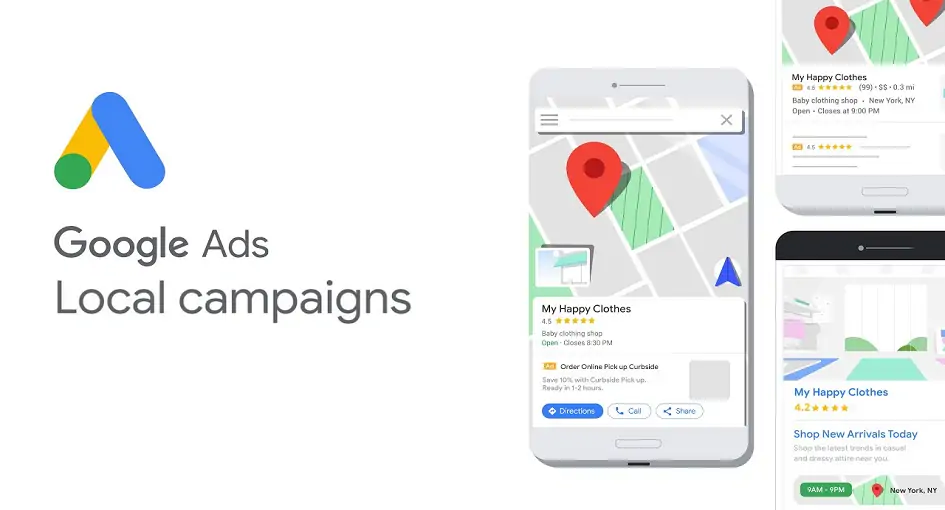
                                      Local Google Ads near me is a component of Google’s advertising network designed to help businesses market their products and services to potential customers in a specific area. These ads are most visible to consumers looking for local services on Google Maps, where they also appear in search results when users enter location-specific keywords.

                                      For local businesses, Google Ads is a vital tool that promotes foot traffic, online interaction, and overall business success. 88% of smartphone users visit or call a store within a day, and 46% of Google searches are for local information. Over 500% more “near me” searches have been made in the last few years, and 78% of these local mobile searches result in offline sales. 50% of mobile users who conduct local searches visit stores within a day, and companies make $2 on average for every $1 they spend on Google AdWords.

                                      Given that local search is a popular consumer habit, Google Ads is an essential tool for local businesses looking to connect with potential clients. These advertisements offer mobile optimization, cost-effectiveness, fast results, customized advertising, and increased visibility. They provide businesses with specific targeting based on geography, demographics, interests, and search behavior, and they allow them to appear prominently in local search results, frequently above organic results. 

                                      Pay-per-click (PPC) advertising is an affordable option for companies with tight marketing budgets. Google AdWords offers comprehensive statistics and performance indicators for ongoing optimization in addition to generating instant traffic to a company’s website or physical presence. Local businesses should use keyword research, attractive ad text, ad extensions, mobile device optimization, monitoring, and exploiting local insights to optimize the impact of Google Ads.

                                      This post explores the value of local Google Ads for local customers, highlighting their advantages, efficacy, and methods for optimizing return on investment. 

                                      Benefits of Local Google Ads

                                      1. Targeted Reach:

                                      With the help of Google Local Ads, businesses can target particular geographic areas with highly focused advertising. Customers in the area will see the adverts and are more likely to convert as a result. Businesses can effectively use their advertising resources to attract consumers who are actively searching for local goods and services by pinpointing specific places. Relevance and engagement can be raised by customizing local keywords and ad wording for local Google Ads login. This degree of focused outreach increases foot traffic, stimulates sales from nearby clients, and improves the efficacy of advertising initiatives.

                                      2. Increased Visibility

                                      Local companies may now be found at the top of local search results and on Google Maps thanks to Google Local Ads, which also increases their visibility in search results. High-buy intent users are drawn to this exposure, which increases click-through rates and conversions. By offering pertinent information like business address, operating hours, and stock availability, other features like location extensions and local inventory advertisements further improve exposure. This increases brand awareness in the neighborhood and increases traffic to the company’s website or physical location, making it simpler for clients to identify and select local companies over rivals.

                                      3. Cost-Effectiveness:

                                      One major advantage of Google Local Ads is their cost-effectiveness, which makes them a desirable choice for small local businesses with tight marketing budgets. Businesses using Google Local Ads only pay when a potential customer clicks on their advertisement thanks to the pay-per-click (PPC) business model. By doing this, the advertising spend is guaranteed to be used to create real interest and engagement, hence optimizing return on investment (ROI). Furthermore, advertising is given to highly relevant audiences thanks to the ability to target specific geographic areas and local keywords, which saves money on pointless clicks. 

                                      Businesses have complete control over their expenditure because they may set daily or campaign-wide budgets. Google Local Ads’ accurate targeting features and quantifiable performance indicators let companies continuously improve their ads and make sure their investment is yielding the greatest returns. Local businesses may boost sales, get leads, and drive traffic with this economical strategy without having to spend a lot of money on marketing.

                                      4. Measurable Results:

                                      By monitoring data like impressions, clicks, click-through rates, conversion rates, and cost per click, Google Local Ads provides businesses with quantifiable outcomes. These measurements assist companies in evaluating the effectiveness of their advertisements and determining the most captivating elements. Data on visitors performing desired actions after viewing an advertisement is provided via conversion tracking and store visit metrics. Businesses are able to make well-informed decisions, optimize their advertising tactics in real-time, and more efficiently spend their expenditures because to this transparency and data-driven insight. Local businesses can continuously improve their marketing activities for optimal efficiency and effect by measuring and analyzing their results.

                                      5. Enhanced Local Engagement:

                                      By facilitating more efficient communication between businesses and the community, Google Local Ads improve local involvement. Businesses should make sure their ads are relevant to local clients and increase engagement rates by employing local keywords and targeting ads to specific geographic areas. Potential clients may find the business, obtain directions, phone the business directly, or visit the store with ease thanks to features like call buttons and location extensions. Advertisements can also be customized to promote neighborhood partnerships, promotions, or events, strengthening ties with the neighborhood and encouraging patronage. Long-term growth and higher client satisfaction are the results of this customized approach.

                                      FAQs

                                      What are local ads in Google Ads?

                                      Local ads in Google AdWords are a particular kind of advertising created to assist companies in connecting with potential clients in a particular region. These advertisements are highly visible to consumers who are looking for nearby related goods or services since they show up in local search results, on Google Maps, and throughout the Google Display Network. Local advertising seeks to increase foot traffic to real establishments, provide local leads, and improve community participation by focusing on particular places, leveraging local keywords, and including call buttons and location extensions.

                                      How to set up local Google Ads?

                                      To set up local Google Ads and local service ads categories, log into your account, select the campaign type, target the desired geographic area, use relevant local keywords, create compelling ad copy, and use ad extensions like location and call. Set your budget and bidding strategy, review settings, and launch the campaign. Regularly monitor and adjust ads based on performance metrics to optimize results. This will help you reach your desired audience and drive more sales.

                                      How much do Google Local Services Ads cost?

                                      Businesses are only charged when a potential consumer contacts them directly through Google Local Services Ads because the mechanism is pay-per-lead. The cost per lead normally ranges from $6 to $30, depending on the business, region, and level of competition. Google uses the weekly budget that businesses specify to manage ad placements and make sure leads don’t go over budget. This strategy is a cost-effective choice for local firms looking to draw in quality leads because it permits flexible expenditure and guarantees that advertising expenses are directly linked to consumer queries.

                                      Is Google local service ads worth it?

                                      Indeed, for many local firms, Google Local Services Ads are well worth the investment. These advertisements provide high-quality leads by connecting companies with prospective clients who are actively looking for particular services in their area. Pay-per-lead is a cost-effective advertising strategy since it guarantees that companies only pay for real client queries. Furthermore, these advertisements’ trust seals and client testimonials can increase their legitimacy and draw in additional business. Overall, the Local Google ads app can be a wise investment for companies looking to grow their local clientele and provide quality leads.

                                      Is Google Ads worth it with a small budget?

                                      Indeed, Google Ads can still be worthwhile with a modest budget. Because of the platform’s flexibility, firms can target specific demographics and set daily spending limitations to make sure every dollar is spent effectively. Small businesses can gain a lot of publicity and draw in potential clients without breaking the bank by concentrating on highly relevant keywords, employing accurate geographic targeting, and optimizing ad wording. In addition, companies can maximize return on investment for Google local service ads cost by using the pay-per-click (PPC) model, which charges only when a user clicks on their advertisement. With diligent oversight and ongoing refinement, a little budget can produce significant AdWords returns.

                                      Effectiveness of Local Google Ads

                                      There are numerous ways to evaluate the efficacy of local Google Ads:

                                      • Ad Relevance and Quality Score:

                                      Advertising that are extremely related to the user’s search query are given priority by Google’s algorithm. A better Quality Score can be attained by a local advertisement that is well-written, has a compelling value proposition, and a strong call to action. This score affects the cost-per-click and placement of the advertisement, which in turn affects how effective it is.

                                      • Mobile Optimization:

                                      The increasing number of mobile searches, especially for local information, highlights the need to optimize local Google Ads for mobile devices. Click-to-call and navigation elements, as well as mobile friendliness, can greatly increase engagement and conversion rates in ads. 

                                      • Ad Extensions:

                                      Local Google Ads can be more effective when ad extensions are used. The possibility of a successful outcome is increased with extensions like location, call, and review extensions, which offer users more alternatives and information to interact with the advertisement.

                                      • Competitive Advantage:

                                      Local Google Ads can give you a competitive advantage, particularly in markets with a high population density. Companies that spend money on local advertisements have a better chance of overtaking rivals that only use organic search results for market share. This competitive edge may play a key role in drawing in local customers. 

                                      Strategies for Maximizing ROI

                                      The following tactics should be used by companies to optimize the return on investment of local Google AdWords:

                                      Comprehensive Keyword Research:

                                      To determine which local keywords are the most relevant and effective, conduct in-depth keyword research. To increase the relevancy of your ads and draw in targeted traffic, include these keywords in the headlines, body copy, and landing pages. 

                                      Effective Ad Copy:

                                      Write enticing advertising language that draws attention to the company’s unique selling propositions (USPs). To entice clicks and conversions, use succinct, straightforward language and make sure your call to action is strong. Adjust the ad copy to the particular requirements and inclinations of the target market.

                                      Landing Page Optimization:

                                      Make sure the landing page is conversion-optimized. The website should load rapidly, work well on mobile devices, and offer a smooth user experience. Provide contact details, pertinent content that supports the advertisement’s message, and obvious calls to action.

                                      Utilize Ad Extensions:

                                      Utilize ad extensions to their fullest potential to boost ad visibility and offer more information. Call extensions allow for direct communication, while location extensions might make it easier for customers to find the company. Review extensions that highlight gratifying client comments to help increase trust.

                                      Monitor and Adjust Campaigns:

                                      Use Google Ads analytics tools to track local Google Ads campaign performance on a regular basis. Monitor important performance indicators including cost-per-click (CPC), conversion rates, and click-through rates (CTR). Utilize this information to pinpoint problem areas and implement the required fixes to maximize campaign effectiveness.

                                      Leverage Local Insights:

                                      Advertisements can be customized to the unique tastes and habits of the local audience by utilizing consumer information and local insights. Businesses may produce more interesting and relevant advertisements that appeal to potential customers by having a better understanding of the characteristics of the local market.

                                      Case Studies and Real-World Examples

                                      To demonstrate the value of local Google Ads examples, let’s examine a few actual cases: 

                                      Local Retail Store:

                                      Local Google Ads were employed by a nearby boutique that sold handmade jewelry to draw in customers. Within three months of implementing keyword targeting strategies like “handmade jewelry near me” and “local jewelry shop,” the boutique had a 50% rise in foot traffic and a 30% increase in revenues. The store’s customer base was further expanded by tourists who found it thanks to the advertising’s prominence on Google Maps. 

                                      Home Services Business:

                                      A plumbing business used neighborhood Google Ads to connect with local homes. The organization enabled potential consumers to identify and contact them with ease by leveraging call and location extensions. A 40% rise in service calls and a notable boost in overall business growth were the campaign’s outcomes.

                                      Restaurant and Café:

                                      Local Google Ads were employed by a nearby café to advertise their new menu and exclusive deals. During peak hours, the café increased the number of customers by utilizing visually appealing ad language and focusing on food-related keywords. The strategy improved the café’s internet visibility and reputation in addition to increasing bookings.

                                      Conclusion: Local Google Ads are incredibly beneficial for companies looking to foster community engagement and spur expansion. Local Google Ads provide SMEs with a potent marketing tool through cost-effectiveness, quantifiable outcomes, enhanced exposure, and targeted reach. Businesses may increase the return on investment (ROI) of their local ad campaigns by putting strategic techniques like keyword research, compelling ad text, landing page optimization, and utilizing ad extensions into practice. Examples from the real world show the observable advantages that local Google Ads may provide, emphasizing their value as the cornerstone of contemporary local marketing campaigns. In a time when people are more likely to look online for local information, companies that use local Google Ads stand to gain from this trend. Local firms may prosper in their communities and see steady development by drawing in neighboring consumers, encouraging community involvement, and outpacing the competition. 

                                      Read More
                                      26 MayBusiness

                                      Effective and Professional Ways To Promote Your Business Online

                                      Effective online business promotion necessitates a comprehensive plan that makes use of a range of digital marketing strategies. Regardless of your size of company—you can run a tiny or huge one—online promotion can greatly increase your visibility, draw in new clients, and boost revenue.

                                      Online business promotion is the umbrella term for a variety of tactics and ways to promote your business and expand a company’s online presence and customer base. It entails making use of the internet and other online resources to draw in and interact with potential clients, which will eventually lead to increased sales and expansion.

                                      For businesses to improve exposure, reach, cost-effectiveness, targeted advertising, measurable outcomes, brand building, customer engagement, and competitive advantage, professional internet promotion is crucial. It enables companies to increase ROI, reach a worldwide audience, and offer round-the-clock accessibility. Businesses may target particular demographics, hobbies, and behaviors with online marketing platforms, guaranteeing the most relevant audience. Utilizing data analytics to create personalized content is also advantageous.

                                      Businesses may optimize their marketing strategy and make well-informed decisions by utilizing the comprehensive statistics and insights provided by digital marketing. While consistent branding builds recognition and trust, thought leadership builds credibility and draws in a devoted following of clients. Online channels provide instantaneous feedback and encourage user participation, which enhances products, services, and customer experiences.

                                      One of the many ways to promote your business is to maintain an advantage over rivals and seize market possibilities by implementing new online marketing trends and technology. Businesses can grow their digital marketing campaigns and adjust to shifting market conditions because of scalability. Digital marketing tools give organizations the ability to segment their audience and customize services by delivering extensive insights into the behavior, preferences, and purchase habits of their customers.

                                      Expert online marketing boosts e-commerce by increasing traffic and revenue, and combining offline and online marketing efforts results in a smooth omnichannel experience that increases client loyalty and pleasure. This is also one of the cheap ways to promote your business.

                                      Let’s explore some of the creative ways to promote your business online in this post.

                                      What are the Professional Ways to Promote Your Business Online?

                                      1. Build a Professional Website

                                      How to promote your small business? Well, the foundation of your online presence is a polished, easy-to-use website. It ought to be responsive to mobile devices, visually beautiful, and simple to use. Add important sections such as a blog, services/products, contact information, and about us. Make sure the user experience on your website is flawless and that it loads promptly. 

                                      Key Elements:

                                      • Responsive Design: Make sure your website looks fantastic on all devices using responsive design.
                                      • Simple Navigation: Facilitates finding information for users.
                                      • High-Quality Content: High-quality content offers value and engages users.

                                      2. Optimize for Search Engines (SEO)

                                      Optimizing your website to appear higher in search engine results pages (SERPs) is known as search engine optimization, or SEO. By doing this, you become more visible to prospective clients who are looking for goods or services similar to yours.

                                      SEO Strategies:

                                      • Keyword Research: Conduct keyword research and incorporate pertinent terms into your writing.
                                      • On-Page SEO: Title tags, meta descriptions, headers, and pictures should all be optimized for on-page SEO.
                                      • Content Creation: Consistently publish excellent, keyword-rich content.
                                      • Link Building: To increase your authority, obtain backlinks from respectable websites.

                                      3. Utilize Social Media Marketing

                                      Social media sites like TikTok, Facebook, Instagram, Twitter, LinkedIn, and Facebook provide effective tools for promoting businesses. To engage your audience, make profiles on pertinent networks and post interesting material. 

                                      Social Media Tips:

                                      • Consistent Branding: Maintain a consistent brand across all platforms by using the same imagery and messaging.
                                      • Engagement: Respond to messages and comments from your followers to engage with them.
                                      • Content Strategy: Post a variety of material kinds, such as pictures, videos, narratives, and live streams, as part of your content strategy.
                                      • Paid Advertising: To increase your reach and target particular demographics, use social media ads.

                                      4. Invest in Pay-Per-Click (PPC) Advertising

                                      One of the many effective ways to promote your business online is pay-per-click (PPC). With PPC advertising, you may post advertisements on social media and search engines and only have to pay when someone clicks on them. This technique can increase targeted visitors to your website and give you instant visibility. It is one of the many widely used ways to advertise your business for free online.

                                      PPC Best Practices:

                                      • Google Ads: Select business-related keywords and craft attention-grabbing ad wording.
                                      • Social Media Ads:  To target particular audiences, use Facebook, Instagram, or LinkedIn ads.
                                      • Budget Management: To guarantee a positive return on investment (ROI), establish a defined budget and track your efforts. 

                                      5. Leverage Email Marketing

                                      One of the best methods for nurturing leads and developing a relationship with customers is still email marketing. To inform your subscribers about your offerings, promotions, and services, send them customized emails.

                                      Email Marketing Strategies:

                                      • Build an Email List: Create an email list by gathering email addresses using social media and website sign-up forms.
                                      • Segmentation: To deliver tailored communications to various audience segments, divide up your email list into segments.
                                      • Automation: To automate campaigns like welcome emails and follow-up sequences, use email marketing software.
                                      • Content: Write enticing email subject lines and include insightful content.

                                      6. Create High-Quality Content

                                      One of the many effective ways to promote your business online is by creating high-quality and engaging content. Content marketing involves creating and sharing engaging content to captivate and maintain the interest of your target audience.  Blog entries, articles, films, infographics, and eBooks can all fall into this category.

                                      Content Marketing Tips:

                                      • Blogging: Compose educational blog entries that speak to the interests and problems of your readers.
                                      • Video Content: Create interesting videos for your website, social media accounts, or YouTube.
                                      • Infographics: To show data and information attractively, use infographics.
                                      • Guest Posting: To increase your exposure, write guest posts for respectable websites in your sector.

                                      7. Use Influencer Marketing

                                      You can learn how to promote your business locally wit the help of local influencers. By collaborating with influencers, you may expand your audience and establish trust. Select influencers whose fan base is similar to your intended audience.

                                      Influencer Marketing Tips:

                                      • Find Relevant Influencers: Seek out influencers who genuinely have a relationship with your sector.
                                      • Creative Collaboration: Assist influencers in producing real, interesting content.
                                      • Measure Outcomes: Monitor influencer campaign performance to gauge effectiveness.

                                      8. Implement Affiliate Marketing

                                      Collaborating with affiliates who market your goods in return for a commission on sales is known as affiliate marketing. This can be a cheap and efficient strategy to increase sales and broaden your audience.

                                      Affiliate Marketing Strategies:

                                      • Recruit Affiliates: Look for affiliates who complement your brand and have a significant internet presence.
                                      • Provide Resources: Provide assistance and advertising materials to your affiliates.
                                      • Track Performance: Keep an eye on affiliate commissions and sales by using tracking software. 

                                      9. Engage in Online Communities and Forums

                                      You may network, learn new things, and market your company by taking part in industry-related online communities and forums as one of the ways to promote your business on social media.

                                      Community Engagement Tips:

                                      • Provide Value: Help people and share your knowledge without directly pushing your company.
                                      • Be Involved: Take part in conversations regularly and establish yourself in the neighborhood.
                                      • Link Back: Incorporate links to your blog or website into your profile or signature on forums. 

                                      10. Offer Promotions and Discounts

                                      By providing discounts and promotions, you can draw in new clients and promote recurring business. Make sales by instilling a sense of urgency with these offers.

                                      Promotion Ideas:

                                      • Limited-Time Offers: Make deals that expire quickly to entice customers to buy now.
                                      • Seasonal Sales: To draw customers, time sales around holidays and special occasions.
                                      • Loyalty Programs: Give special discounts and offers to loyal clients.

                                      11. Utilize Analytics and Data

                                      To maximize the effectiveness of your internet marketing initiatives, make data-driven decisions. Track your performance and learn about the behavior of your audience by using analytics tools.

                                      Analytics Tools:

                                      • Google Analytics: Track user activity, conversion rates, and website traffic.
                                      • Social Media Insights: Monitor performance and engagement with insights tailored to your platform.
                                      • Email Marketing Analytics: Analyze click-through, conversion, and open rates in email marketing analytics.

                                      12. Optimize for Mobile

                                      It is vital to make sure your online presence is mobile-friendly, as a considerable proportion of web traffic originates from mobile devices.

                                      Mobile Optimization Tips:

                                      • Responsive Design: Make sure your website adapts to various screen widths by using responsive design.
                                      • Quick Loading Times: To speed up mobile load times, optimize pictures, and take advantage of caching.
                                      • Simplified Navigation: Make it simple and quick for users of mobile devices to locate what they need. 

                                      13. Maintain a Strong Online Reputation

                                      The success of your business can be greatly impacted by your online reputation. Manage your online reputation carefully, and strive for positive evaluations.

                                      Reputation Management Tips:

                                      • Promote Reviews: Request that pleased clients post gratifying evaluations on websites such as Google, Yelp, and Trustpilot.
                                      • Reaction to Feedback: Handle all comments, constructive and constructive, in a timely and professional manner.
                                      • Track Mentions: Utilize services such as Google Alerts to monitor online mentions of your company.

                                      Conclusion: Effective online business promotion necessitates a multifaceted strategy that incorporates many ways to promote your business and effective digital marketing techniques. You can dramatically increase your online visibility, draw in more clients, and propel business growth by developing a polished website, optimizing it for search engines, utilizing social media, investing in PPC advertising, participating in email marketing, producing high-quality content, utilizing influencer and affiliate marketing, taking part in online communities, providing promotions, utilizing analytics, optimizing for mobile, and upholding a solid online reputation. Remain flexible, track your progress, and iteratively improve your tactics to stay ahead of the ever-changing digital scene. 

                                      Read More
                                      25 MayDigital Marketing

                                      Utilizing Professional Web Design Services for Sales Optimization

                                      A well-designed website is more than simply a digital storefront in the modern digital era; it’s an effective instrument for increasing sales and fostering company expansion. Businesses need to give priority to their online presence as more and more consumers use the internet to research items and make purchases. To assist businesses in establishing visually beautiful, user-friendly websites that are geared for conversions, professional web design services are essential.  

                                      Businesses need web design services to create visually beautiful, user-friendly websites that are geared for conversions, which in turn increases revenue. They provide a good first impression and give guests a sense of credibility and confidence. A crucial element in deciding whether users stay on a website or leave to visit a rival is the user experience, or UX.

                                      Building brand awareness and trust requires consistent branding across all touchpoints. By using SEO best practices, the website’s visibility in search engine results is improved, increasing the likelihood of organic visitors and conversions. For mobile consumers, mobile optimization is essential since it guarantees that the website works properly on all devices and screen sizes. To direct visitors toward desired tasks, well-placed calls-to-action (CTAs) are utilized.  

                                      Businesses that offer goods online must also integrate e-commerce. Analytics tools are used by web design firms to monitor website performance, track visitor activity, and pinpoint areas for improvement. By using a data-driven strategy, businesses may optimize their website to enhance revenue and improve conversions.

                                      The growing use of mobile devices has led to a substantial evolution in web design patterns; by 2021, mobile devices will drive over 50% of all website traffic worldwide. The design of the user experience, or UX, has drawn a lot of attention. Businesses that prioritize UX report improved customer retention, decreased bounce rates, and greater conversion rates.

                                      The COVID-19 pandemic has accelerated e-commerce growth, with global sales reaching $4.28 trillion in 2020. Websites are increasingly incorporating visual and interactive elements, such as animation, videos, and interactive graphics, to engage users. Also, accessibility is a growing concern, with 98.1% of the top 1 million websites having detectable WCAG 2 failures.

                                      Besides, speed optimization is crucial for the user experience and search engine rankings, while minimalist design principles such as clean layouts, ample white space, and simplified navigation, are popular. Similarly, dark mode has also gained popularity, reducing eye strain and conserving battery life.

                                      This article explores how professional web design services description can significantly boost sales for businesses of all sizes.

                                      The Importance of Web Design Services for Sales

                                      More than merely being visually beautiful, a well-designed website may increase sales and income as a strategic asset. The following justifies the need for expert web design services jobs to maximize sales potential:

                                      1. First Impressions Matter: 

                                      As it conveys professionalism, trustworthiness, brand image, user experience, distinction, and conversion optimization, a well-designed website is essential for web design services. Potential customers are given the impression of competence and knowledge by a clear layout, eye-catching images, and simple navigation. A well-designed website increases credibility and increases the likelihood that users will believe in your knowledge and skills. 

                                      In a competitive market, brand identification and distinction are facilitated by consistent branding across all parts. A user-friendly website that is simple to use, loads fast, and has pertinent content makes for a satisfying user experience that promotes interaction and raises the possibility that potential customers may ask questions about your offerings. 

                                      A well-designed website may help you stand out from the competition in a competitive market by showing your portfolio, customer testimonials, and distinctive design style. Because it facilitates visitors’ progression through the sales funnel and increases income and sales, conversion optimization is crucial.

                                      2. User Experience (UX) Optimization: 

                                      Optimizing the user experience (UX) is crucial for web design services USA that want to increase sales. UX improvement may help the sales process in the following ways:

                                      Intuitive Navigation: Visitors may be guided through the sales funnel, and the possibility of conversion is increased by a user-friendly website with clear menus, well-organized information, and a logical site layout.

                                      Responsive Design: A mobile-friendly website attracts visitors at every touchpoint and guarantees a smooth user experience.

                                      Quick Loading Speed: Increasing website speed helps lower bounce rates and boost user engagement.

                                      Clear Call-to-Action (CTA): Visitors may be guided toward conversion by placing clear and appealing CTAs strategically across the website.

                                      Visuals That Engage: Exceptional photos, videos, and graphics improve the website’s appearance and draw users in.

                                      Simplified Forms: You may enhance the user experience by streamlining form fields and cutting down on friction.

                                      Personalization: Adapting offers, suggestions, and content to each user’s particular requirements can increase engagement and boost revenue.

                                      Accessibility: All users, including those with impairments, can use the website provided that accessibility standards and rules are followed.

                                      3. Brand Consistency: 

                                      To increase revenue, the top web design services must uphold brand consistency. By establishing a consistent brand identity across all touchpoints, including the website, aids in building trust with potential customers. This fosters a reputation of dependability and professionalism, boosting trust in the services’ capacity to meet expectations. 

                                      Consistent branding also helps create brand recognition, making it easier for potential clients to remember the services. Building authority in the industry, consistent branding conveys expertise and credibility to potential clients, making them more likely to trust the services. Consistent branding increases brand recall, leading to higher conversion rates and sales. It reinforces the value proposition and unique selling points, reminding potential clients of the benefits of choosing the services over competitors. 

                                      Lastly, a consistent brand helps to build an emotional bond with prospective customers, which boosts loyalty and trust and eventually boosts sales. 

                                      FAQs

                                      How much does it cost to pay someone to design a website?

                                      Website design costs vary based on complexity, page count, customization, and the designer’s experience. On average, small business websites cost $500-$5,000, while complex sites can cost $5,000-$30,000. Freelancers may charge less than established agencies, but final costs depend on specific requirements and the desired quality of work.

                                      What is a web design service?

                                      A web design service is a process that involves creating and maintaining websites, focusing on aesthetics, usability, and functionality. It includes designing layout, visual elements, and interactive features to ensure a positive user experience. The goal is to create a visually appealing, user-friendly, and effective online presence.

                                      How much is GoDaddy website design services?

                                      The Basic plan at GoDaddy, which includes a unique website created by GoDaddy pros, continuous maintenance, and standard SEO tools, is usually the starting price for website design services. Additional needs like extensive customization, e-commerce capability, and extra marketing services may result in price increases. The easiest way to find the most accurate and recent price depending on your particular needs is to visit GoDaddy’s website or get in touch with their sales staff.

                                      What is a good price for web design?

                                      Web design prices vary based on project scope, complexity, and designer expertise. Basic small business websites typically cost between $1,000 and $5,000, while complex websites with custom features can cost between $5,000 and $20,000. Balancing cost with quality is crucial for a professional, functional, and visually appealing website.

                                      How much does a 5-page website cost?

                                      A 5-page website’s cost varies based on complexity, design requirements, and the designer’s expertise. A basic design can cost $500 to $2,500, while more complex projects may cost between $2,500 and $5,000. It’s crucial to clearly define your needs and budget when discussing your project with potential designers.

                                      4. Search Engine Optimization (SEO): 

                                      One of the most important factors in increasing sales of web design services for small business is search engine optimization or SEO. Here are some ways that SEO may help with the sales process:

                                      Enhanced Visibility: Search engine optimization (SEO) increases a website’s exposure in search engine results pages (SERPs), which increases organic traffic and revenue prospects.

                                      Targeted Traffic: SEO draws users who are actively looking for web design services, which draws in more prospective customers and boosts revenue.

                                      Quality Leads: By focusing on pertinent keywords and phrases, SEO draws in more interested visitors, which produces higher-quality leads and more sales.

                                      Better User Experience: SEO increases visitor engagement and the possibility that a visitor will convert by optimizing website elements including speed, mobile friendliness, navigation, and content quality.

                                      Competitive Advantage: By placing higher in search results and focusing on local prospective customers, SEO gives you a competitive advantage.

                                      Long-Term Investment: SEO creates a steady stream of leads and sales for professional web design services by continuing to produce organic traffic. 

                                      5. Mobile Optimization: 

                                      In today’s mobile-centric environment, mobile optimization is essential for web design services to generate sales. By making websites usable and accessible on a range of mobile devices, such as tablets and smartphones, it improves the user experience. This enables users to explore services, navigate the website, and make transactions. Additionally, mobile optimization broadens the website’s audience by drawing users who prefer to browse and purchase on their smartphones or tablets.

                                      Another advantage of mobile optimization is higher search engine ranks, particularly in light of Google’s mobile-first indexing strategy. Mobile-friendly websites are more likely to appear higher in mobile search results, boosting exposure and bringing in natural visitors. An additional advantage of mobile optimization is faster load times.

                                      Businesses aiming to attract local customers might greatly benefit from the local SEO advantage. Businesses may draw in more customers by making their websites more visible in local search results by optimizing them for local search.

                                      6. Clear Call-to-Action (CTA): 

                                      Clear and compelling calls-to-action (CTAs) are crucial for web design services to drive sales. They guide visitors through the sales funnel, encouraging them to take action and engage with the website. CTAs can highlight the benefits of choosing web design services, address visitors’ pain points, and offer solutions. They can create urgency by using phrases like “Limited Time Offer” or “Act Now,” prompting visitors to act quickly and capitalize on time-sensitive opportunities.

                                      The effectiveness of CTAs in generating sales is increased by their strategic placement throughout the website. Put calls to action (CTAs) in plain sight on pages with a lot of traffic, such as the homepage, services pages, and portfolio, as well as at crucial junctures in the user experience. With constant testing and tweaking, CTAs can perform better over time. Through A/B testing, you can determine which CTAs work best for your audience and provide the highest conversion rates by experimenting with different versions of the text, color, size, and location. You may improve your strategy and increase sales chances by evaluating data and making iterations on CTAs.

                                      7. E-commerce Integration: 

                                      A calculated strategy used by web design services to increase revenue is e-commerce integration. It enables clients to sell goods or services online, expanding their potential customer base and generating more revenue. This leads to an extended service offering. Due to the potential for e-commerce solutions to create new revenue streams, this also provides revenue diversification.

                                      As a value-added service, integrating e-commerce functionality into website designs provides clients with a comprehensive solution that addresses their online selling needs, positioning your services as more valuable and desirable. Offering e-commerce integration services provides a competitive advantage in the market, as businesses increasingly recognize the importance of selling online. By positioning yourself as a one-stop shop for all their online needs, you can attract more clients and win more projects, ultimately increasing sales.

                                      By offering website designers e-commerce capabilities as an extra feature, you can position your services as more valuable and appealing by providing them with a comprehensive solution that satisfies their needs for online selling. As more and more people come to understand the importance of online sales, businesses may gain a competitive edge in the market by offering e-commerce integration services. By positioning yourself as a one-stop shop for all of their web needs, you might be able to attract more clients and get more contracts. 

                                      8. Analytics and Tracking: 

                                      Analytics technologies are used by web designers to watch visitor activity, keep an eye on the performance of their websites, and pinpoint areas that need work. Businesses may enhance their websites for greater conversion rates and higher revenue by using this data-driven method. 

                                      To increase revenue, the web design services list must have tracking and analytics capabilities. They offer goal-setting, data-driven decision-making, conversion tracking, visitor behavior analysis, real-time performance monitoring, performance improvement, and ROI evaluation. Web design companies may monitor traffic, engagement, and conversion rates with the use of analytics tools, which give them important information about visitor behavior and areas for development. Additionally, they enable the study of visitor activity, which facilitates improved comprehension of user navigation, sales funnel optimization, and conversion points.

                                      Web design services may optimize their sales funnel by measuring its efficacy and identifying conversion points with the use of conversion monitoring. In order to make sure the website successfully supports sales objectives, web design services may define and monitor precise targets linked to sales and conversions.

                                      Optimizing website performance, content strategy, marketing campaigns, and sales activities all depend on data-driven decision-making. Web design services may make well-informed judgments on website optimization, content strategy, marketing campaigns, and sales activities by examining trends and patterns in data.

                                      Finally, web design services near me may evaluate the influence on sales results and identify the most successful tactics for revenue development by measuring the return on investment (ROI) of their marketing and sales activities with the use of analytics and monitoring technologies. 

                                      Case Studies: Real-World Examples of Sales Growth Through Professional Web Design

                                      1. E-commerce Retailer: A reputable web design firm collaborated with a top e-commerce company to redesign their website. User experience, mobile optimization, and expedited checkout procedures were given top priority in the new design. Consequently, within the first month of introducing the new website, the shop experienced a thirty percent boost in online sales.
                                      2. Local Service Business: A nearby service company made an investment in expert web design services to boost its internet visibility. The website was revamped using local SEO tactics, improved content, and obvious calls to action. Within three months of introducing the new website, the firm saw a 20% increase in sales leads and a 50% rise in online inquiries.

                                      Conclusion: By developing aesthetically pleasing, user-friendly websites that are geared for conversions, professional web design services play a critical role in increasing sales for businesses. In the highly competitive digital market of today, experienced web designers help businesses attract more visitors, boost sales, and achieve long-term success by focusing on user experience, brand consistency, SEO, mobile optimization, clear CTAs, e-commerce integration, and analytics monitoring. Purchasing a high-quality website is an investment in your company’s expansion and success, not just a one-time cost.

                                      Read More
                                      21 MayDigital Marketing

                                      A Comprehensive Beginner’s Guide to Social Media Advertising

                                      For companies of all sizes, social media advertising has become an essential part of their digital marketing plans. With billions of users on several platforms, social media presents unmatched chances to interact and connect with potential clients. For novices, however, the world of social media advertising may be intimidating.

                                      Using sponsored ads on social media platforms to reach a specific audience is known as social media advertising. These advertisements may be text-based, picture-based, video-based, or interactive. Increasing brand recognition, and generating leads, traffic, and sales are the main objectives, and social media advertising benefits.

                                      Social media advertising is still an essential component of digital marketing plans for companies all around the world in 2024. With more than 4.7 billion users, it accounts for more than 60% of the global populace. It is anticipated that global advertising expenditure would amount to $207 billion by 2024, having grown at an average annual rate of 15% over the previous five years. Businesses receive an average return on investment (ROI) of $5.78 for each dollar spent on social media advertising, according to 73% of marketers who feel their social media advertising is effective.

                                      The well-known social media sites Facebook, Instagram, Twitter, LinkedIn, Pinterest, and TikTok each have sizable user populations and substantial ad income. Instagram posts have an engagement rate of 1.22%, compared to Facebook’s 0.90% click-through rate on average. By the end of 2024, it is anticipated that businesses will spend more than $40 billion on Instagram advertising. LinkedIn spends $4.5 billion on advertisements, compared to Twitter’s $5.5 billion in income. Of its 463 million active users, 89% go to Pinterest for inspiration when making purchases. It is anticipated that Pinterest’s ad income will amount to $3 billion by the end of 2024. With 52 minutes spent on the app per day on average, TikTok has 1.1 billion monthly active users.

                                      This guide will lead you through the fundamentals, covering everything from comprehending various social media advertising platforms to developing successful campaigns, types of social media advertising, social media advertising cost, and gauging their impact. 

                                      Choosing the Right Social Media Advertising Platforms

                                      Different social media platforms cater to different audiences and have unique advertising features.

                                      1. Facebook:

                                      • Audience: Broad demographic, suitable for almost any business.
                                      • Ad Types: Image, video, carousel, slideshow, and collection ads.
                                      • Features: Detailed targeting options, robust analytics, and a large user base.

                                      Facebook’s large user base, sophisticated targeting tools, and variety of ad types make a platform with social media advertising effectiveness. It provides resources to connect with target markets, build brand recognition, and encourage conversions. Facebook offers a range of ad styles, such as slideshow, picture, video, and carousel, in addition to comprehensive analytics for tracking ad success and campaign optimization.

                                      Create a Facebook Business Page and use the Facebook Ads Manager tool to begin a Facebook Ad Campaign. Establish campaign goals such as awareness, contemplation, and conversion. Use Facebook’s targeting features to determine who your target audience is. Establish a spending plan and budget for advertising, then maximize results. Select from a variety of ad forms, including slideshow, collection, immediate experience, picture, video, and carousel. Use attention-grabbing headlines, powerful CTAs, and excellent imagery to create engaging advertising material. Post advertisements in Facebook News Feed, Instagram, Messenger, Audience Network, and so on. After checking your campaign settings, start running your advertisements to kick off your campaign. Facebook will use your budget and schedule to determine which users are your target audience for adverts. 

                                      2. Instagram:

                                      • Audience: Younger demographic, highly visual.
                                      • Ad Types: Image, video, carousel, and story ads.
                                      • Features: Integrated with Facebook Ads Manager, strong engagement rates, and visually appealing formats.

                                        Instagram has more than 1.5 billion active users each month, making it a potent social media advertising tool. In addition to visual attractiveness, a variety of ad types, including Stories, Carousel, and Shopping advertisements, and connection with Facebook advertisements Manager, it provides great interaction rates. 

                                        Convert your Instagram account to a business profile, open Facebook Ads Manager, choose an ad format (photo, video, carousel, story, shopping, or collection), create engaging ad content, and start your campaign to establish campaign objectives, target audience, budget, and schedule. Instagram provides a range of ad forms, such as narrative, shopping, collection, carousel, video, and photo advertisements. Select ad formats that increase traffic, engagement, conversions, and brand exposure. Use attention-grabbing headlines, powerful CTAs, and excellent photos or videos to create engaging advertising material. Start your campaign, then monitor its results.

                                        3. Twitter:

                                        • Audience: Tech-savvy and news-focused users.
                                        • Ad Types: Promoted tweets, accounts, and trends.
                                        • Features: Real-time engagement, hashtag targeting, and concise messaging.

                                          Twitter’s wide range of ad types, sophisticated targeting capabilities, and real-time engagement make it a popular venue for social media advertising. With more than 368 million active users each month, it offers businesses access to a very engaged and powerful audience. From campaign setup to optimization and measurement, this article covers the necessary processes and best practices for utilizing Twitter for advertising in an efficient manner. Twitter users may spread the word about you since they are frequently influencers and early adopters.

                                          Go to ads.twitter.com to create a Twitter Ads account before starting a campaign. Establish marketing goals such as conversions, website clicks, and awareness. Use consumer data, demographics, hobbies, behavior, and keywords to target your audience. Select from a variety of ad types, including promoted tweets, promoted accounts, trending moments, video advertising, carousel advertisements, and Twitter Amplify, after deciding on your budget and bidding strategy. Make compelling advertisements with crisp language, eye-catching photos or videos, and compelling calls to action. When your campaign is launched, Twitter will use your budget and bidding technique to target your audience with advertising.

                                          4. LinkedIn:

                                          • Audience: Professionals and B2B market.
                                          • Ad Types: Sponsored content, InMail, and text ads.
                                          • Features: Professional targeting options, industry-specific ads, and lead generation forms.

                                            With more than 930 million members, LinkedIn is a well-known professional networking site that is perfect for B2B marketing and advertising. It provides lead-generating tools, content marketing, and sophisticated targeting possibilities. 

                                            Create a LinkedIn advertisements account, specify the campaign’s goals and target audience, decide on the ad style (sponsored content, sponsored in-mail, or text advertisements), produce engaging content, and start the campaign in order to set up a LinkedIn Ad Campaign. LinkedIn provides a range of campaign goals, including as conversions, website visits, brand exposure, and engagement. Select from choices related to audience growth, interests, and demographics. Use crisp writing, compelling CTAs, and high-quality photos or videos to create content that is educational, specialized, and professional.

                                            5. Pinterest:

                                            • Audience: Creative and DIY enthusiasts, predominantly female.
                                            • Ad Types: Promoted pins, videos, and carousels.
                                            • Features: Visual discovery, high purchase intent, and inspirational content.

                                              With over 450 million monthly active users, Pinterest is a visual discovery network that offers companies a special chance to highlight their goods and services through eye-catching material. It is a useful tool for social media advertising since it provides comprehensive targeting choices based on demographics, interests, keywords, and behaviors as well as the lifetime of pins. 

                                              Establish a Pinterest Business account, specify campaign goals such as conversions, engagement, and brand recognition, then target your audience using their demographics, interests, keywords, and behavior to launch a Pinterest ad campaign. Choose among promoted pins, video pins, carousel pins, and shopping advertisements after deciding on a budget and bidding plan. Make engaging advertising material with crisp language, eye-catching photos, and effective calls to action. Examine your campaign settings before launching it to make sure it reaches your intended audience in accordance with your budget and bidding plan.

                                              6. TikTok:

                                              • Audience: Young, engaged, and trend-driven users.
                                              • Ad Types: In-feed ads, branded hashtags, and challenges.
                                              • Features: Short-form video content, viral potential, and creative formats.

                                                Through short-form video content, TikTok, a well-known social media network with over 1 billion active users, provides companies with a special chance to connect and interact with a creative audience. With an emphasis on TikTok’s enormous reach, high engagement, creative potential, and sophisticated targeting choices based on demographics, interests, and behaviors, this book covers campaign setup, optimization, and measurement for successful advertising on the platform.

                                                A TikTok Ad campaign may be started by creating an account on the platform, defining the campaign’s goals, target audience, budget, and bidding, selecting an ad style (branded hashtag challenges, in-feed advertisements, or branded effects), producing interesting ad content, and launching the campaign. TikTok provides a range of campaign possibilities, such as traffic, awareness, app installs, views, and conversions. To target users, select from a list of demographics, interests, and behaviors. Make real, captivating, and engaging advertising material with appealing videos, catchy soundtracks, and relatable messaging.

                                                Planning and Beginning with Your First Social Media Advertising Campaign

                                                1. Define Your Goals:

                                                  Establish the goals you have for your social media advertisements. Sales, lead creation, internet traffic, and brand exposure are typical objectives.

                                                  2. Determine Who Your Target Market Is:

                                                    To identify your target audience, consider their geography, interests, activities, and demographic data. To help you reach the correct audience, the majority of platforms include comprehensive targeting options.

                                                    3. Produce Interesting Content:

                                                      Create aesthetically pleasing and captivating advertising content that complements your brand’s messaging. Make use of eye-catching headlines, crisp calls to action, and high-quality photos or videos (CTAs).

                                                      4. Set Your Budget:

                                                        Determine the budget you have for your advertising effort. Platforms provide a range of budgeting choices, such as lifetime and daily budgets. Budget: Start small and increase or decrease depending on performance.

                                                        5. Select the Appropriate Ad Format:

                                                          Choose the ad format that works best for the platform and campaign objectives. Select the format that will optimize user interaction and efficiency from the several formats offered by each platform.

                                                          6. Start the Campaign:

                                                            Start your campaign as soon as your advertisements are made and your target market is determined. Make sure it’s functioning properly by keeping a tight eye on it.

                                                            Optimizing Your Social Media Advertising Campaign

                                                            1. Monitor Performance:

                                                              Track the effectiveness of your advertising by using the analytics tools that each platform offers. Impressions, clicks, conversions, click-through rates (CTR), and return on ad spend (ROAS) are important metrics to track.

                                                              2. A/B Testing:

                                                                To compare different versions of your advertising, use A/B testing. Test variations in headlines, images, CTAs, and targeting to determine what works best.

                                                                3. Adjust Targeting:

                                                                  Adapt your targeting in light of the performance information. Increasing or decreasing the size of your audience, modifying your demographics, or modifying your interests can all help your campaign work better.

                                                                  4. Optimize Ad Spend:

                                                                    Budget for the top-performing advertisements and modify bids to optimize return on investment. To make sure your money is used wisely, stop running underperforming ads or remove them altogether.

                                                                    5. Update Content Regularly:

                                                                      Update your material on a regular basis to keep your ads relevant. Ad fatigue may be brought on by stale or repeated content, which lowers effectiveness and interest.

                                                                      Measuring the Success of Your Social Media Advertising Campaign

                                                                      1. Key Performance Indicators (KPIs):

                                                                        Set KPIs according to the objectives of your campaign. Cost per click (CPC), engagement rate, conversion rate, CTR, and ROAS are examples of common KPIs.

                                                                        2. Use Analytics Tools:

                                                                          Every platform has integrated analytics capabilities for tracking the effectiveness of your ads. Furthermore, greater insights into traffic and conversions coming from your social network advertisements may be obtained with tools like Google Analytics.

                                                                          3. Analyze and Report:

                                                                            To learn what worked and what didn’t, evaluate the results of your campaigns on a regular basis and create reports. Utilize this information to guide future campaigns and make ongoing strategic improvements.

                                                                            Common Mistakes to Avoid for Your Social Media Advertising Campaign

                                                                            Ignoring Analytics: You risk wasting money and missing out on optimization chances if you don’t track and evaluate the effectiveness of your ads.

                                                                            Inadequate Targeting: Excessive expenses and low participation might arise from broad or inaccurate targeting. Ensure that your target audience is clear and pertinent to your objectives.

                                                                            Inconsistent Branding: Using inconsistent branding in your advertisements might confuse viewers and weaken the impact of your message. Make sure that every advertisement you run reflects your brand.

                                                                            Absence of Testing: You risk missing out on the greatest content for your audience if you don’t do A/B tests. Always test several aspects of your advertisements.

                                                                            Ignoring Mobile Users: Make sure your advertisements are tailored for mobile viewing, as the majority of social media users visit platforms through mobile devices.

                                                                            Conclusion: Businesses aiming to accomplish their marketing objectives and reach a larger audience can find great success with social media advertising. You may successfully utilize the potential of social media advertising examples by comprehending the distinctive qualities of each platform, establishing specific goals, producing interesting content, and consistently refining your campaigns. Recall that social media advertising course success needs constant observation, evaluation, and modification. To maintain the success of your campaigns and the growth of your company, stay up to date on the most recent trends and best practices.

                                                                            Read More
                                                                            19 MayDigital Marketing

                                                                            Guide to Creating Your E-commerce Online Shopping Platform

                                                                            A digital marketplace where companies and individuals may purchase and sell goods and services online is known as an online shopping platform. Customers can browse, add things to their cart, and safely complete purchases using it as a virtual storefront. A storefront, a shopping cart, a payment gateway, inventory control, choices for shipping and fulfillment, security features, analytics, and reporting are some of the essential elements. Shopify, WooCommerce, Magento, BigCommerce, Amazon, eBay, and Etsy are a few of the well-known platforms. These systems serve a range of company kinds and provide adaptable options to satisfy certain requirements. All things considered, an online shopping platform gives companies a digital platform to present their goods and services and allow easy transactions.

                                                                            Establishing an e-commerce platform gives companies several benefits, such as cost-effectiveness, improved operational control, flexibility, ownership of client data, brand control, and the development of a long-lasting corporate asset. By tailoring the platform to correspond with company values, aesthetics, and messaging, businesses can provide customers with an exceptional shopping experience. Additionally, an online shopping platform makes it simple for the company to scale up and adjust in response to changing market trends and client requests. 

                                                                            Possession of client data facilitates long-term connections with the audience, enhanced consumer interaction, and customized marketing initiatives. Long-term savings from eliminating recurrent fees and transaction costs can come from making an initial investment in the platform’s construction. Additionally, an online shopping platform gives businesses more control over pricing plans, fulfillment procedures, and inventory management, enabling them to react swiftly to changes in the market and client input.

                                                                            Is Amazon an e-commerce platform? Possession of the platform confers stability and independence, rendering it an invaluable commercial resource for producing income, drawing in investors, and bolstering the general expansion of the enterprise. 

                                                                            Establishing your own e-commerce online shopping platform, just like the top 10 e-commerce websites, can be a game-changer because it gives you total control over your brand, marketing tactics, and consumer interactions. This article will help you through the crucial processes and concerns, whether you’re beginning a new business or converting an existing brick-and-mortar store to an online model.

                                                                            Creating Your Own Online Shopping Platform

                                                                            1. Defining Your Business Model and Niche

                                                                            Clearly defining your company’s strategy and specialty is essential before delving into the technical details of creating your own online shopping platform. The crucial actions are as follows:

                                                                            Identify Your Niche

                                                                            • Market Research: Examine the market to learn about potential profitability, rivalry, and demand.
                                                                            • Target Audience: Identify your target audience by describing your potential clients’ tastes and purchasing habits.
                                                                            • Specialized Selling Point (USP): Find out what makes your company unique from the competition. This could be distinctive goods, first-rate customer support, or an engaging brand narrative.

                                                                            Business Model Choices

                                                                            • B2C (Business-to-Consumer): Business-to-Consumer, or B2C, refers to the sale of goods to specific individuals.
                                                                            • B2B (Business-to-Business): Business-to-business, or B2B, is the sale of goods in large quantities to other companies.
                                                                            • C2C (Consumer-to-Consumer): offering a marketplace (like eBay) where customers can trade goods with one another.
                                                                            • Subscription-Based: Charging a fee for goods or services (subscription boxes, for example). 

                                                                            2. Building Your Online Shopping Platform

                                                                            Choose the Right E-commerce Platform

                                                                            Selecting the right cheapest e-commerce platform online shopping platform is critical. Consider the following options: 

                                                                            • Shopify: User-friendly with a variety of themes and plugins. WooCommerce: A flexible, open-source option that integrates with WordPress. 
                                                                            • Magento: Highly customizable and scalable, suitable for larger businesses. 
                                                                            • BigCommerce: Offers robust features and scalability without transaction fees.

                                                                            Domain Name and Hosting

                                                                            • Domain Name: Pick a name for your website that is relevant to your items, your business and online shopping platform, and is simple to remember.
                                                                            • Hosting: Select dependable hosting companies that are able to manage the volume of traffic you expect. While some e-commerce platforms come with hosting, others might need to purchase hosting separately.

                                                                            3. Designing Your Website

                                                                            A well-designed website and the best e-commerce platform for beginners promotes purchases and improves the user experience.

                                                                            User-Friendly Interface

                                                                            • Navigation: Make sure your website has intuitive search and category features.
                                                                            • Mobile Responsiveness: Since many customers shop on their mobile devices, your website needs to be responsive to mobile users.

                                                                            Visual Design

                                                                            • Branding: Make use of recognizable pictures, typefaces, and colors that are consistent with your brand.
                                                                            • Product Photos: Exceptional photos taken from various perspectives have a big impact on people’s decisions to buy.

                                                                            Content Management

                                                                            • Product Descriptions: Give thorough, interesting explanations of each product’s characteristics and advantages.
                                                                            • Blog: Use a blog to interact with customers, share insightful information, and boost SEO for the top online shopping platforms.

                                                                            4. Setting Up Product Listings for Your Online Shopping Platform

                                                                            Effectively arrange your product listings to improve discoverability and conversion rates.

                                                                            Product Categories and Tags

                                                                            • Categories: Product categories should be made to be easily understood by customers so they can locate what they’re seeking promptly.
                                                                            • Tags: To improve SEO and make things searchable, use relevant tags.

                                                                            Inventory Management

                                                                            • Stock Levels: Monitor stock levels to prevent overselling and make sure restocking occurs on schedule.
                                                                            • SKU Management: To track and manage inventory more effectively, use stock-keeping units, or SKUs.

                                                                            5. Payment Gateways and Security for Your Online Shopping Platform

                                                                            Payment Options

                                                                            To accommodate varying consumer preferences, provide a variety of payment options for your free online shopping platforms:

                                                                            • Integrate Credit/Debit cards with well-known card processors such as PayPal or Stripe.
                                                                            • Digital Wallets: Turn on services like Google Wallet, Apple Pay, and Amazon Pay.
                                                                            • Bank Transfers and COD: COD and bank transfers may be good choices for you, depending on your market.

                                                                            Security Measures

                                                                            • SSL Certificate: To safeguard consumer data, make sure your website is secure by using an SSL certificate.
                                                                            • PCI Compliance: To guarantee the secure processing of card information, adhere to the Payment Card Industry Data Security Standard (PCI DSS).
                                                                            • Fraud Prevention: Put procedures and instruments in place to identify and stop fraudulent transactions.

                                                                            6. Shipping and Fulfillment for Your Online Shopping Platform

                                                                            For customers to be satisfied, shipping and fulfillment procedures must run smoothly. 

                                                                            Shipping Options

                                                                            • Domestic and International Shipping: Provide both domestic and international shipping to increase the size of your customer base.
                                                                            • Shipping Rates: Give clients precise costs by using real-time shipping rates.
                                                                            • Free Shipping: To encourage greater purchases, think about providing free shipping on orders over a specific threshold.

                                                                            Order Fulfillment

                                                                            • Internal Fulfillment: Oversee stock levels and dispatch straight from your site.
                                                                            • Third-Party Logistics (3PL): For effective scaling, assign fulfillment to a 3PL supplier.

                                                                            7. Marketing Your Online Shopping Platform

                                                                            Sales are increased and traffic is increased by effective marketing methods. Pay attention to the following areas:

                                                                            Search Engine Optimization (SEO)

                                                                            • Keywords: Look for relevant terms and use them in the text of your website.
                                                                            • On-page SEO: Optimize headers, meta descriptions, and product pages for on-page SEO.
                                                                            • Backlinks: Build high-quality backlinks to raise your website’s search engine rating.

                                                                            Content Marketing

                                                                            • Blog Posts: To draw in and keep readers, write interesting and educational blog entries for your online shopping platform list.
                                                                            • Email Marketing: Create an email list and distribute updates, promotions, and newsletters on a regular basis.
                                                                            • Social Media: Interact with clients on Twitter, Instagram, and Facebook.

                                                                            Paid Advertising

                                                                            • Google Ads: Place customized advertisements to show up in display networks and search results.
                                                                            • Social Media Ads: Use Instagram, Facebook, and other channels to advertise to specific audiences.

                                                                            8. Customer Service and Retention

                                                                            Retaining clients and promoting repeat business requires exceptional customer care for your online shopping platform.

                                                                            Customer Support

                                                                            • Live Chat: Incorporate live chat to offer prompt support.
                                                                            • Help Desk: Establish a thorough help page and ticketing system.
                                                                            • Responsive Communication: Efficient Communication: Guarantee prompt replies to client questions.

                                                                            Loyalty Programs

                                                                            • Reward Programs: Give loyal consumers points, rebates, or exclusive incentives.
                                                                            • Referral Programs: Offer incentives to current clients to recommend new ones.

                                                                            9. Analytics and Optimization of Your Online Shopping Platform

                                                                            Keep an eye on things and make regular platform optimizations for ongoing enhancements. 

                                                                            Analytics Tools

                                                                            • Google Analytics: Monitor user activity, traffic, and conversions.
                                                                            • E-commerce analytics: Track customer information and sales performance with tools tailored to your platform.

                                                                            A/B Testing

                                                                            • Landing Pages: See which landing page variants convert better by testing various iterations.
                                                                            • Email Campaigns: To increase open rates and conversions, test different subject lines, content, and send times.

                                                                            10. Legal Considerations

                                                                            Make sure the best website builder for online store rules governing your online store are followed.

                                                                            Business Licenses and Permits

                                                                            • Local Regulations: Get the licenses and permits required in your area to run an online business.
                                                                            • Tax Compliance: Recognize and abide by local, state, and federal sales tax laws.

                                                                            Privacy Policies and Terms of Service

                                                                            • Privacy Policy: Clearly state the methods utilized to gather, utilize, and safeguard consumer data.
                                                                            • Terms of Service: Describe the terms and conditions that apply to using your website and making purchases in your terms of service.

                                                                            Conclusion: Building your own e-commerce online shopping platform is a complex process that needs to be carefully thought out and carried out. You may create a profitable online business by identifying your market, selecting the best e-commerce platform, creating a user-friendly website, and putting effective marketing and customer support techniques into practice. To maintain long-term success, regularly review performance and remain flexible in response to changing market trends. In the cutthroat world of e-commerce, your online shopping platform can succeed with commitment and the appropriate strategy.

                                                                            Read More
                                                                            18 MayDigital Marketing

                                                                            Comprehensive Guide to Shopify ERP System Building & Management

                                                                            Success in the fast-paced world of e-commerce depends on effective operations management. Order, inventory, and customer data management is more difficult as a firm expands. To accelerate development and streamline procedures, Enterprise Resource Planning (ERP) solutions provide a consolidated solution. Integrating an ERP system may completely transform a Shopify merchant’s operations, including inventory control and order management. 

                                                                            Building and managing a Shopify ERP system entails fusing an ERP system with an e-commerce platform to boost productivity, expand the company, and enhance operations. Choosing an appropriate ERP system, mapping data fields, customizing and configuring settings, developing integration components, testing and quality assurance, deployment, and go-live, user adoption and training, monitoring, and upkeep of the integration, and continuous improvement based on feedback, performance metrics, and changing business requirements are all steps in this process. Data mapping, customization, integration development, testing and quality assurance, deployment and go-live, user adoption and training, maintenance, and monitoring, and continuous improvement are all included in the integration process. This procedure guarantees scalability and easy data interchange, which boosts corporate growth and efficiency. 

                                                                            Enterprise Resource Planning is referred to as ERP. Organizations utilize this type of software to coordinate and oversee key company operations, including finance, HR, supply chain, manufacturing, procurement, and more. ERP systems offer a consolidated platform for data storage, processing, and reporting, streamlining workflows and data across several departments within a business. They facilitate better decision-making, efficiency, and teamwork by offering up-to-date information about company operations.

                                                                            Is Shopify an ERP system? Shopify ERP integration has several advantages for enterprises. Automating tasks like order fulfillment, inventory control, and management, reduces human error and effort while streamlining operations. ERP systems synchronize all data across the two systems by offering a consolidated database for handling financial, customer, and inventory data. To minimize surplus stock and carrying expenses, inventory optimization is accomplished by synchronizing stock levels between Shopify and ERP. By offering precise product information, real-time inventory updates, and quicker order processing, this connection enhances the customer experience and raises customer satisfaction. Order fulfillment may be done more efficiently by automating processes including tracking, shipping, and processing. ERP systems also include strong analytics and reporting features that let companies examine e-commerce data with other company data to make more educated decisions. 

                                                                            This thorough book explores integration choices, best practices, and efficiency-boosting strategies as it dives into the complexities of developing and maintaining a Shopify ERP system. 

                                                                            Benefits of Shopify ERP System Integration

                                                                            The integration of Shopify ERP has several advantages for online retailers. By centralizing data management, it lowers mistakes and data silos. By automatically synchronizing orders with the ERP system, it reduces mistakes and human data entry, therefore streamlining order processing. Enabling real-time inventory management helps to avoid stockouts by giving precise information about stock levels. 

                                                                            By transmitting order information from Shopify to the ERP system for picking, packaging, and shipping, ERP connectivity helps streamline fulfillment procedures. Supplying real-time stock availability and cutting down on backorders and delays, enhances the customer experience. Precise inventory data minimizes the possibility of backorders and delays, resulting in quicker delivery times and happier customers. 

                                                                            Comprehensive financial management features are also offered via ERP integration, which combines Shopify sales data with the ERP system to precisely measure income, costs, and profitability. This facilitates progress and well-informed decision-making. Shopify ERP connections facilitate effective scalability and growth for expanding enterprises, enabling higher order volumes and larger product catalogs without sacrificing accuracy or efficiency.

                                                                            Common Shopify ERP System Modules and Features

                                                                            Planning Your Shopify ERP System Integration

                                                                            1. Assessing Business Needs and Goals

                                                                            To integrate Shopify with an ERP system, businesses must assess their current processes, define objectives, identify key requirements, evaluate ERP options, plan an integration strategy, and assess the total cost of ownership. The strategy should include testing, employee training, risk assessment, and continuous monitoring of KPIs. It should focus on streamlining order processing, fulfillment, inventory management, financial management, customer experience, and scalability. Evaluating different ERP systems is crucial, and risk assessment and mitigation strategies should be developed.

                                                                            2. Choosing the Right ERP Solution

                                                                            The process of choosing an ERP system Shopify agent to integrate with Shopify involves assessing the business’s specific needs, evaluating integration capabilities, functionality, scalability and flexibility, ease of use and adoption, cost considerations, vendor reputation and reliability, and integration with other systems. ERP solutions should have pre-built connectors specifically designed for Shopify, enabling seamless data exchange between the two platforms. Functionality should include order management, inventory management, financial management, and customer relationship management. Scalability and flexibility are crucial, as ERP systems should handle increasing transaction volumes without compromising performance. Cost considerations include licensing fees, implementation costs, maintenance expenses, and additional costs associated with integration.

                                                                            3. Evaluating Integration Options

                                                                            To successfully integrate the best Shopify ERP system, businesses should consider pre-built integrations, custom integration, API integration, middleware solutions, data mapping and synchronization, real-time vs. batch integration, scalability and performance, reliability and error handling, security and compliance requirements, and cost and ROI. Pre-built integrations can streamline the process, reduce development time and costs, and minimize errors. Custom integration may require more time, resources, and expertise. Data mapping and synchronization should be evaluated for accuracy and reliability. Scalability and performance should be assessed to handle increasing transaction volumes without compromising performance.

                                                                            FAQs

                                                                            Does Shopify have an ERP?

                                                                            No, an integrated enterprise resource planning (ERP) solution is not available with Shopify. Nonetheless, Shopify can be linked with several other ERP platforms to help manage inventory, track orders, expedite company processes, and support financial administration. Through these interfaces, companies can make use of what Shopify and ERP systems have to offer to streamline workflows, increase productivity, and successfully expand their operations.

                                                                            What is the ERP system in ecommerce?

                                                                            In the context of e-commerce, an enterprise resource planning (ERP) system is a complete software solution that unifies several business processes and tasks inside an e-commerce enterprise. It includes modules for supply chain management, financial management, order processing, inventory management, and customer relationship management (CRM). An ERP system simplifies operations, boosts productivity, and helps e-commerce companies to successfully manage their resources, improve client experiences, and spur growth by centralizing data and automating procedures.

                                                                            What is ERP in dropshipping?

                                                                            Enterprise Resource Planning (ERP) in dropshipping is the term for a centralized software system that combines and controls several corporate operations, including order processing, supplier management, inventory control, and customer interactions. Businesses may automate tedious processes, expedite workflows, and have real-time insight into inventory levels, orders, and shipments across several suppliers and sales channels by utilizing ERP in dropshipping. This facilitates drop shipping companies’ ability to scale their operations profitably while managing their supply chains, streamlining fulfillment procedures, and providing a flawless customer experience.

                                                                            Is G suite an ERP system?

                                                                            No, G Suite is not an ERP system, but a collection of Google’s cloud-based productivity and collaboration tools. It offers communication, document management, and collaboration functionalities but lacks comprehensive business process management capabilities. ERP systems integrate core business functions like inventory, order processing, financial management, and human resources into a single software platform, enhancing operational efficiency.

                                                                            4. Budgeting and Resource Allocation

                                                                            To budget and allocate resources for Shopify integration with an ERP system, businesses should conduct a thorough project scope and requirements analysis, including identifying key requirements and estimating costs. A contingency budget is necessary to account for unexpected expenses. Human resources should be allocated based on project timelines and skill requirements. A project timeline with milestones should track progress, and risk management strategies should be developed to minimize budget impact. A cost-benefit analysis should evaluate the return on investment. Monitoring and control mechanisms should be implemented to ensure project completion.

                                                                            Building Your Shopify ERP System 

                                                                            1. Data Migration and Integration

                                                                            The process of migrating and integrating data for your Shopify ERP integration involves assessing your current data landscape, defining business objectives, identifying needed data, and determining integration points. Data cleansing and preparation are crucial for accuracy and consistency. The right integration tools should be chosen based on scalability, ease of use, customization options, and compatibility with existing systems. Data migration is performed using tools or services, and test migrations are conducted to validate the process. Training and documentation are provided, and maintenance tasks are performed.

                                                                            2. Customization and Configuration

                                                                            When creating a Shopify ERP system that is suited to your unique business requirements, customization and configuration are essential stages. Determining the needs, choosing the best ERP system, organizing adaptations, collaborating with developers, connecting with Shopify, migrating and configuring data, testing and quality control, adoption and training, and continual improvement are all part of this process. determining the needs and objectives of the business, selecting an ERP integration meaning that works well with Shopify, outlining the requirements for modification, and ranking activities according to how they would affect operations and strategic goals. The system must be developed specifically for you to fulfill your demands and your strategic goals. Other necessary phases include testing, training, data migration, custom development, and continual improvement.

                                                                            3. Testing and Quality Assurance

                                                                            The best ERP for e-commerce systems requires rigorous testing and quality assurance to ensure functionality, meet business requirements, and provide a positive user experience. A comprehensive approach includes test planning, strategy, and testing environments. Types of testing include functional, integration, performance, security, user interface, and regression testing. Automated tools streamline processes, while data testing ensures consistency and reliability. User acceptance testing (UAT) validates the system against business requirements. Defect management and resolution are crucial, along with prioritization and root cause analysis. Performance monitoring and optimization focus on system configuration, resource allocation, and database queries. Documentation and knowledge sharing are vital for future reference.

                                                                            Managing Your Shopify ERP System

                                                                            1. Order Management

                                                                            The Shopify ERP system manages customer orders from capture to fulfillment, tracking inventory levels, and managing fulfillment based on the chosen method. It captures customer details, order items, payment information, and shipping preferences, generates shipping documents, communicates order status updates, handles returns and refunds, and provides personalized customer communication. The system also offers reporting capabilities to track order metrics, analyze sales performance, and identify trends, enabling strategic decision-making.

                                                                            2. Inventory Control and Fulfillment

                                                                            The Shopify ERP system manages customer orders from capture to fulfillment, tracking inventory levels, and managing fulfillment based on the chosen method. It captures customer details, order items, payment information, and shipping preferences, generates shipping documents, communicates order status updates, handles returns and refunds, and provides personalized customer communication. The system also offers reporting capabilities to track order metrics, analyze sales performance, and identify trends, enabling strategic decision-making.

                                                                            3. Customer Relationship Management (CRM)

                                                                            CRM is a vital tool in Shopify ERP systems, enabling businesses to manage customer interactions, track data, and enhance customer satisfaction. It provides a centralized database, allowing businesses to store customer information across all touchpoints. CRM offers a 360-degree view of customers, segmenting them based on demographics, buying behavior, and engagement levels. It also allows for order history and tracking, enabling customer service representatives to assist with inquiries. CRM integration with marketing automation automates lead nurturing and tracking, ensuring data security and compliance with regulations.

                                                                            4. Reporting and Analytics

                                                                            Reporting and analytics are essential for managing a Shopify ERP system, providing valuable insights into sales performance, inventory management, customer behavior, and business health. They integrate data from various sources, define key performance indicators (KPIs), create customized dashboards, analyze sales data, optimize inventory management, understand customer demographics, and evaluate marketing campaigns. By benchmarking performance against industry standards and competitors, businesses can identify strengths and areas for improvement. Continuous monitoring of KPIs and performance metrics helps make data-driven decisions, optimize processes, and drive continuous improvement.

                                                                            Best Practices for Shopify ERP System Integration

                                                                            Ensure Data Accuracy and Consistency

                                                                            Use these recommended practices to guarantee data consistency and correctness in a Shopify ERP integration:

                                                                            1. Data mapping and validation: To guarantee precise and reliable data transmission, map data fields between Shopify and the ERP system.

                                                                            2. Normalization and standardization: To guarantee interoperability, standardize data formats and structures between Shopify and the ERP system.

                                                                            3. Error handling and logging: Put strong error handling procedures in place to quickly identify and fix integration problems.

                                                                            4. Data deduplication and cleansing: Remove duplicate records by cleaning and deduplicating data.

                                                                            5. Data quality monitoring: Keep an eye on indicators related to data quality and create warnings for problems.

                                                                            6. Create data governance policies: Outline accountability, roles, and duties for data management.

                                                                            7. Prevent unwanted access: Encrypt sensitive data being sent between Shopify and the ERP system.

                                                                            8. Perform routine data audits: To ensure data consistency and correctness, perform routine audits.

                                                                            9. Provide documentation and user training: For training and reference, describe validation rules, mappings, and data integration procedures.

                                                                            Optimize Workflow Automation for Your Shopify ERP system

                                                                            To optimize workflow automation in a Shopify ERP integration, analyze business processes, identify manual tasks that can benefit from automation, and map out workflows. Utilize automation tools and platforms that integrate seamlessly with Shopify and your ERP system. Use Shopify’s APIs and webhooks to trigger automated actions and implement rule-based automation. Streamline data mapping and transformation processes for seamless data exchange. Implement robust error handling mechanisms to detect and address integration errors proactively. Monitor performance to identify bottlenecks and areas for optimization. Provide user training and documentation on automated workflows.

                                                                            Foster Cross-Departmental Collaboration

                                                                            To achieve a successful Shopify ERP integration, it’s essential to foster cross-departmental collaboration. This involves clear communication channels, defining roles, creating cross-functional teams, providing training, promoting knowledge sharing, aligning business processes, setting common goals, fostering feedback, celebrating achievements, and remaining flexible. Regular meetings, emails, and collaboration tools facilitate transparency. Teams from IT, operations, sales, and marketing can work together to solve problems and achieve common objectives. Training and support help familiarize team members with the Shopify ERP system and integration tools. Continuous improvement and recognition of achievements boost morale and motivation.

                                                                            Monitor Performance Metrics and KPIs

                                                                            Monitoring ERP system Shopify integration performance metrics and key performance indicators (KPIs) is crucial for assessing its effectiveness, identifying areas for improvement, and ensuring business objectives are met. Key metrics include integration efficiency, operational performance, financial metrics, customer satisfaction, and integration performance KPIs. Compliance and security metrics include data security compliance, audit trails, and scalability. Growth metrics like transaction volume and new customer acquisitions are also important. Dashboards and reporting consolidate these metrics, providing stakeholders with real-time visibility into key performance indicators and actionable insights, ensuring the integration’s success and meeting business objectives.

                                                                            Stay Agile and Flexible for Growth

                                                                            Organizations should use agile approaches like Scrum or Kanban, divide work into digestible chunks, and regularly schedule sprints to spur development in Shopify ERP integration. Incremental upgrades need iterative techniques for development and distribution. Scalability and modular design are essential, and SOA, or microservices, concepts encourage adaptability. Continuous integration and deployment pipelines automate testing and validation, and an API-first strategy is advised. Growth is supported by cloud services and scalable infrastructure, and flexible vendor selection is crucial. 

                                                                            Conclusion: To sum up, developing and overseeing a Shopify ERP system has the potential to revolutionize e-commerce enterprises by optimizing processes and spurring expansion. Order management, inventory control, and customer connections may all be optimized by merchants using ERP capabilities by comprehending the integration process, planning wisely, and putting best practices into practice. While there may be obstacles along the way, companies may fully utilize the capabilities of their Shopify ERP system and set themselves up for long-term success in the cutthroat world of online retail with thoughtful planning, effective implementation, and continuous management. 

                                                                            Read More
                                                                            • 1
                                                                            • …
                                                                            • 300
                                                                            • 301
                                                                            • 302
                                                                            • 303
                                                                            • 304
                                                                            • …
                                                                            • 315

                                                                            Recent Posts

                                                                            • Les tendances de paiements mobiles et leur impact sur Paysafecard
                                                                            • De Estoril Casino 100 Free Spins Bonus 2026
                                                                            • Smashing Casino No Deposit Bonus Codes For Free Spins 2026
                                                                            • Admiral Nelson Casino Login App Sign Up
                                                                            • Do Online Casinos Cheat

                                                                            Copyright © 2020 Zikzag by WebGeniusLab. All Rights Reserved

                                                                            BACK TO TOP