

• Home
  • Services
    • Search Engine Optimization
    • Ad Creative
    • Social Media Creative
    • Email Design
    • Web Design
    • Presentation Design
    • Packaging & Merch Design
    • eBook & Digital Report Design
    • Print Design
    • Motion Design
    • Illustration Design
    • Brand Identity Design
    • Concept Creation
    • Video Production
    • Digital Marketing Consulting
  • CaaS
  • OUR WORK
  • Pricing
  • Blog
BOOK A DEMO
CONTACT US
  • Home
  • Services
    • Search Engine Optimization
    • Ad Creative
    • Social Media Creative
    • Email Design
    • Web Design
    • Presentation Design
    • Packaging & Merch Design
    • eBook & Digital Report Design
    • Print Design
    • Motion Design
    • Illustration Design
    • Brand Identity Design
    • Concept Creation
    • Video Production
    • Digital Marketing Consulting
  • CaaS
  • OUR WORK
  • Pricing
  • Blog
BOOK A DEMO
CONTACT US
  • Home
  • Services
    • Search Engine Optimization
    • Ad Creative
    • Social Media Creative
    • Email Design
    • Web Design
    • Presentation Design
    • Packaging & Merch Design
    • eBook & Digital Report Design
    • Print Design
    • Motion Design
    • Illustration Design
    • Brand Identity Design
    • Concept Creation
    • Video Production
    • Digital Marketing Consulting
  • CaaS
  • OUR WORK
  • Pricing
  • Blog

Type To Search

  • Home
  • Services
    • Search Engine Optimization
    • Ad Creative
    • Social Media Creative
    • Email Design
    • Web Design
    • Presentation Design
    • Packaging & Merch Design
    • eBook & Digital Report Design
    • Print Design
    • Motion Design
    • Illustration Design
    • Brand Identity Design
    • Concept Creation
    • Video Production
    • Digital Marketing Consulting
  • CaaS
  • OUR WORK
  • Pricing
  • Blog
SEO & Link Building
Home SEO & Link Building Page 2

Category: SEO & Link Building

29 SepSEO & Link Building

Why Outreach Link Building Service Are Essential for Modern SEO

by Alamgir Rajab0 Comments

In the rapidly evolving landscape of search engine optimization (SEO), backlinks continue to play a crucial role in determining the ranking and visibility of a website. High-quality backlinks not only boost a site’s authority but also improve its chances of ranking higher in search engine results pages (SERPs). However, securing these valuable links has become more competitive and complex than ever. This is where outreach link building service come into play.

Outreach link building is a strategic process where SEO specialists reach out to relevant websites, influencers, bloggers, and industry experts to secure backlinks to your website. The goal is to build relationships and provide valuable content that others will want to link to. As search engines continue to prioritize high-quality backlinks, outreach link build services have emerged as an essential tool for modern SEO strategies.

Why are these services so critical in today’s SEO environment? Traditional link-building methods, such as directory submissions or blog comments, no longer carry the same weight. Instead, search engines like Google focus on the quality and relevance of backlinks, and the most effective way to secure these links is through personalized outreach. Modern outreach link build services utilize advanced tools and techniques to streamline the outreach process, target the right websites, and foster long-term relationships.

In this article, we’ll explore why outreach link building service are essential for modern SEO. We’ll dive into key strategies, provide examples of successful campaigns, review the cost and benefits of these services, and discuss tools that can simplify backlink outreach. Whether you’re a seasoned digital marketer or a business owner looking to boost your online presence, understanding the importance of outreach link building can give you a competitive edge in the SEO game.

By the end of this article, you’ll not only understand why outreach link building is critical for modern SEO, but you’ll also be equipped with actionable tips on how to get started, find the right service, and ensure long-term success.

What Is an Outreach Link Building Service?

An outreach link build service is a specialized SEO service that focuses on obtaining high-quality backlinks from authoritative websites. Unlike traditional link building methods, which often involve submitting your website to directories or relying on low-quality backlinks, outreach link building involves creating genuine relationships with website owners, influencers, and industry leaders.

The process typically involves reaching out to relevant websites, offering valuable content (such as guest posts or collaborative opportunities), and securing backlinks in exchange. Outreach link build services streamline this process by using sophisticated tools and techniques to identify potential link opportunities, automate outreach, and monitor the success of campaigns.

Key Components of an Outreach Link Building Service:

Key components of an outreach link building service encompass several essential processes that work together to secure high-quality backlinks. 

1. Website Research and Identification: 

SEO specialists identify high-authority websites that are relevant to your niche or industry. These websites are more likely to provide valuable backlinks that will improve your website’s domain authority.

2. Content Creation: 

High-quality content is at the core of successful link building. Whether it’s a guest post, infographic, or in-depth research, offering valuable and engaging content increases your chances of getting backlinks.

3. Personalized Outreach: 

Outreach specialists craft personalized messages tailored to each potential backlink opportunity. Building a genuine relationship with website owners and influencers is key to securing backlinks.

4. Monitoring and Reporting:

A good outreach link build service continuously monitors the success of its campaigns. This involves tracking metrics such as the number of backlinks secured, referral traffic, and changes in keyword rankings.

Why Outreach Link Building Services Are Crucial for Modern SEO

1. Increased Competition for Quality Backlinks: 

As SEO continues to evolve, search engines like Google are becoming more discerning in how they rank websites. Gone are the days when a website could rank high simply by amassing a large number of backlinks. These days, the caliber of backlinks is more important than the amount. Outreach link build services help websites secure backlinks from authoritative and relevant websites, which significantly improves the chances of ranking higher in SERPs.

2. Search Engine Algorithms Favor Relevance and Authority:

Google’s algorithms, including updates like Penguin and Panda, emphasize the importance of relevance and authority when it comes to backlinks. An outreach link build service ensures that your website gets backlinks from websites that are relevant to your industry and have high domain authority, which boosts your SEO performance.

3. Manual Link Building Is Time-Consuming and Complex:

Manually conducting outreach link building can be incredibly time-consuming and complex. Finding the right websites, crafting personalized emails, and tracking responses can take hours, if not days. This is where an outreach link build service can be invaluable. By automating parts of the process and leveraging a team of Link building specialist, you can scale your link-building efforts without sacrificing quality.

4. Outreach Link Building Service Example and Reviews:

Many businesses and SEO agencies have successfully used outreach link build services to improve their rankings. For example, an e-commerce company might use an outreach service to secure backlinks from niche blogs and influencers, resulting in increased organic traffic and higher search rankings. Reviews of outreach link build services often highlight their effectiveness in driving long-term SEO growth.

5. Cost-Effectiveness of Outreach Link Building Service:

While the cost of outreach link build service can vary, they are generally more cost-effective than in-house link-building efforts. The average outreach link building service cost ranges from $500 to $5,000 per month, depending on the scope of the campaign and the number of backlinks secured. Although this may seem steep, the return on investment (ROI) from high-quality backlinks can significantly outweigh the initial cost.

FAQs

What is outreach for link building?

Outreach for link building is a strategic approach by SEO professionals to secure high-quality backlinks from website owners, bloggers, and influencers. It involves identifying relevant sites, creating valuable content, and crafting personalized outreach messages to improve a website’s authority and visibility in search engine results.

How much do link building services cost?

Link building services cost varies based on provider expertise, backlink quality, industry, and campaign scope. Prices range from $100 to over $1,000 per link, with monthly packages costing $500 to $5,000. High-quality outreach services may charge more. Businesses should evaluate ROI for improved search engine rankings and organic traffic.

What is link building Service?

A link building service is a digital marketing strategy that acquires external backlinks to enhance a website’s SEO and visibility. It involves outreach, content creation, and relationship-building with influencers, aiming to secure high-quality backlinks, increase organic traffic, boost domain authority, and drive conversions and sales.

How do I reach out for link building?

To build links, identify relevant websites or blogs in your niche and create personalized emails introducing your content. Highlight content that would fit their site, express genuine interest, and keep communication concise. Include a call to action for collaboration or backlinking. Follow up politely if no response is received.

How do you approach link building?

The author uses a strategic approach to link building, starting with thorough research to identify relevant websites, creating engaging content, establishing relationships with website owners and influencers, leveraging social media, and monitoring results to refine strategy and ensure ongoing effectiveness.

The Role of Tools in Outreach Link Building

To make the outreach process more efficient, many outreach link build service rely on specialized tools. These tools help automate the process, from finding relevant websites to sending personalized outreach emails. Here are some essential tools:

1. Backlink Outreach Tool:

Backlink outreach tools like Pitchbox, BuzzStream, and NinjaOutreach streamline the process of finding potential link opportunities and managing email outreach. These tools also allow you to track responses, monitor backlink acquisition, and measure campaign success.

2. Content Marketing Tools:

Tools like SEMrush and Ahrefs help you analyze competitors’ backlinks, identify content gaps, and develop content strategies that will attract high-quality backlinks.

3. Email Automation Tools:

Email automation platforms, such as Mailshake and GMass, enable SEO specialists to send personalized outreach emails at scale. This allows for more efficient communication with potential link partners, increasing the chances of securing backlinks.

Case Study: Successful Outreach Link Building Campaigns

A notable case study showcasing a successful outreach link building campaign involves an e-commerce store specializing in sustainable fashion. 

Example 1: E-Commerce Store

An e-commerce store selling sustainable fashion wanted to increase its domain authority and drive more organic traffic. They hired an outreach link build service that focused on reaching out to fashion bloggers, influencers, and niche publications. By securing backlinks from high-authority websites within the fashion industry, the store saw a 40% increase in organic traffic and improved rankings for several key product categories.

Example 2: SaaS Company

A SaaS company offering project management software needed to improve its search engine rankings for competitive keywords. The company utilized an outreach link build service that targeted tech blogs, software review sites, and industry influencers. Within six months, the company’s organic traffic increased by 60%, and it achieved first-page rankings for its primary target keywords.

How to Choose the Right Outreach Link Building Service

When selecting an outreach link build service, it’s important to consider several factors:

1. Experience and Reputation:

Look for services with a proven track record and positive outreach link building service reviews. A reputable service should have case studies and client testimonials showcasing successful campaigns.

2. Cost:

Outreach link service costs can vary widely, so it’s essential to find a service that fits your budget while offering high-quality backlinks. Keep in mind that cheaper services may not provide the same level of quality.

3. Customization:

The best outreach link build services offer customized campaigns tailored to your business’s specific needs. This ensures that you get backlinks from relevant websites that will have a positive impact on your SEO.

4. Transparency:

A good outreach link building service free provides transparent reporting and metrics, allowing you to track the success of your campaigns and measure your ROI.

The Future of Outreach Link Building 

As search engines continue to evolve, the importance of high-quality backlinks is unlikely to diminish. In fact, outreach link building is expected to become even more crucial as competition for organic rankings intensifies. The use of AI-driven tools and data-driven strategies will further streamline the outreach process, enabling businesses to scale their link-building efforts more efficiently.

In the end, outreach link building service are no longer optional in the world of modern SEO they’re essential. By securing high-quality backlinks from relevant and authoritative websites, businesses can significantly improve their search rankings, increase organic traffic, and boost their online presence. Whether you’re a small business or a large enterprise, investing in an outreach link build service can provide long-term SEO benefits and a competitive edge in your industry.

Read More
26 SepSEO & Link Building

Why Resource Link Building Is Essential for Content Marketing

by Alamgir Rajab0 Comments

In the ever-evolving world of digital marketing, resource link building has emerged as a powerful tool for enhancing content marketing strategies. As businesses strive to establish authority in their respective niches and drive organic traffic, resource link build serves as a key approach to acquiring high-quality backlinks. At its core, this practice involves the creation or identification of useful resources on the web and leveraging them to gain backlinks from authoritative websites. Whether you are an SEO novice or an experienced marketer, resource link build can play a crucial role in elevating your content marketing efforts.

For search engines like Google, backlinks continue to be one of the most significant ranking factors. High-quality backlinks not only improve a website’s authority but also boost its visibility in search engine results pages (SERPs). Resource link building is a structured method of acquiring these backlinks by adding value to the internet ecosystem through well-designed and informative resource pages. 

Consider this scenario: You’ve created an exhaustive guide on sustainable living practices. By identifying websites that host resource pages related to environmental conservation, you can request them to link to your guide as an additional resource. This simple yet effective process can significantly increase the reach of your content, drive traffic, and ultimately improve your website’s SEO performance.

Throughout this article will explore why resource link build is essential for your content marketing strategy, how to effectively implement it, and what tools and techniques are available to help you succeed. Also delve into resource link build examples, resource page design, and broken link building, all while uncovering actionable insights to elevate your content marketing efforts. Whether you’re a seasoned marketer or just getting started, understanding resource link meaning and applying it strategically can lead to a substantial increase in website traffic and authority. 

Understanding Resource Link Building: An Overview

Resource link build is a link-building strategy that involves identifying high-quality, relevant resource pages on authoritative websites and acquiring backlinks by offering valuable content. This practice focuses on linking content to a resource page, an online listing of valuable tools, articles, guides, and references related to a specific topic.

Resource page meaning refers to a webpage designed to curate and share relevant resources for users. These pages typically serve as a one-stop shop for information and are often maintained by educational institutions, government bodies, and industry-specific organizations.

A resource link meaning essentially refers to a hyperlink added to these resource pages, leading back to valuable, related content. These links are coveted because they are typically placed on high-authority websites, providing a boost in SEO value and organic traffic.

In practice, resource link build involves reaching out to the owners of these pages and suggesting that they include your content as part of their collection. The goal is to establish your website or content as a helpful resource, building not only backlinks but also credibility within your industry.

Why Resource Link Building is Critical for Content Marketing Success

Resource link build is a strategy that improves search engine rankings by acquiring backlinks from trusted sources, thereby enhancing a website’s domain authority and page rank. These backlinks are considered endorsements by search engines, making your content more likely to rank higher in SERPs for relevant keywords. It also drives targeted traffic to your website, as resource pages cater to specific audiences seeking detailed information on a particular subject. Featured on high-quality resource pages or resource link build example demonstrates your content’s value and reliability to search engines and users, boosting your credibility and authority in your industry, potentially leading to partnerships and collaborations.

Resource Link Building Example: Practical Application

This example of resource link build will show you how the idea works:

Imagine you’ve written an in-depth blog post on “The Benefits of Yoga for Mental Health.” You could search for websites that maintain resource page example related to mental health, wellness, or fitness. After finding a few reputable sites with strong domain authority, you reach out to the webmasters, politely suggesting that they include your article in their list of helpful resources on mental health.

If one of these sites agrees to link to your content, you’ve successfully secured a valuable backlink through resource link build. This not only boosts your SEO but also exposes your content to a broader, targeted audience.

Key Elements of a Good Resource Page Design

A well-designed resource page is a crucial tool for content marketing, attracting backlinks and serving as a helpful tool for users. It curates and organizes information, tools, articles, and external links related to a specific topic. Key elements of a good resource page design include clarity and organization, visual appeal, regular updates, and a mix of content types.

Clarity and organization ensure a logical flow, making it easy for users to find the information they need. Visual appeal is achieved through graphics, bullet points, and whitespace. Regular updates keep the page updated by adding new links and removing outdated ones. A comprehensive and diverse content mix enhances the page’s overall value.

By creating a well-organized and frequently updated resource page, you invite other websites to link back to your content, establishing your page as a valuable resource hub.

How to Find and Utilize Resource Pages for Link Building

To build resource links, start by finding relevant resource pages using Google Search Operators, niche-specific directories, and competitor backlinks tools like Ahrefs or SEMrush. Use queries like “inurl:resources + [your topic]” or “intitle:resources + [your topic]” to find pages that match your content. Analyze competitor backlinks to target similar resource pages. Once identified, craft a personalized message explaining why your content would be valuable to their resource page.

Broken Link Building as an Alternative Strategy

Broken link building is a strategy that involves identifying broken links on resource pages and suggesting content as a replacement. This is crucial for improving user experience and SEO. Tools like Ahrefs, Screaming Frog, and Check My Links can be used to identify broken links. When contacting the site owner, point out the broken link and suggest your content as a replacement, highlighting its relevance to the topic. Building relationships with the site owner can lead to future link-building opportunities.

The SEO Benefits of Resource Link: A Deeper Dive

Resource link building significantly impacts SEO by generating high-quality backlinks that are authoritative and highly relevant, making them valuable in search engines like Google. High-quality websites link to your content, boosting your domain authority (DA) and allowing you to rank for competitive keywords. Backlinks from resource pages can increase crawl frequency by search engine bots, signaling your content’s value and encouraging more regular indexing. By targeting resource pages that align with your content’s keywords, you solidify your relevance for specific search queries. 

For example, if you have content about “content marketing strategies” and secure a link from a resource page on “digital marketing tips,” Google will perceive your content as highly relevant for similar keyword clusters. Overall, resource link build is a crucial aspect of SEO strategy.

Content Marketing Amplification through Resource Link Building

Content marketing involves amplifying content across multiple channels, including resource link build. This strategy can extend the lifespan of content by placing it in front of relevant audiences who frequent authoritative sites, blogs, or directories. Content on resource pages is often evergreen, attracting traffic long after its publication. Linkable assets, such as long-form guides, research papers, infographics, or interactive tools, are essential for creating comprehensive, high-value content that other websites want to link to. This improves the chances of being added to resource pages without extensive outreach.

Respected websites linking to resources act as social proof, increasing user trust and visibility in the niche. The more times a resource is listed across authoritative websites, the more familiar your brand becomes, increasing credibility and overall brand awareness.

FAQs

What is a resource link?

A resource link is a hyperlink on a web page that directs users to valuable content related to a specific topic or category. These links are curated by website owners to provide authoritative, relevant content and are often used in SEO strategies to build backlinks and improve search engine rankings.

What is resource link building in SEO?

Resource link build in SEO involves acquiring backlinks by listing content on resource pages, curated lists of valuable content or tools on a specific topic. This strategy identifies relevant and authoritative pages in a niche, reaching out to webmasters for content suggestions, aiming to improve search engine rankings and website credibility.

How to create a resource link?

To create a resource link, identify high-quality content or tools in your niche and organize them into a well-structured resource page on your website. Reach out to authoritative websites or blogs with similar focus and offer your page as a reference. Ensure the page has an intuitive design and is optimized for SEO to attract organic traffic and potential backlinks.

What do you mean by link building?

Link building is the process of acquiring backlinks from other websites, helping search engines like Google evaluate a site’s relevance, authority, and popularity. It improves a website’s search engine rankings, drives referral traffic, and enhances online visibility through strategies like content creation, guest blogging, and resource link build.

What are the benefits of link building?

Link building improves search engine rankings by generating high-quality backlinks from authoritative websites, driving referral traffic, and increasing brand visibility. It fosters relationships, leads to long-term partnerships, and enhances domain authority, enhancing a website’s online presence and attracting a wider audience.

The Role of Resource Link Building in Earning Passive Links

Resource link building is a powerful strategy that can generate passive backlinks over time, attracting backlinks from other webmasters who reference those pages as resources themselves. This approach can lead to content becoming a ‘go-to’ resource in its niche, attracting more organic backlinks from bloggers, journalists, and content creators.

Unlike other link-building strategies that require continuous outreach or content creation, resource link build offers ongoing results with minimal maintenance. Once a link is secured, it can continue driving traffic and backlinks passively for months or years, allowing content creators to focus on new content without constantly revisiting the same strategy.

The Importance of Quality Over Quantity in Resource Link Build

Prioritizing quality over quantity is crucial in resource link. Securing backlinks from a few highly authoritative and relevant resource pages is more beneficial than getting many from low-quality or unrelated pages. Relevance matters when targeting resource pages, as links from irrelevant or low-quality pages can harm SEO efforts. A natural, organic link profile is critical for long-term SEO success, as search engines like Google prioritize diverse and natural backlink profiles. Focusing on high-quality resource pages ensures backlinks are from trusted, authoritative sources, keeping your link profile clean and boosting your rankings.

The synergy between resource link build and broken link building can significantly improve backlink acquisition efforts. By identifying opportunities for resource and broken links, you can help webmasters fix issues and secure valuable backlinks. Additionally, broken link building can help build relationships with authoritative sites, opening the door for future collaboration, such as guest posts, content partnerships, or additional link-building opportunities. By focusing on high-quality resource pages, you can ensure your backlinks are from trusted, authoritative sources, keeping your link profile clean and boosting your rankings.

Challenges and Pitfalls of Resource Link

Resource link build is a powerful strategy, but it comes with several challenges and pitfalls. The first is identifying the right resource pages, which can be challenging, especially in certain industries. Advanced search operators and competitor analysis tools can help uncover hidden opportunities. The second challenge is reaching webmasters for link placements, which requires persistence and strategy. Personalized, relevant pitches are essential, and generic or aggressive outreach emails can damage reputation and lead to low response rates. The third challenge is staying compliant with Google’s guidelines, which emphasize natural link-building practices. Any attempts to manipulate links through paid placements or link exchanges could result in penalties.

How to Measure the Success of Your Resource Link Building Campaigns

To fully understand the impact of your resource link build efforts, you need to measure the right metrics. Some KPIs, or key performance indicators, to keep an eye on are as follows:

1. Backlinks Acquired

The most obvious metric is the number of backlinks your content has gained. Use tools like Ahrefs, SEMrush, or Moz to track the backlinks pointing to your website from resource pages and monitor your link-building growth over time.

2. Domain Authority and Page Authority

An increase in your website’s domain authority (DA) and page authority (PA) is a clear sign that your resource link-building strategy is working. Higher authority means better chances of ranking in search engines and gaining visibility for your content.

3. Resource Link Building: Organic Traffic Growth

One of the primary goals of resource link build is to drive more organic traffic to your website. Monitor your website’s traffic over time to see if there’s a noticeable uptick after securing backlinks from resource pages.

4. Keyword Rankings

Since resource link build helps improve your search engine rankings, it’s essential to track your keyword performance. Use a keyword tracking tool to see if your target keywords are improving in position as a result of your link-building efforts.

To sum up, resource link building is a crucial aspect of content marketing strategy, allowing for the creation of relationships with authoritative websites, targeted traffic, and improved SEO performance. By focusing on resource page design, broken link building, and leveraging resource link meaning, content can earn valuable backlinks for long-term success. Despite the time, patience, and effort required, the rewards of enhanced credibility, traffic growth, and SEO visibility make it a worthwhile strategy. Mastering resource links is a critical component of any successful content marketing plan.

Read More
24 SepSEO & Link Building

Breaking Down the Difference Between Link and Hyperlink

by Alamgir Rajab0 Comments

In today’s digital age, the terms “link” and “hyperlink” are often used interchangeably, but they hold different meanings depending on the context. Both are integral to the fabric of the internet and various digital platforms, enabling easy navigation between pages, resources, or documents. Despite their similar roles in connecting users to information, there are technical difference between link and hyperlink that are important to understand.

A “link” is generally seen as a basic, non-clickable reference to a resource, which could be a website, document, or file location. On the other hand, a “hyperlink” is a clickable connection between one piece of digital content and another, allowing users to jump directly to a different location, page, or document by simply clicking on it. Hyperlinks are commonly embedded in text, buttons, or images, and they work seamlessly in various digital environments like websites, documents, and spreadsheets. 

Understanding the difference between link and hyperlink becomes even more crucial when working with different platforms such as HTML (web design), Excel (spreadsheets), or even word processors. The distinction can be significant when structuring information and creating an intuitive user experience. This article will explore the difference between link and hyperlink, how they are used across different platforms like HTML and Excel, and provide practical examples. Additionally, discuss the difference between a link and an anchor tag, a critical component in web development, and learn how to create a hyperlink in various applications.

By breaking down these terms, explore aims to provide a comprehensive understanding that can benefit beginners, link vs hyperlink examples, web developers, and content creators alike. So, let’s dive into the world of digital connections and untangle the nuances that differentiate links from hyperlinks.

The Basics Difference Between Link And Hyperlink: What Is A Link?

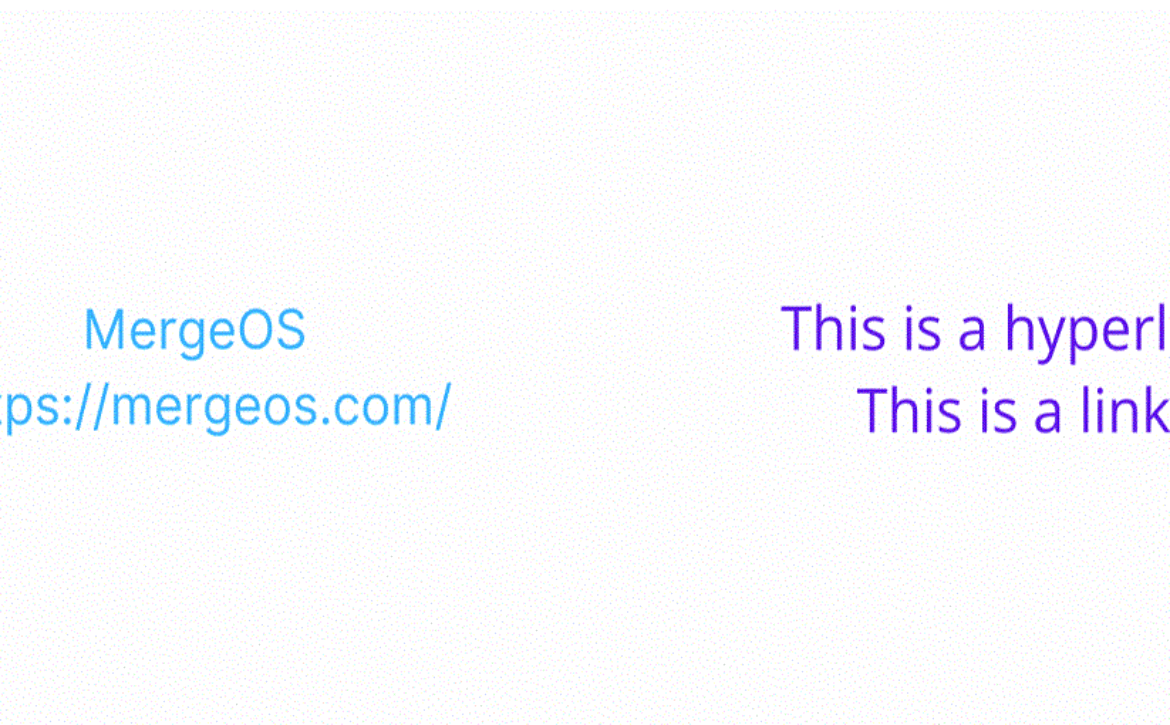
A “link” in its simplest form is a reference to a resource. It can be a piece of text, a URL, or a file path that indicates where a resource, such as a web page or file, is located. However, a link by itself may not be clickable. For example, if you see a plain URL like “www.example.com” in a document, it is considered a link but not a hyperlink unless you can click on it to navigate to the web page.

In the context of the internet, links often appear as URLs (Uniform Resource Locators) that specify the location of a web page. Links can also be used in offline documents to direct users to resources stored locally or on a network. However, without the added functionality of making the link clickable, it remains a basic link.

What is a Hyperlink?

A “hyperlink” takes the concept of a link one step further by providing a clickable connection between two pieces of content. When users click on a hyperlink, it directs them to a new destination, which could be a web page, a document, or another section of the same document. Hyperlinks are typically presented as underlined text, buttons, or clickable images.

In web design, hyperlinks are created using HTML (Hypertext Markup Language), where a specific tag (`<a>`) is used to create the clickable element. Hyperlinks allow for easy navigation and are essential to the overall functionality of websites, ensuring users can move seamlessly from one page to another.

Difference Between Link and Hyperlink Example

  • Link Example: www.example.com (plain, non-clickable URL)
  • Hyperlink Example: [Example Website](http://www.example.com) (clickable text that leads to the website)

Difference Between Link and Hyperlink in HTML

In HTML, a link is typically just a URL or file reference that is not inherently clickable. A hyperlink, however, is created using the anchor tag (`<a>`), which allows you to specify both the clickable text or element and the destination URL.

For example:

  • Link in HTML: `http://www.example.com` (plain URL that doesn’t do anything when clicked).
  • Hyperlink in HTML: `<a href=”http://www.example.com”>Visit Example Website</a>` (clickable text that takes the user to the specified URL).

The difference between link and hyperlink in HTML is primarily that hyperlinks use additional code to enable clickability, while a plain link is simply text or a reference without any interactive element.

Difference Between Link and Hyperlink in Excel

Difference between link and hyperlink in Excel, the terms “link” and “hyperlink” are also used, but they serve slightly different purposes. A link in Excel typically refers to a cell that references another cell, file, or external document, whereas a hyperlink is a clickable text or cell that, when clicked, opens a web page or document.

  • Link in Excel Example: A cell containing the value `C:\Documents\report.xlsx` is a link but not clickable.
  • Hyperlink in Excel Example: A cell containing the formula `=HYPERLINK(“http://www.example.com”, “Click Here”)` is a clickable hyperlink that directs the user to the specified URL.

The difference between a link and hyperlink in Excel is that hyperlinks provide an easy way to navigate or open external resources, while links are simple references without the functionality of navigation.

Difference Between Link and Anchor Tag

The anchor tag (`<a>`) in HTML is what transforms a link into a clickable hyperlink. It is used to “anchor” the clickable text to the destination URL. Essentially, the anchor tag makes the difference between link and hyperlink. 

This is an illustration of an anchor tag in use:

  • Anchor Tag Example: `<a href=”http://www.example.com”>Visit Example Website</a>`.

In this instance, the anchor tag (`<a>`) surrounds the clickable text (“Visit Example Website”) and directs the user to the linked resource (`href=”http://www.example.com”`). The anchor tag can also be used to link to different sections of the same page by using the `#` symbol followed by an element’s ID.

  • Difference Between Link and Anchor Tag:– A link is simply a URL or file reference, while the anchor tag is an HTML element that creates a clickable hyperlink.

FAQs

Are link and hyperlink the same thing?

Links and hyperlinks are often used interchangeably, but they have distinct meanings. Links are references connecting resources, while hyperlinks are clickable links directing users to different web pages or resources. All hyperlinks are links, but not all links are hyperlinks, as they can also refer to non-clickable references.

What is an example of a link and hyperlink?

A link is a web address (URL) that a user can manually type into their browser, while a hyperlink is a clickable text or image embedded with a URL, directing the user to the webpage.

What makes a link a hyperlink?

A hyperlink is a clickable link that directs users to a different location, typically a webpage, document, or section within the same document. It includes a visible anchor text and an embedded URL, and is commonly created using the HTML “ tag for seamless navigation across digital content.

What is the difference between hyperlink and link button?

A hyperlink is a text or image that directs users to a different webpage, often styled with underlining and color. A link button, on the other hand, is a clickable button with similar functionality, but visually more prominent and interactive.

Why are links called hyperlinks?

Hyperlinks are links that connect information non-linearly within a digital environment, allowing users to jump between parts of a document, website, or file with a single click, creating a web of interconnected content that forms the foundation of the internet.

How to Create a Hyperlink

The difference between link and hyperlink, creating a hyperlink varies depending on the platform you’re using, but the process is fairly straightforward across different applications.

1. How to Create a Hyperlink in HTML:

To create a hyperlink in HTML, use the anchor tag (`<a>`) as shown below:

<a href=”http://www.example.com”>Visit Example Website</a>

2. How to Create a Hyperlink in Excel:

In Excel, you can create a hyperlink using the HYPERLINK formula. Here’s an example:

=HYPERLINK(“http://www.example.com”, “Click Here”)

This creates a clickable hyperlink in the cell that says “Click Here” and directs the user to “http://www.example.com” when clicked.

3. How to Create a Hyperlink in Word:

In Microsoft Word, highlight the text you want to turn into a hyperlink, right-click, and select “Hyperlink” from the menu. Then, enter the URL or file location in the dialog box that appears, and click “OK.” Your text will now be a clickable hyperlink.

The Importance of Hyperlinks in Web Design

Hyperlinks are fundamental to the internet’s interconnected structure. Without hyperlinks, navigating from one web page to another would be a manual and tedious process. Difference between link and hyperlink, by embedding hyperlinks into content, web designers create a fluid experience where users can explore related information, access resources, and follow calls to action effortlessly.

Hyperlinks also enhance SEO (Search Engine Optimization). Well-placed hyperlinks that connect to authoritative resources can improve a website’s ranking in search engine results. Internal hyperlinks, which direct users to different pages within the same website, help with site navigation and encourage users to stay on the site longer, boosting engagement metrics.

Difference Between Link and Hyperlink: The Evolution of Hyperlinks

Hyperlinks have been a cornerstone of the internet since its inception. In the early days of the web, hyperlinks were mainly used for basic navigation between web pages. However, as the web evolved, so did the use of hyperlinks. They are now integral to complex functionalities like:

  • Interactive Interfaces: Hyperlinks are embedded in buttons, icons, and images to enhance user interfaces.
  • E-commerce: Hyperlinks are used to connect product listings, shopping carts, and payment gateways, streamlining the online shopping experience.
  • Multimedia Content: Hyperlinks can connect to audio, video, and dynamic content, allowing for richer and more engaging user experiences.

Hyperlinks have also become more dynamic over time, supporting features like pop-ups, tooltips, and hover effects, making them more interactive and engaging for users.

Future of Hyperlinks in a Hyperconnected World

As digital technology continues to advance, the role of hyperlinks is likely to evolve further. We are already seeing changes in the way hyperlinks function in the context of mobile apps, voice search, and augmented reality (AR).

1. Hyperlinks in Mobile Apps

Hyperlinks are becoming more integrated into mobile applications, not just for navigating web pages but for connecting various functions within apps. Deep linking allows users to be taken directly to specific content within an app, creating a seamless experience.

2. Voice-Activated Hyperlinks

With the rise of smart assistants like Alexa, Siri, and Google Assistant, voice-activated hyperlinks are becoming more common. These hyperlinks allow users to navigate to content without having to click or touch a screen. Voice search is expected to reshape how hyperlinks are presented and accessed, pushing for even more user-friendly and natural ways to interact with digital content.

3. Augmented Reality (AR) and Hyperlinks

Hyperlinks in the context of augmented reality could become clickable elements in real-world environments. For instance, AR glasses may enable users to see hyperlinks embedded in physical objects or signs, allowing them to navigate the digital and physical worlds simultaneously.

In the end, understanding the difference between link and hyperlink is crucial for digital content creation and web design. A link is a reference to a resource, while a hyperlink is a clickable element that allows users to navigate between content. This distinction is especially important in platforms like HTML and Excel, where hyperlinks are crucial for functionality and navigation. Effective hyperlinks enhance user experience, streamline information access, and improve content interactivity. By understanding these concepts, developers can create dynamic and user-friendly digital experiences.

Read More
01 SepSEO & Link Building

10 Reasons Your Company Needs an International SEO Agency

by Alamgir Rajab0 Comments

Businesses are no longer limited to their local markets in today’s digital world. Businesses may now access clients anywhere in the world thanks to the internet, which has created a wealth of options. But reaching out to foreign markets calls for more than just translating a website—it also calls for a methodical approach to search engine optimization (SEO) that takes into consideration various languages, cultural norms, and search engine usage patterns. An international SEO agency can help in this situation. 

A top 10 SEO company in world is essential for businesses expanding globally, as they need to optimize their online presence for different languages, cultures, and search engines. They help businesses rank well in multiple regions and reach diverse audiences effectively. By implementing tailored keyword strategies, localizing content, and managing technical SEO, these agencies help businesses maximize visibility, attract global traffic, and increase conversions. This targeted approach boosts brand awareness and drives sustainable growth in international markets, making them an indispensable partner for businesses aiming to scale globally.

CSA Research shows that over 60% of global consumers prefer native language purchases. International SEO helps businesses reach these audiences by optimizing content for different languages and regions. Google’s global market share is over 90%, but local search engines like Baidu and Yandex dominate in China and Russia, requiring effective international SEO agency reviews for increased visibility.

Moreover, International SEO agency strategies can boost businesses by 20-30% in organic traffic, resulting in higher conversion rates and revenue. With global e-commerce sales projected to reach $6.5 trillion by 2024, businesses leveraging international SEO are better positioned to tap into this growing market. Localized content on websites has a 70% higher conversion rate, emphasizing the importance of cultural and linguistic preferences. International SEO is cost-effective, reducing reliance on paid advertising while still achieving significant reach.

10 Reasons Your Company Needs an International SEO Agency

1. Expertise in Multilingual SEO

The language barrier is one of the main obstacles to growing in foreign markets. It is not sufficient to merely translate your material into another language, even if translation might be helpful. With the ability to optimize your website for numerous languages, an international SEO agency can make sure that your material is not only appropriately translated but also appeals to the local audience. They can use hreflang tags, which inform search engines about a webpage’s language and target region. This helps to avoid duplicate content problems and guarantees that the appropriate material is displayed to the appropriate audience. 

2. Understanding of Local Search Engines

Even though it is the industry leader in many regions of the world, Google is not the only contender. Local search engines like Baidu, Yandex, and Naver have substantial market shares in nations like South Korea, China, and Russia. Because they are well-versed in different local search engines, an international SEO agency can optimize your website appropriately. They ensure that your website performs highly in several locations by being aware of the algorithms, ranking variables, and user habits specific to each search engine.

3. Tailored Keyword Research for Each Market

Any effective SEO plan starts with keyword research, but it gets much more complicated when it comes to international SEO. Due to linguistic quirks, cultural variations, and local search intent, keywords that do well in one nation might not work as well in another. For every target market, an international SEO agency carries out in-depth keyword research to determine the most pertinent and effective terms in each language. With this customized strategy, you can be confident that your material is geared to draw in the appropriate audience in each area.

4. Cultural Sensitivity and Localization

The way that various markets view your brand may be greatly impacted by cultural variations. What functions well in one nation might not in another, and cultural insensitivity can cause miscommunications or even enrage prospective clients. Instead of merely translating your content, an international SEO agency localizes it to assist you avoid these errors. To make sure that your brand appeals to people throughout the world, they modify your messaging, imagery, and overall brand presentation to fit the cultural norms and preferences of each region.

5. Geo-Targeting for Improved Search Rankings

The process of optimizing your website to target particular geographic locations is known as geo-targeting. This includes developing area-specific content, setting up Google My Business accounts for each place, and utilizing local domain extensions (such as.co.uk,.de, and.cn). Effective geo-targeting techniques may be used by an international SEO agency to raise your search engine rankings in each target market. They assist you with achieving higher ranks and greater exposure in local search results by demonstrating to search engines that your website is relevant to people in particular locations.

FAQs

How much does international SEO cost?

A few factors that might have a big impact on the price of international SEO include the size of your website, the number of target languages or regions, the complexity of your SEO requirements, and the level of competition in your industry. Businesses should budget, on average, between $2,000 and $10,000 per month for comprehensive international SEO services. However, larger or the top 50 SEO companies that target several countries and have stricter SEO requirements could pay more. Remember that although international SEO may require a significant financial outlay, the potential benefits of increased global exposure and revenue may outweigh the expense.

Who is the best SEO in the world?

The sector, target market, and specific criteria are only a few of the factors that go into the subjective process of choosing the “best” SEO in the globe. SEO experts like Neil Patel, Brian Dean, and Rand Fishkin are widely recognized in the field for their innovative approaches and thought leadership. The perfect SEO, however, understands your industry, target market, and business goals and can offer tailored, effective strategies that yield measurable results. A business or SEO specialist must possess a proven track record, a strong portfolio of happy clients, and an in-depth understanding of content-driven and technical SEO.

What is an international SEO?

International SEO is the process of making your website more search engine-friendly for users in several languages and countries. It means targeting certain geographic areas with your content, site structure, and technology components to ensure that your website performs well in local search engines and appeals to a wide variety of people. Important elements of international SEO include geo-targeting, language optimization, and localization, which help businesses effectively engage and interact with customers in a variety of foreign markets, boost global traffic, and expand their online presence.

How much does it cost to hire an SEO agency?

The range of services, agency experience, and company requirements all affect how much it costs to work with an international SEO agency. Businesses should budget between $1,000 and $5,000 per month on average for continuous SEO services. The monthly cost for larger websites or more extensive campaigns might be anything from $5,000 to $20,000. Additionally, several firms provide project-based pricing, which runs from $5,000 to $30,000. The long-term advantages of more organic traffic, better search ranks, and more conversions frequently outweigh the initial expenditure.

Is it worth paying someone to do SEO?

Yes, SEO is a difficult and drawn-out procedure that may raise conversions, increase organic traffic to websites, and make them more visible. Professionals with expertise can create and implement a plan that meets your company’s objectives and improves search engine results while fostering long-term growth. For the majority of firms, SEO is a worthwhile investment since the long-term advantages—such as enhanced brand awareness and a greater return on investment—usually exceed the initial expenses.

6. Technical SEO Expertise for International Websites

Beyond standard SEO, a variety of technical factors are involved in international SEO. These include handling domain structures (e.g., ccTLDs, subdomains, and subdirectories), maintaining several language versions of your website, using hreflang tags, and making sure that your website runs quickly and is mobile-friendly everywhere. No matter where consumers are situated, your website will be optimized for search engines by an international SEO agency, which has the technological know-how to meet these obstacles.

7. Effective Link Building Across Borders

Building links is an essential part of SEO, and it becomes much more crucial when targeting foreign markets. However, establishing solid backlinks from respectable websites abroad necessitates a thorough grasp of the regional digital market. You may create and implement a successful link-building plan that targets reputable websites in each area with the aid of an international SEO agency. They raise the authority and trustworthiness of your website in each target market by obtaining backlinks from local sources, which raises your website’s search rank.

8. Enhanced User Experience for Global Audiences

User experience (UX) is a crucial component of SEO, and it becomes much more crucial when aiming for a global audience. When it comes to the functioning, navigation, and appearance of websites, various areas have distinct expectations and preferences. You may design a user-friendly website that meets the expectations of consumers in every market with the assistance of an international SEO agency. This entails maximizing website load speeds, guaranteeing responsiveness on mobile devices, and creating user-friendly navigation that makes it simple for visitors to locate what they’re looking for. Conversions and customer satisfaction rise along with your search rankings when users have a pleasant experience.

9. Data-Driven Insights for Informed Decision-Making

Decisions based on data and analytics must be made to expand into foreign markets. An international SEO agency clients can show you useful information about how well your website is performing across various geographical areas, which keywords are bringing in traffic, and where you may make improvements. They follow and evaluate the success of your foreign search engine optimization plan using sophisticated analytics tools, giving you the power to make informed decisions that optimize your return on investment. They assist you in maintaining an advantage over the competition in every market by regularly assessing and refining your approach.

10. Scalability for Future Growth

Your company’s demands for SEO will expand along with it. International SEO agency jobs may adjust its services to match your changing requirements, whether you’re entering new markets or introducing new goods. They possess the technology, know-how, and resources necessary to oversee intricate, extensive SEO operations in several areas. Because of its scalability, your SEO strategy will be able to expand with your company, opening up new commercial prospects and sustaining a strong online presence.

In conclusion, having a strong web presence in foreign markets is crucial for business success in an increasingly globalized world. But doing so calls for a more sophisticated approach that takes into consideration the nuances of many languages, cultures, and search engines—more than simply a straightforward SEO plan. The knowledge, resources, and tactics required to overcome these obstacles and prosper in the international market are offered by an international SEO agency. They provide a holistic solution that lets your business reach and interact with audiences worldwide, ranging from link development and user experience optimization to multilingual SEO and geo-targeting. You may seize fresh prospects for expansion, forge a more powerful worldwide brand, and accomplish enduring success in foreign markets by collaborating with the top SEO companies in the world.

Read More
17 AugSEO & Link Building

Top Social Media Marketing Companies to Watch for in 2024

by Alamgir Rajab0 Comments

In today’s fast-paced digital landscape, social media has emerged as a cornerstone of modern marketing strategies, driving brand engagement, customer acquisition, and revenue growth. With billions of active users across various platforms, social media offers unparalleled opportunities for businesses and individuals to connect with their target audiences in innovative and impactful ways. However, navigating the complexities of top social media marketing companies requires expertise and strategic insight, making the role of specialized social media marketing companies increasingly vital.

As we approach 2024, the landscape of social media marketing continues to evolve rapidly, influenced by emerging trends, shifting algorithms, and new platform features. To stay competitive and effectively leverage these changes, businesses and influencers alike are turning to social media marketing companies that can offer cutting-edge strategies and proven results. These agencies bring a wealth of experience and a deep understanding of the digital ecosystem, providing services that range from content creation and social media management to advanced analytics and targeted advertising.

This article delves into the top social media marketing companies to anticipate in 2024. We’ll highlight those making significant waves in the industry, including leading firms globally and standout agencies in the USA. Whether you’re a small business looking for tailored social media solutions, a large corporation seeking comprehensive digital strategies, or an influencer aiming to enhance your online presence, these top social media marketing companies are equipped to meet a variety of needs. By examining their unique offerings, expertise, and client success stories, this guide aims to help you identify the best partners to elevate your social media marketing efforts and achieve your digital goals in the coming year.

Top Social Media Marketing Companies in the World

In the dynamic realm of social media marketing, several companies have distinguished themselves as leaders by delivering exceptional results and innovative solutions across global markets. 

1. Hootsuite

Renowned for its comprehensive suite of social media management tools, Hootsuite is a titan in the industry. Their platform offers everything from content scheduling to performance analytics, making it a top choice for businesses looking to streamline their social media efforts. Hootsuite’s ability to integrate with various social networks and provide in-depth insights makes it a leading option for brands seeking to optimize their social media strategy.

2. Sprout Social

Sprout Social stands out for its focus on delivering actionable insights and fostering meaningful customer engagement. Their platform offers robust analytics and reporting tools that help businesses track their social media performance and refine their strategies. Sprout Social’s emphasis on customer relationship management (CRM) and its user-friendly interface make it a favorite among businesses aiming to build strong relationships with their audience.

3. SocialBee

Top social media marketing companies, SocialBee is known for its versatile social media management services, which include content scheduling, curation, and analytics. Their unique approach to content categorization allows businesses to maintain a consistent and engaging online presence. SocialBee’s focus on automation and content planning helps companies effectively manage their social media channels and drive engagement.

4. Buffer

Buffer offers a streamlined and intuitive platform for managing social media accounts. Its features include scheduling posts, analyzing performance, and collaborating with team members. Buffer’s commitment to simplicity and ease of use makes it an ideal choice for businesses and influencers looking for a straightforward social media management solution.

5. Later

Later specializes in visual content planning and scheduling, making it a great choice for businesses focused on platforms like Instagram. Their drag-and-drop interface and visual content calendar simplify the process of managing social media posts. Later’s emphasis on visual planning helps brands maintain a cohesive and attractive social media presence.

6. Top Social Media Marketing Companies: Tailwind

Tailwind is particularly well-regarded for its Pinterest and Instagram marketing capabilities. Its features include scheduling, analytics, and content discovery tools. Tailwind’s focus on visual content and its ability to help businesses optimize their Pinterest and Instagram strategies make it a valuable tool for visual-centric brands.

7. CoSchedule

CoSchedule offers a comprehensive marketing calendar and social media management tools designed to help businesses organize and execute their content strategy. Their platform integrates with various marketing channels and provides robust analytics, making it a powerful tool for managing and optimizing social media campaigns.

8. Agorapulse

Agorapulse is known for its social media monitoring and engagement capabilities. Top social media marketing companies platform provides tools for scheduling, responding to messages, and analyzing social media performance. Agorapulse’s emphasis on customer engagement and real-time monitoring makes it a strong choice for businesses looking to enhance their social media interactions.

9. Zoho Social

Zoho Social offers a range of features for managing social media accounts, including scheduling, analytics, and monitoring. Its integration with Zoho’s suite of business tools provides a comprehensive solution for managing social media alongside other aspects of business operations.

10. Loomly

Loomly focuses on simplifying social media management through its content calendar and collaboration tools. Its platform helps businesses plan, schedule, and optimize their social media content, making it a valuable tool for teams looking to streamline their social media efforts.

Top Social Media Marketing Companies in USA

In the competitive realm of social media marketing, several agencies in the USA have distinguished themselves as leaders by delivering innovative and effective solutions. 

1. Ignite Social Media

Based in Raleigh, North Carolina, Ignite Social Media is a leading social media marketing agency known for its data-driven approach. They offer a range of services, including strategy development, content creation, and social media management. Ignite Social Media’s focus on delivering measurable results and their expertise in various industries make them a top choice for businesses across the USA.

2. Social Media 55

Social Media 55, headquartered in Montreal, Canada, has a strong presence in the USA. They specialize in top social media marketing companies, including content creation, management, and advertising. Their commitment to creating customized strategies and their track record of delivering results have earned them a reputation as a top social media marketing agency in America.

3. Firebelly Marketing

Firebelly Marketing, based in Indianapolis, Indiana, is known for its social media management and influencer marketing services. They focus on helping brands build their online presence through strategic social media campaigns and influencer partnerships. Firebelly Marketing’s dedication to creativity and results-driven strategies makes them a standout in the industry.

4. Hawksem

Hawksem is a Chicago-based agency specializing in social media marketing and digital advertising. Their services include social media strategy, content creation, and paid social campaigns. Hawksem’s data-driven approach and focus on achieving measurable results have made them a top choice for businesses looking to enhance their social media presence.

5. Top Social Media Marketing Companies: Sculpt

Sculpt, located in Seattle, Washington, offers a range of social media marketing services, including strategy development, content creation, and analytics. Their emphasis on creating compelling content and their ability to deliver results through targeted social media campaigns make them a leading agency in the USA.

6. Social Media Shark

Based in Los Angeles, California, Social Media Shark specializes in social media marketing and influencer management. They offer services such as content creation, social media management, and influencer partnerships. Social Media Shark’s focus on leveraging the power of influencers and their expertise in various social media platforms makes them a top choice for brands looking to boost their online presence.

7. The Influencer Marketing Factory

The Influencer Marketing Factory, headquartered in New York City, focuses on influencer marketing and social media strategy. Their services include influencer partnerships, content creation, and campaign management. Their expertise in connecting brands with the right influencers and their data-driven approach have made them a leading agency in the USA.

8. Lush Social

Lush Social, based in Miami, Florida, offers a range of social media marketing services, including content creation, social media management, and advertising. Their emphasis on creativity and their ability to deliver results through innovative social media strategies make them a standout agency in America.

9. Reputation Loop

One of the top social media marketing companies in america, Reputation Loop, located in San Francisco, California, specializes in social media marketing and online reputation management. Their services include social media management, content creation, and reputation monitoring. Reputation Loop’s focus on helping businesses build and maintain a positive online reputation makes them a top choice for brands in the USA.

10. Sociallyin

Sociallyin, based in Birmingham, Alabama, is known for its social media management and content creation services. They focus on developing customized social media strategies and delivering results through engaging content and targeted campaigns. Sociallyin’s dedication to client satisfaction and their expertise in social media marketing make them a leading agency in America.

FAQs

Who is the best social media marketing agency?

Hootsuite is a top choice for social media marketing agencies due to its comprehensive scheduling, analytics, and management tools, catering to businesses of all sizes and delivering exceptional results across various platforms, based on specific needs.

Who is best social media marketing?

Hootsuite is a popular choice for businesses due to its comprehensive management tools, user-friendly platform, and integration with various networks, making it ideal for scheduling, analytics, and optimizing social media strategies.

Which social media site is best for marketing?

The optimal social media platform for marketing depends on your target audience and business objectives. LinkedIn is effective for B2B, while Instagram, TikTok, Facebook, and Twitter cater to visually-driven brands and diverse audiences.

What are the biggest media marketing companies?

WPP, Omnicom Group, Publicis Groupe, IPG, and Densu are major media marketing companies offering comprehensive advertising and marketing services, making them top choices for major brands worldwide.

What are the big 4 marketing companies?

The Big Four marketing companies, Omnicom Group, WPP, Publicis Groupe, and IPG, dominate the industry by offering services in advertising, media planning, public relations, digital marketing, and branding.

Top Social Media Marketing Agency for Small Business

1. Hootsuite: Hootsuite’s comprehensive tools and affordable pricing make it an excellent choice for small businesses. Their platform offers features for scheduling, analytics, and monitoring, allowing small businesses to manage their social media presence effectively.

2. Buffer: Buffer’s user-friendly interface and flexible pricing plans make it a great option for small businesses. Their platform provides essential features for scheduling posts, tracking performance, and engaging with followers.

3. SocialBee: SocialBee’s content categorization and automation features are ideal for small businesses looking to maintain a consistent social media presence. Their tools help businesses streamline their content creation and scheduling processes.

4. Later: Later’s visual content planning and scheduling features are particularly beneficial for small businesses focusing on Instagram. Their platform helps businesses create and manage visually appealing social media content.

5. Tailwind: Tailwind’s focus on Pinterest and Instagram marketing makes it a valuable tool for small businesses looking to enhance their presence on these platforms. Their scheduling and analytics features help businesses optimize their social media strategies.

6. CoSchedule: CoSchedule’s marketing calendar and social media management tools are useful for small businesses looking to organize and execute their social media campaigns. Their platform integrates with various marketing channels, providing a comprehensive solution for managing social media efforts.

7. Zoho Social: Top social media marketing companies, Zoho Social’s range of features and integration with other Zoho business tools make it a good choice for small businesses. Their platform provides scheduling, analytics, and monitoring capabilities to help businesses manage their social media presence effectively.

8. Agorapulse: Top 10 social media companies, monitoring and engagement tools are beneficial for small businesses looking to enhance their interactions with followers. Their platform offers features for scheduling, responding to messages, and analyzing performance.

9. Loomly: Loomly’s content calendar and collaboration tools are ideal for small businesses with teams working on social media campaigns. Their platform helps businesses plan, schedule, and optimize their social media content efficiently.

10. Reputation Loop: Reputation Loop’s focus on online reputation management and social media marketing is valuable for small businesses looking to build and maintain a positive online image. Their services help businesses enhance their social media presence and manage their reputation effectively.

Social Media Marketing Agencies for Influencers

For social media agency for influencers seeking to amplify their personal brand and maximize their impact on social media, partnering with a specialized social media marketing agency can be a game-changer.

1. Social Media Shark

Social Media Shark specializes in influencer marketing and social media management, making it an excellent choice for influencers looking to grow their personal brand.They provide influencer connections, social media management, and content development.

2. The Influencer Marketing Factory

The Influencer Marketing Factory focuses on connecting influencers with brands and managing influencer campaigns. Their expertise in influencer marketing and data-driven approach make them a top choice for influencers looking to collaborate with brands and expand their reach.

3. Firebelly Marketing

Firebelly Marketing’s influencer marketing services are designed to help influencers build their personal brand and engage with their audience. Their services include influencer partnerships, content creation, and social media management.

4. Lush Social

Lush Social offers social media management and content creation services tailored to influencers. Their focus on creativity and their ability to deliver results through engaging content make them a valuable partner for influencers looking to enhance their social media presence.

5. Sculpt

Sculpt’s social media marketing services cater to influencers seeking to optimize their online presence. Their platform offers tools for content creation, scheduling, and analytics, helping influencers manage their social media efforts effectively.

6. Hawksem

Hawksem’s expertise in social media marketing and digital advertising is beneficial for influencers looking to grow their audience and engage with their followers. Their data-driven approach and targeted campaigns help influencers achieve their goals.

7. Reputation Loop

Reputation Loop’s focus on online reputation management and top social media marketing companies are valuable for influencers looking to maintain a positive online image. Their services help influencers manage their social media presence and build a strong personal brand.

8. SocialBee

SocialBee’s content categorization and automation features are useful for influencers managing their social media accounts. Their platform helps influencers maintain a consistent online presence and engage with their audience effectively.

9. Agorapulse

Agorapulse’s social media monitoring and engagement tools are ideal for influencers looking to enhance their interactions with followers. Their platform offers features for scheduling, responding to messages, and analyzing performance.

10. Zoho Social

Zoho Social’s range of features and integration with other business tools make it a good choice for influencers looking to manage their social media presence. Their platform provides scheduling, analytics, and monitoring capabilities to help influencers achieve their goals.

To sum up, the demand for top social media marketing companies is on the rise due to the pivotal role of social media in digital marketing. These agencies offer tailored services to businesses, small enterprises, and influencers. They range from global leaders to specialized firms, driving innovation and delivering exceptional results across various platforms. Whether a small business needs effective social media strategies or an influencer aims to amplify their personal brand, these companies are well-equipped to help achieve their goals. As 2024 approaches, choosing the right social media marketing partner can significantly impact building a successful online presence.

Read More
15 AugSEO & Link Building

Role of Google Analytics Direct in Your Website’s Traffic Reports

by Alamgir Rajab0 Comments

In the realm of digital marketing and web analytics, understanding how visitors interact with your website is essential for crafting effective strategies and optimizing performance. Google Analytics Direct, a leading analytics platform, provides comprehensive insights into traffic sources, user behavior, and website performance. Among the various traffic categories it tracks, “Direct Traffic” stands out as one of the more elusive and sometimes misunderstood metrics. 

Direct traffic refers to visitors who arrive at your site without a clear referral source. This can include users who type your website’s URL directly into their browser, click on a bookmarked link, or access your site through links in non-web documents or applications that don’t pass referrer information. Because Google Analytics cannot identify the precise origin of these visits, they are categorized as direct traffic, which can sometimes lead to ambiguity in your data.

Understanding the role of direct traffic is crucial for several reasons. It offers insights into brand recognition and loyalty, reflecting how well your audience knows and trusts your brand. It can also highlight the effectiveness of offline marketing efforts, such as print ads or TV commercials, which often drive users to visit your site directly. However, direct traffic can also encompass visits from sources that aren’t tracked properly, making it a complex metric to interpret.

In this article, we will delve into the nuances of Google Analytics direct traffic, comparing it with other traffic sources like organic search and referral traffic. We will explore how direct traffic is tracked in both Universal Analytics and the newer GA4 (Google Analytics 4), discuss its implications for your marketing strategy, and offer strategies to better manage and optimize this important traffic source. Understanding direct traffic fully enables you to refine your analytics approach and enhance your overall digital marketing effectiveness.

Understanding Google Analytics Direct Traffic

Google Analytics Traffic refers to visits to your website where the source of the visit is unknown or untraceable by Google Analytics. 

What is Direct Traffic in Google Analytics?

Google Analytics is defined as the category of website visitors who arrive without a clearly defined referral source. Essentially, Google Analytics labels a visitor as “direct” if it cannot determine where they came from. There are a number of explanations for why this may happen, including:

1. Typing the URL directly: A user manually enters your website’s URL into their browser.

2. Bookmark access: The visitor has your website bookmarked and uses this shortcut to access it.

3. Non-tracked sources: Sometimes, visits from emails, PDFs, or other non-web documents that lack tracking parameters can also be categorized as direct traffic.

4. Link from non-web sources: Visitors arriving from a link in a document (like a Word document or PDF) that doesn’t carry a referrer might also be counted as direct traffic.

The ambiguity surrounding direct traffic makes it one of the more challenging aspects of Google Analytics to interpret accurately.

Google Analytics Direct Traffic in GA4

With the introduction of Google Analytics 4 (GA4), the definition and tracking of direct traffic have seen some adjustments. GA4 is designed to offer more sophisticated tracking capabilities, including improved identification of traffic sources. However, direct traffic still plays a significant role in GA4, especially when it comes to understanding how users navigate directly to your website. GA4’s event-based tracking model provides more granular data, potentially reducing the volume of direct traffic by better attributing visits to the correct sources. Nonetheless, direct traffic remains an essential metric for understanding user behavior and optimizing your marketing efforts.

What is Organic Search in Google Analytics

Organic search traffic refers to visitors who find your website through a search engine query, such as Google, Bing, or Yahoo, without clicking on a paid advertisement. This type of traffic is highly valuable because it typically consists of users actively seeking information related to your content, products, or services. Google Analytics tracks organic search traffic separately from other sources, providing insights into the keywords and search queries driving visitors to your site.

Direct Traffic vs. Organic Search: Key Differences

Understanding the difference between Google Analytics direct traffic vs organic search is crucial for accurately interpreting your website’s performance data. While direct traffic is somewhat ambiguous, organic search traffic is more straightforward, as it is tied directly to search engine activity. The key differences include:

1. Source Identification: 

Organic search traffic comes from search engines, whereas direct traffic lacks a clear source.

2. Google Analytics Direct: User Intent 

Visitors to organic search sites are often more targeted, as they are actively searching for specific information. Direct traffic users might already be familiar with your brand or have a specific purpose for visiting.

3. Impact on SEO:

 Organic search traffic is a direct indicator of your website’s SEO performance. High organic traffic suggests strong search engine rankings, while direct traffic doesn’t provide such insights.

By comparing Google Analytics traffic with organic search, you can better understand how users are finding your site and the effectiveness of your SEO strategy.

What is Referral Traffic in Google Analytics?

Referral traffic refers to visitors who arrive at your website from a link on another website. This could include social media platforms, blogs, partner websites, or online directories. Referral traffic is an important metric because it can indicate the effectiveness of your link-building efforts and partnerships with other sites. It also helps you understand which external sources are driving traffic to your website.

Direct Traffic vs. Referral Traffic

When comparing direct traffic to referral traffic, the primary difference lies in the source of the visits. While direct traffic lacks a referral source, referral traffic clearly identifies the website or platform from which the visitor originated. Understanding these differences helps in refining your marketing strategies and identifying which external sites are most beneficial for your business.

Why is Direct Traffic Important?

Google Analytics Direct traffic is a crucial metric because it can provide insights into brand loyalty, user behavior, and the overall effectiveness of your marketing efforts. High levels of direct traffic may indicate strong brand recognition, as users are actively seeking out your website. However, it’s essential to understand the various factors that contribute to direct traffic, as misinterpreting this data can lead to incorrect conclusions about your website’s performance.

Strategies for Managing Google Analytics Direct Traffic

To optimize direct traffic, consider the following strategies:

1. Improve URL Structure: Simplifying your URLs can make them easier for users to remember and type directly.

2. Enhance Brand Awareness: Focus on building a strong brand presence so that users are more likely to remember and directly visit your site.

3. Utilize UTM Parameters: Implement UTM parameters in your marketing campaigns to reduce the likelihood of traffic being categorized as direct when it originates from trackable sources.

Common Misconceptions About Direct Traffic

One common misconception about direct traffic is that it exclusively represents users who manually type in your website’s URL or access it through a bookmark. 

The “Direct Traffic Police” Myth

A common misconception is that Google Analytics acts as a “direct traffic police,” strictly categorizing traffic based on specific rules. While Google Analytics does have algorithms to identify traffic sources, it is not infallible. Misconfigurations, untagged links, and other tracking issues can sometimes lead to the incorrect categorization of traffic as direct.

Understanding the Complexity of Direct Traffic

Direct traffic is not always a straightforward metric to interpret. Various factors, including browser privacy settings, can affect how traffic is categorized. For instance, if a user has high privacy settings enabled, their traffic may be misclassified as direct even if it originated from another source.

FAQs

What is direct on Google Analytics?

Direct traffic in Google Analytics refers to website visits without tracking the source, such as direct URL inputs, bookmarking, or offline links. This broad and sometimes ambiguous metric helps understand user behavior.

What is the difference between direct and referral?

Direct traffic is traffic from visitors who visit a website without a traceable source, while referral traffic comes from external links from other websites, such as blog posts or social media platforms, allowing for clear attribution to specific external sources.

What is the difference between direct and SEO?

Direct traffic refers to users visiting a website directly, such as through a bookmark or non-trackable link, while organic search traffic comes from users finding the site through search engine results, driven by the website’s visibility and ranking.

What is the difference between direct and organic in GA4?

GA4 distinguishes between direct traffic, which is untraceable, and organic traffic, which is attributed to search engines like Google. Direct traffic lacks identifiable source data, while organic traffic is influenced by SEO efforts.

What are direct users in GA4?

Direct users in GA4 refer to visitors without a clear source or referral, such as browsing a website URL, bookmarking, or following a link without referral data. They are often seen as indicators of brand awareness or offline marketing effectiveness.

Segmenting Direct Traffic

One way to gain deeper insights into direct traffic is to segment it based on various user behaviors and characteristics. For example, you can segment google analytics direct traffic by returning visitors versus new visitors or by the pages they land on. This can help you understand. which parts of your site are most appealing to direct traffic and whether these visitors are more likely to convert.

Comparing Direct Traffic Across Time Periods

Analyzing direct traffic over different time periods can reveal trends and patterns that may not be immediately apparent. For instance, you might notice an increase in direct traffic following a major marketing campaign, even if that campaign wasn’t directly aimed at driving direct visits.

Transitioning from Universal Analytics to GA4

As Google Analytics continues to evolve, the transition from Universal Analytics to GA4 presents both challenges and opportunities for marketers. GA4 offers enhanced tracking capabilities, which can provide a more accurate picture of direct traffic. Understanding these changes is crucial for making the most of your analytics data.

Google Analytics Direct: Leveraging GA4 for Better Traffic Attribution

GA4’s event-based tracking system allows for more detailed analysis of user behavior, which can help reduce the volume of traffic categorized as direct. By implementing Direct traffic GA4 advanced features, you can gain a clearer understanding of where your direct traffic is coming from and how to optimize your marketing efforts accordingly.

The Role of Brand Familiarity in Direct Traffic

One of the most significant contributors to Google Analytics Direct traffic is brand familiarity. When users are familiar with your brand and have a positive association with it, they are more likely to visit your website directly by typing in your URL or accessing a bookmarked page. This kind of traffic is particularly valuable because it often reflects a loyal customer base or a highly engaged audience.

Brand familiarity can be cultivated through various strategies, including consistent branding across all marketing channels, strong customer service, and memorable advertising campaigns. The more recognizable and trustworthy your brand becomes, the more likely users are to seek you out directly. This underscores the importance of brand-building activities, as they directly influence the volume and quality of direct traffic.

Exploring the Impact of Offline Campaigns on Direct Traffic

Offline marketing campaigns, such as TV commercials, radio ads, print media, or even word-of-mouth recommendations, can also drive significant amounts of direct traffic. These types of campaigns often prompt users to visit a website directly because they lack a clickable link. For instance, a memorable TV ad that promotes a specific URL can lead to a spike in direct traffic, as viewers are inspired to type the URL into their browser.

This aspect of Google Analytics Direct traffic highlights the importance of integrating online and offline marketing strategies. By ensuring that offline campaigns are well-coordinated with your online presence, you can create a seamless experience that drives direct visits and maximizes the effectiveness of your overall marketing efforts.

Challenges in Accurately Tracking Direct Traffic

Despite its importance, tracking direct traffic accurately can be fraught with challenges. One of the primary issues is that direct traffic can sometimes serve as a “catch-all” category for visits that Google Analytics cannot properly attribute. This can happen due to various reasons, such as:

  • Missing UTM Parameters: When links in your marketing campaigns are not properly tagged with UTM parameters, visits that should be attributed to specific campaigns may end up categorized as direct traffic.
  • HTTPS to HTTP Transitions: If a user navigates from an HTTPS site to an HTTP site, the referrer data might not be passed along, leading to the visit being counted as direct traffic.
  • Private Browsing and Ad Blockers: Users who browse in private mode or use ad blockers might also have their visits misclassified as direct traffic, as these tools can strip away referrer information.

Understanding these challenges is crucial for improving the accuracy of your traffic reports. By addressing potential tracking issues, such as ensuring that all campaign links are properly tagged and optimizing your site to maintain HTTPS throughout, you can reduce the amount of traffic inaccurately attributed to the direct category.

The Role of Google Analytics Direct Traffic in Conversion Rate Optimization

Google Analytics Direct traffic often consists of users who are already familiar with your brand, which can make them more likely to convert than visitors from other sources. As such, direct traffic is an important metric to consider when optimizing your website for conversions. Understanding how direct visitors interact with your site, including which pages they visit and how long they stay, can provide valuable insights for improving user experience and increasing conversion rates.

For example, if you notice that a significant portion of direct traffic lands on a specific product page, this might indicate a strong interest in that product among your loyal audience. In response, you could focus on optimizing that page to improve its conversion rate, such as by enhancing the product description, adding customer testimonials, or offering special promotions for returning visitors.

The Evolution of Traffic Attribution and the Future of Direct Traffic

As digital marketing evolves, so too does the landscape of traffic attribution. Tools like GA4 are paving the way for more sophisticated tracking and analysis, which can help reduce the ambiguity associated with direct traffic. Future developments in analytics technology may further refine our understanding of traffic sources, making it easier to accurately attribute visits and optimize marketing strategies.

However, it’s important to recognize that direct traffic will likely always play a role in website analytics. As long as users have the option to type in URLs, bookmark pages, or share links in non-trackable ways, direct traffic will remain a relevant metric. The key for marketers is to stay informed about changes in analytics tools and to continuously refine their strategies for managing and interpreting direct traffic.

To sum up, Google Direct traffic in analytics is crucial for understanding user behavior and website performance. It can be difficult to interpret due to its ambiguous nature. Understanding it and comparing it to other sources like organic search and referral traffic can provide valuable insights. Marketers can use Universal Analytics and GA4 to manage direct traffic, optimize strategies, and drive more engagement and conversions. Understanding Google Analytics direct traffic sources, organic search, and referral traffic is essential for refining strategies and improving website performance.

Read More
13 AugSEO & Link Building

How a PPC Services Agency Can Optimize Your Campaigns

by Alamgir Rajab0 Comments

In today’s digital age, businesses must continually adapt their marketing strategies to stay ahead of the competition. Pay-Per-Click (PPC) advertising has emerged as one of the most effective ways to drive targeted traffic, generate leads, and boost conversions. But managing a PPC campaign effectively entails more than just putting advertisements up and leaving them running. It demands a deep understanding of audience behavior, strategic keyword selection, continuous optimization, and expert management to ensure that every dollar spent delivers the highest possible return on investment (ROI). A PPC services agency can help in this situation.

A PPC service agency specializes in creating, managing, and optimizing PPC campaigns to help businesses achieve their marketing goals. From conducting thorough keyword research to analyzing competitor strategies, these agencies bring a wealth of experience and expertise that can make the difference between a campaign that struggles to break even and one that consistently drives conversions. Whether you’re a small business looking to attract local customers or a multinational corporation aiming to dominate global markets, partnering with the right PPC agency can be a game-changer.

Choosing a PPC services agency isn’t just about finding someone to run your ads; it’s about finding a partner who understands your business objectives, your target audience, and the nuances of PPC management. With so many options available from agencies that specialize in certain industries to those that offer comprehensive PPC management services, it can be challenging to find the right fit. Additionally, understanding the PPC agency meaning and what to expect in terms of PPC service agency salary and service offerings can help you make an informed decision.

In this article, we’ll explore how a PPC services agency can optimize your campaigns to boost conversions. We’ll delve into the key strategies they use, the benefits of hiring a PPC agency, and how to choose the right one for your business, whether you’re looking for the best PPC company in India or a PPC agency USA. By the end, you’ll have a clear understanding of how a PPC service agency can take your digital marketing efforts to the next level.

The Role of a PPC Services Agency

A PPC service agency plays a crucial role in the success of your digital marketing efforts. At its core, PPC advertising is about bidding on keywords to place ads on search engines like Google or Bing. However, the success of a PPC campaign depends on much more than just keyword selection. A PPC services agency brings a comprehensive approach to PPC management, ensuring that every aspect of your campaign is optimized for maximum effectiveness.

 1. Keyword Research and Selection

One of the first steps a PPC service agency will take is to conduct thorough keyword research. Finding the most profitable and relevant keywords for your company is part of this process. Agencies use advanced tools and analytics to uncover keywords that your target audience is actively searching for. This process is not just about finding high-traffic keywords but also about identifying keywords that have a high intent to convert.

By understanding the nuances of PPC agency meaning and utilizing this knowledge in keyword research, agencies can ensure that your ads are shown to the right people at the right time. This increases the likelihood of conversions and reduces wasted ad spending.

2. Ad Copy Creation and Testing

Once the keywords are selected, the next step is creating compelling ad copy. A PPC service agency understands that effective ad copy is critical for attracting clicks and driving conversions. They craft messages that resonate with your target audience, highlighting the unique selling points of your product or service.

In addition to creating the initial ad copy, a PPC service agency will also run A/B tests to determine which versions of the ads perform best. This continuous testing and optimization process helps refine the messaging to improve click-through rates (CTR) and conversion rates over time.

3.  PPC Services Agency: Landing Page Optimization

Driving traffic to your website is only half the battle; converting that traffic into leads or sales is the real challenge. A PPC service agency ensures that the landing pages your ads point to are optimized for conversions. This includes improving the page’s design, layout, content, and call-to-action (CTA) to align with the ad’s message and the user’s intent.

Landing page optimization is a critical aspect of PPC management services. An agency will analyze user behavior on your landing pages and make data-driven changes to increase the likelihood of conversion.

4. Budget Management and Bid Optimization

Managing your PPC budget effectively is essential to maximizing your ROI. A PPC services agency will monitor your ad spend closely, ensuring that your budget is allocated to the most effective keywords and ads. They use advanced bidding strategies to optimize your bids, ensuring that you get the most out of your advertising dollars.

This process includes adjusting bids based on factors like time of day, location, device, and competition. By continuously optimizing your bids, a PPC service agency can help you achieve higher ad rankings and lower cost-per-click (CPC), leading to more efficient use of your budget.

5. Performance Tracking and Reporting

A key advantage of working with a PPC service agency is access to detailed performance tracking and reporting. Agencies use sophisticated analytics tools to monitor every aspect of your PPC campaigns, from click-through rates to conversion rates and beyond.

Regular reports provide insights into how your campaigns are performing and where improvements can be made. This transparency allows you to see the tangible results of your PPC investment and understand the value that the agency is bringing to your business.

The Benefits of Hiring a PPC Services Agency

Partnering with a PPC service agency offers numerous benefits that can significantly impact your business’s online presence and overall success. Here are some of the key advantages:

1. Expertise and Experience

A PPC service agency brings a level of expertise and experience that is difficult to match in-house. Their teams are composed of specialists who understand the intricacies of PPC advertising, from keyword selection to bid management.Your campaigns will be well-positioned for success right from the outset thanks to this experience.

Moreover, agencies have experience working with a wide range of clients across different industries. This gives them unique insights into what strategies work best for specific markets, which can be applied to your campaigns.

2. Time and Resource Efficiency

Managing a PPC campaign requires a significant investment of time and resources. By hiring a PPC services agency clients, you can free up your internal team to focus on other important aspects of your business. The agency handles all the day-to-day management of your PPC campaigns, allowing you to concentrate on running your business.

This efficiency extends to the use of advanced tools and technologies that agencies have at their disposal. These tools enable them to conduct in-depth analyses and make data-driven decisions that can optimize your campaigns more effectively than if you were to manage them in-house.

3. Access to Advanced Tools and Technologies

PPC services agencies have access to a wide range of advanced tools and technologies that are essential for running successful PPC campaigns. These tools include keyword research software, bid management platforms, analytics tools, and more.

By leveraging these tools, agencies can gain deeper insights into your campaigns, identify opportunities for optimization, and implement changes quickly. This level of sophistication is often beyond the reach of small or medium-sized businesses managing their PPC efforts in-house.

4. Continuous Optimization

PPC campaigns are not static; they require continuous monitoring and optimization to stay effective. A PPC service agency is dedicated to this process, constantly analyzing data and making adjustments to improve performance.

Whether it’s testing new ad copy, adjusting bids, or refining targeting parameters, the agency is always working to ensure that your campaigns are performing at their best. This proactive approach can lead to significant improvements in your conversion rates over time.

5.  PPC Services Agency: Scalability

Your PPC requirements could alter as your company expands. A PPC service agency offers the scalability needed to adjust your campaigns as your business evolves. Whether you’re expanding into new markets, launching new products, or increasing your budget, the agency can adapt your campaigns to meet your changing needs.

This scalability ensures that your PPC efforts can grow alongside your business, providing the support you need to achieve your long-term goals.

FAQs

What is a PPC management agency?

A PPC management agency optimizes businesses’ pay-per-click advertising campaigns, using data-driven strategies and keyword research to drive traffic, increase conversions, and maximize return on investment, ensuring ads reach the right audience.

How much does an agency charge for PPC?

The cost of hiring a PPC agency depends on factors like expertise, services, and campaign complexity. They charge either a flat fee, a percentage of ad spend, or a combination of both. Performance-based pricing may also be offered.

What does PPC stand for?

Advertisers that use the Pay-Per-Click (PPC) digital advertising strategy must pay a fee each time their ad is clicked. It is commonly used in search engine and social media advertising, allowing businesses to bid on keywords and place ads that drive traffic to their websites with the goal of generating leads or sales.

How do PPC agencies make money?

PPC agencies earn revenue by charging clients for management services, including fixed fees, percentages of ad spend, or a combination of both. They may offer tiered pricing based on service level or campaign scale, delivering measurable results.

How much does PPC cost per month?

PPC advertising costs vary based on industry, competition, and campaign scale, with businesses spending between $1,000 and $10,000 per month. Total expenditure depends on keywords, bid amounts, ad placements, and advertiser budget.

Choosing the Right PPC Services Agency

Selecting the right PPC service agency is crucial to the success of your campaigns. With so many options available, it’s important to consider several factors before making your decision.

1. Industry Experience

Take into account an agency’s prior experience in your sector while assessing them. An agency that has worked with businesses similar to yours will have a better understanding of your target audience, competitive landscape, and industry-specific challenges.

For example, if you’re looking for the best PPC company in India, finding an agency with a proven track record in the Indian market can give you an edge. Similarly, if you’re targeting the U.S. market, a PPC agency USA with experience in your industry will be better equipped to drive results.

2. Service Offerings

Different agencies offer different levels of service, so it’s important to understand what each agency provides. Some agencies specialize in specific areas of PPC, such as Google Ads or social media advertising, while others offer comprehensive PPC management services that cover all aspects of PPC advertising.

Consider what services are most important to you and choose an agency that aligns with your needs. If you’re looking for full-service management, make sure the agency can handle everything from keyword research to ad copy creation, landing page optimization, and ongoing campaign management.

3. Transparency and Communication

Effective communication is key to a successful partnership with a PPC services agency. Look for an agency that values transparency and provides regular updates on your campaign’s performance. They should be willing to share detailed reports PPC agency near me and explain the data in a way that you can understand.

In addition, consider how responsive the agency is to your questions and concerns. A good agency will be proactive in addressing any issues that arise and will work with you to find solutions.

4. Pricing and Value

Understanding the PPC service agency salary structure and pricing is essential when choosing an agency. Different agencies have different pricing models, so it’s important to find one that fits your budget and offers good value for your investment.

While cost is an important factor, it’s also important to consider the value that the agency can provide. The cheapest option may not always be the best, especially if it means sacrificing quality or expertise. Look for an agency that offers a balance of cost and value, ensuring that you get the best return on your investment.

5. Client Testimonials and Case Studies

Client testimonials and case studies are valuable resources when evaluating a PPC service agency. They provide insight into the agency’s past performance and the results they have achieved for other clients.

Look for testimonials and case studies that highlight the agency’s ability to drive conversions and improve ROI. This will give you confidence that the agency can deliver similar results for your business.

Understanding PPC Agency Meaning and Full Form

Before diving deeper into the benefits and strategies of a PPC services agency, it’s important to understand some basic terms. The PPC service full form refers to a specialized agency that focuses on managing pay-per-click advertising campaigns for clients. These agencies are experts in creating, optimizing, and managing ads that appear on search engines, social media platforms, and other digital channels.

The PPC service’s full form is “Pay-Per-Click service.” This refers to a model of internet marketing in which advertisers pay a fee each time one of their ads is clicked. Essentially, it’s a way to buy website traffic instead of trying to get it organically.

PPC Services Agency Salary: What to Expect

When considering hiring a PPC service agency, it’s important to understand the potential costs involved, including the PPC service agency salary for the professionals who will be managing your campaigns.

1. Factors Influencing Salary

Several factors can influence the salary of PPC professionals within an agency. These include:

  • Experience: More experienced PPC managers typically command higher salaries. Their expertise allows them to manage more complex campaigns and deliver better results.
  • Location: The location of the agency can also impact salary levels. For example, salaries for PPC professionals in the U.S. are generally higher than those in India due to differences in the cost of living and market demand.
  • Agency Size: Larger agencies with more clients and bigger budgets may offer higher salaries to attract top talent.

2. Salary Ranges

While salaries can vary widely depending on the factors mentioned above, here are some general ranges for PPC professionals:

  • Entry-Level PPC Specialist: $40,000 – $60,000 per year
  • Mid-Level PPC Manager: $60,000 – $90,000 per year
  • Senior PPC Strategist: $90,000 – $120,000+ per year

These figures are based on U.S. salaries. In other regions, such as India, the figures may be lower, but the relative cost of services will also be adjusted accordingly.

3. Balancing Cost and Expertise

When evaluating the cost of hiring a PPC service agency, it’s important to balance salary expectations with the level of expertise and value the agency can provide. A higher salary often correlates with better results, but it’s essential to ensure that the investment aligns with your overall marketing budget.

To sum up, achieving high conversion rates through PPC advertising requires expertise, continuous optimization, and a strategic approach. Partnering with a PPC service agency can provide businesses with the resources and knowledge needed to maximize campaign effectiveness. By leveraging the experience of a PPC agency, every aspect of a campaign is optimized for success, from keyword selection to landing page optimization and budget management. Whether a small business or a large enterprise, choosing the right agency can make all the difference in achieving marketing goals. The real value lies in a PPC services agency’s ability to boost conversions, drive growth, and deliver a strong ROI on advertising spend. By carefully selecting an agency that aligns with your business needs, industry, and budget, you can unlock the full potential of PPC advertising and set your business on the path to sustained success.

Read More
11 AugSEO & Link Building

Top Guest Post Platforms to Boost Your Online Presence in 2024

by Alamgir Rajab0 Comments

In 2024, with the digital world moving quickly, having a strong online presence is essential for both individuals and companies. As competition intensifies across various industries, the need to stand out and reach a broader audience becomes more pressing. One of the most effective strategies to achieve this is through guest post platforms, a powerful tool that allows you to share your expertise, insights, and ideas on established platforms with large, engaged audiences. 

Guest posting not only helps in driving targeted traffic to your website but also plays a pivotal role in building authority, enhancing brand visibility, and improving SEO rankings. By contributing high-quality content to reputable platforms, you position yourself as a thought leader in your niche, gaining credibility and trust among your peers and potential customers. Additionally, guest posts often include backlinks to your website, which can significantly boost your search engine rankings, driving organic traffic and increasing your site’s visibility.

However, the key to successful guest posting lies in choosing the right platforms that align with your goals and target audience. In 2024, a variety of guest post platforms have emerged, each offering unique opportunities to amplify your message and connect with a wider audience. Whether you’re looking to engage with industry professionals, tech enthusiasts, entrepreneurs, or a general audience, selecting the appropriate platform is essential to maximizing the impact of your guest posts.

This article delves into the top guest post platforms of 2024 that can help you boost your online presence. From well-known names like Medium and LinkedIn to industry-specific giants like TechCrunch and Entrepreneur, we’ll explore the benefits each platform offers, how they can enhance your digital strategy, and why they should be an integral part of your content marketing efforts. By understanding the strengths of these platforms, you can make informed decisions and effectively leverage guest posting to achieve your online marketing objectives in the year ahead.

Free guest post platforms

These are some Free guest posting websites where guest blogging is free.

1. Medium

A big, interested audience may read writers’ opinions, ideas, and expertise on Medium, a well-known guest posting site. With over 100 million monthly readers, Medium offers unparalleled exposure for content creators. The platform’s algorithm favors high-quality content, making it essential for writers to focus on providing value to their readers. Medium’s simple, user-friendly interface allows you to publish articles effortlessly, and the platform’s built-in audience can help your content gain traction quickly.

Benefits:

  • High domain authority, boosting SEO for your content.
  • Access to a vast, diverse audience.
  • Opportunity to join Medium’s Partner Program and earn revenue based on article performance.

2. LinkedIn

LinkedIn is an effective tool for content marketing in addition to being a networking site. Guest posting on LinkedIn allows professionals to share their expertise with a highly targeted audience, making it ideal for B2B marketing. LinkedIn articles can be shared across the platform, increasing visibility and engagement. Additionally, the guest post platforms publishing tools allow for easy content creation, while the built-in analytics provide insights into how your posts are performing.

Benefits:

  • Direct access to industry professionals and decision-makers.
  • Enhanced credibility and authority in your niche.
  • Ability to leverage LinkedIn’s algorithm to increase post visibility.

3. Forbes Councils

Forbes Councils offer an exclusive platform for industry leaders and entrepreneurs to share their insights and experiences. As a member, you can publish articles on Forbes.com, which can significantly boost your online presence. The platform is ideal for those who are looking to establish themselves as thought leaders in their industry. Forbes’ high domain authority ensures that your content ranks well in search engines, driving organic traffic to your site.

Benefits:

  • Association with a prestigious brand like Forbes.
  • High domain authority, leading to better SEO outcomes.
  • Opportunities for networking with other industry leaders.

4. HubSpot

HubSpot’s guest blogging program is designed for marketers and business owners looking to share their expertise on a platform with a strong focus on inbound marketing, sales, and customer service. Guest posting on HubSpot can drive significant traffic to your site, particularly if your content aligns with the platform’s focus on providing actionable, data-driven insights. HubSpot’s high domain authority and large audience make it a valuable platform for boosting your online presence.

Benefits:

  • Access to HubSpot’s extensive audience of marketers and business professionals.
  • Enhanced SEO due to HubSpot’s high domain authority.
  • Opportunities to build relationships with HubSpot’s community.

5. Business2Community (B2C)

Business2Community (B2C) is a well-established platform that allows writers to share their insights on a variety of topics, including marketing, technology, and business. Paid guest posting sites platform’s broad audience and strong domain authority make it an excellent choice for those looking to increase their online visibility. B2C offers guest bloggers the opportunity to reach a large, engaged audience, making it a great platform for those looking to establish themselves as experts in their field.

Benefits:

  • broad range of subjects, enabling a variety of material.
  • Strong domain authority, boosting content’s SEO performance.
  • Large, engaged audience interested in business and marketing topics.

6. TechCrunch

For those in the technology sector, TechCrunch offers a prime platform for guest posting. As one of the leading voices in the tech industry, TechCrunch provides unparalleled exposure to a tech-savvy audience. Guest posting on TechCrunch can significantly boost your online presence, particularly if your content focuses on innovative technology, startups, or industry trends. The platform’s high domain authority also ensures that your content ranks well in search engine results, driving organic traffic to your site.

Benefits:

  • Direct access to a tech-focused audience.
  • High domain authority, improving SEO outcomes.
  • Association with a reputable brand in the technology sector.

7. Entrepreneur

Entrepreneur is a respected platform for sharing insights on business, entrepreneurship, and leadership. Guest posting on Entrepreneur can help you reach a global audience of aspiring entrepreneurs and business owners. The guest post platforms strong domain authority ensures that your content ranks well in search engines, driving organic traffic to your site. Additionally, Entrepreneur’s focus on actionable insights makes it an ideal platform for sharing practical advice and strategies.

Benefits:

  • Large, global audience of entrepreneurs and business professionals.
  • Enhanced credibility by being associated with a reputable brand.
  • Strong SEO benefits due to Entrepreneur’s high domain authority.

8. Mashable

Mashable is a popular platform that covers a wide range of topics, including technology, entertainment, culture, and social media. Guest posting on Mashable can help you reach a diverse, global audience. The platform’s high domain authority and strong social media presence make it an excellent choice for those looking to increase their online visibility. Whether you’re sharing insights on the latest tech trends or offering advice on social media marketing, Mashable provides a valuable platform for reaching a broad audience.

Benefits:

  • Access to a diverse, global audience.
  • Strong social media presence, increasing content visibility.
  • High domain authority, improving SEO performance.

Free Guest Post PlatForms 2024

Staying updated with a list of free guest posting sites list 2024 is essential for maximizing your guest posting efforts. In 2024, consider these sites for free guest posting opportunities:

1. HubPages

HubPages allows you to publish articles on a range of topics. It’s a valuable platform for reaching a broad audience and driving traffic to your website.

2. EzineArticles

EzineArticles is a well-established article directory where you can submit your guest posts for free. It’s a great platform for building backlinks and increasing your content’s visibility.

3. ArticleCube

ArticleCube offers a free guest posting opportunity for various topics. By publishing on this platform, you can enhance your online presence and connect with new readers.

4. Guest Post PlatForms: Buzzle

Buzzle is another article directory that allows free guest posting. It’s a good platform for reaching an audience interested in diverse topics and building your online reputation.

5. Sooper Articles

Sooper Articles provides a free guest posting platform where you can share your expertise and attract readers. It’s an effective way to increase your content’s reach and visibility.

Free Instant Approval Guest Posting Sites

For those looking to get their content published quickly, free instant approval guest posting sites offer an efficient solution. Here are some guest post platforms where you can submit your guest posts and receive immediate approval:

1. Blogarama

Blogarama allows you to submit your blog posts and get instant approval. It’s a valuable platform for driving traffic and gaining exposure for your content.

2. SiteJabber

SiteJabber provides an opportunity for free guest posting with quick approval. It’s a great platform for sharing your insights and reaching a wider audience.

3. Infobarrel

Infobarrel offers a platform for publishing guest posts with instant approval. It’s an effective way to build backlinks and increase your content’s visibility.

4. SelfGrowth

SelfGrowth provides a platform for free guest posting with immediate approval. It’s a valuable resource for sharing your expertise and reaching a targeted audience.

5. Contento

Contento allows for free guest posting with quick approval. It’s a good choice for those looking to publish content rapidly and attract new readers.

Best Guest Post Marketplace

Finding the best guest post platforms can significantly impact your guest posting strategy. Consider these top marketplaces to find high-quality guest post opportunities:

1. GuestPost.com

GuestPost.com is a leading guest post marketplace, offering a range of options for purchasing and selling guest posts. It’s known for its high-quality sites and user-friendly interface.

2. Link-able

Link-able provides a marketplace where you can buy and sell guest posts. It focuses on delivering high-quality content placements and connecting you with authoritative sites.

3. Content Marketplace

Content Marketplace offers a platform for purchasing guest posts on high-authority websites. It’s a valuable resource for finding quality placements and boosting your online presence.

4. OutreachZoo

OutreachZoo is a guest post marketplace that connects you with top blogs and websites for guest posting opportunities. It’s known for its quality and relevance in content placement.

5. Authority Builders

Authority Builders, as mentioned earlier, is not only a paid guest posting service but also a marketplace where you can find premium guest posting opportunities. It’s an excellent choice for targeting high-authority sites.

FAQs

Who accepts guest posts?

Guest posts are accepted by various platforms, including industry blogs, online magazines, content marketing platforms, niche forums, and businesses and digital marketing agencies, to enhance their SEO efforts.

Where should I guest post?

To maximize your reach and credibility, guest post on high-authority sites with engaged readers, including popular blogs, industry-specific websites, and marketplaces. Mix free and paid platforms, ensuring do-follow links and strong domain authority, to boost SEO efforts and maximize your reach and credibility.

Does guest posting still work?

Guest posting is a successful strategy for online visibility, traffic, and SEO improvement. It establishes authority, attracts new audiences, and earns backlinks. However, success depends on selecting appropriate platforms and providing genuine value.

How do I create a guest post site?

Create a guest post site by selecting a niche, setting up a user-friendly website using WordPress, installing plugins, outlining content guidelines, promoting through social media, SEO, and outreach, and regularly monitoring submissions to build a thriving community.

How much can you earn from guest posting?

Guest posting earnings vary based on platform, niche, and content quality. Freelance writers earn $50-$500 per post, while established writers charge up to $1,000. Indirect benefits like increased traffic and brand exposure enhance the value.

Guest Post Seller

If you’re interested in selling guest posts, there are several guest post platforms where, through Write for Us Guest Post, you can connect with buyers and monetize your content:

1. BuySellGuestPosts

BuySellGuestPosts is a platform dedicated to buying and selling guest posts. It’s an effective way to monetize your blog and connect with businesses looking for guest post opportunities.

2. The Hoth

The Hoth, besides being a paid guest posting service, also offers opportunities for guest post sellers. It’s a valuable platform for reaching potential buyers and generating revenue.

3. GuestPost.com

GuestPost.com provides a marketplace where you can sell guest posts. It’s a popular choice for connecting with buyers and maximizing your content’s value.

4. OutreachMonkey

OutreachMonkey offers a platform for selling guest posts. It’s a useful resource for bloggers and content creators looking to monetize their sites and reach new audiences.

5. Content Marketplace

The Content Marketplace also allows content creators to sell guest posts. It’s a valuable platform for generating income and finding buyers interested in high-quality content.

Strategies for Successful Guest Post PlatForms

Successful guest posting hinges on several key strategies that can significantly enhance the effectiveness of your efforts.

1. Crafting High-Quality Content

The cornerstone of successful guest posting is creating content that is both engaging and valuable to the target audience. Here’s how you can ensure your guest posts stand out:

  • Research Thoroughly: Understand the audience of the host site.Adapt your content to their interests and requirements. 
  • Be Original: Offer fresh perspectives or insights. Avoid rehashing common topics.
  • Engage Readers: Use a compelling introduction, clear structure, and engaging language to keep readers hooked.

2. Building Relationships with Hosts

Building strong relationships with site owners or editors can significantly enhance your guest guest post platforms posting success.

  • Personalize Your Outreach: When pitching, personalize your message. Show genuine interest in their site and how your content will add value.
  • Check Up: If you don’t hear back from someone, kindly follow up. It pays to be persistent, but try not to be overbearing.

3. Optimizing for SEO

Guest posts can boost your SEO efforts if done right:

  • Incorporate Relevant Keywords: Throughout your article, use keywords in a natural way.This helps in ranking both the host and your site in search engines.
  • Use Internal and External Links: Include links to your own site where relevant and link to high-authority external sources.

4. Leveraging Social Proof

Utilize social proof to enhance your credibility and attract more guest posting opportunities.

  • Showcase Previous Posts: If you’ve written for well-known sites, highlight this in your pitches.
  • Share Success Stories: Demonstrate how your guest posts have positively impacted previous hosts or your own site’s traffic and engagement.

To sum up, in 2024, guest posting will remain a powerful strategy for enhancing your online presence, driving traffic, and building authority. With a diverse range of platforms available, from free options to paid services, it’s essential to choose the ones that align with your goals and budget. By leveraging the top guest post platforms, including free guest posting websites, instant approval sites, and premium marketplaces, you can effectively reach your target audience and achieve your digital marketing objectives. Whether you’re looking to buy or sell guest posts, understanding the landscape of the guest post platform will help you make informed decisions and maximize the impact of your content strategy.

Read More
31 JulSEO & Link Building

Your Business Needs an SEO and Digital Marketing Company in 2024

by Alamgir Rajab0 Comments

In the ever-evolving digital landscape, businesses face the constant challenge of maintaining visibility and relevance among their target audience. With the increasing reliance on the internet for information, shopping, and entertainment, having a strong online presence has become more critical than ever. This is where an SEO and digital marketing company come into play. In 2024, leveraging the expertise of such a company is not just an option but a necessity for businesses aiming to thrive in the competitive market.

An SEO and digital marketing firm specializes in optimizing a business’s online presence to achieve higher search engine rankings, attract more organic traffic, and ultimately drive conversions. These companies employ a range of strategies, from technical SEO and content marketing to social media management and paid advertising, to ensure comprehensive digital growth. The expertise and experience that these companies bring to the table can significantly enhance a business’s ability to reach its target audience effectively.

Choosing the right SEO and digital marketing firm can be a daunting task, given the plethora of options available. This is where SEO and digital marketing company reviews and lists become invaluable resources. Reviews provide insights into the performance and reliability of these companies, helping businesses make informed decisions. Meanwhile, lists such as the top 50 SEO companies or the top 100 SEO companies in USA highlight industry leaders known for their proven track records and innovative approaches.

Partnering with the best SEO company in USA offers numerous advantages. These companies stay abreast of the latest trends and algorithm updates, ensuring that your business’s SEO strategy is always current and effective. They provide a comprehensive SEO services list, tailored to meet the unique needs of your business, whether it’s improving technical SEO, optimizing content, or building high-quality backlinks.

The SEO and Digital Marketing Company in 2024

Every year, new techniques, technology, and trends in digital marketing are introduced. In 2024, the digital marketing landscape is more dynamic than ever, influenced by advancements in artificial intelligence, machine learning, and data analytics. These technologies are enabling businesses to gain deeper insights into consumer behavior, personalize marketing efforts, and optimize campaigns for better results.

The Role of SEO in Digital Marketing

SEO remains a cornerstone of digital marketing. It involves optimizing a website to rank higher in search engine results pages (SERPs), which increases visibility and drives organic traffic. An effective SEO strategy can lead to improved brand recognition, higher conversion rates, and ultimately, increased revenue. SEO is not just about keywords and backlinks; it encompasses a wide range of activities, including technical SEO, on-page optimization, content creation, and link building.

Why Your Business Needs an SEO and Digital Marketing Company

In the ever-evolving digital landscape, businesses face the constant challenge of maintaining visibility and relevance among their target audience. With the increasing reliance on the internet for information, shopping, and entertainment, having a strong online presence has become more critical than ever. 

1. Expertise and Experience

One of the primary reasons to hire an SEO and digital marketing firm is their expertise and experience. These companies employ professionals who are well-versed in the latest SEO techniques and digital marketing trends. They understand how search algorithms work, what strategies are effective, and how to implement them efficiently. This level of expertise is challenging to achieve in-house, especially for small to medium-sized businesses.

2. Comprehensive SEO Services List

A professional SEO and digital marketing company offers a comprehensive SEO services list that covers all aspects of optimization. This includes:

  • Technical SEO: Ensuring your website’s structure, speed, and performance are optimized for search engines.
  • On-page search engine optimization: is the process of enhancing content quality and optimizing individual pages for certain keywords.
  • Off-Page SEO: Increasing domain authority and ranks by creating high-quality backlinks.
  • Content Marketing: Producing worthwhile, pertinent material to draw in and involve your target audience.
  • Analytics and Reporting: Monitoring performance and making data-driven decisions to improve results.
  • Local SEO: is the process of making your company more visible in local search results to draw in clients nearby.

3. Staying Ahead of the Competition

The digital marketplace is highly competitive. By partnering with a top 100 SEO company in the USA, your business can stay ahead of competitors. These companies continuously monitor industry trends, competitor strategies, and algorithm updates to ensure your SEO strategy remains effective. They can adapt quickly to changes, helping your business maintain a competitive edge.

4. Cost-Effective Marketing

Hiring an SEO and digital marketing firm can be more cost-effective than trying to manage these activities in-house. The best SEO company in the USA will have the tools, resources, and expertise to execute campaigns efficiently, maximizing your return on investment (ROI). They can also scale their services to fit your budget and business goals.

Selecting the Best Digital Marketing and SEO Company

Selecting the right SEO and digital marketing firm is a critical decision that can significantly impact your business’s online success. Given the vast array of options available, making an informed choice requires careful consideration of several factors. 

1. SEO and Digital Marketing Company Reviews

Reading SEO and digital marketing firm reviews is a critical step in selecting the right partner. Reviews provide insights into the experiences of other businesses, highlighting the strengths and weaknesses of different companies. Look for reviews on reputable platforms and consider the feedback on the company’s communication, results, and customer service.

2. SEO and Digital Marketing Company List

Consulting an SEO and digital marketing firm list can help you identify potential partners. These lists often rank companies based on their performance, client satisfaction, and industry recognition. The top 50 SEO companies, for instance, are typically well-regarded for their expertise and results. Look for companies that have experience in your industry and offer the services you need.

3. What to Look for in an SEO Agency in the USA

When choosing an SEO agency in the USA, consider the following factors:

  • Experience and Performance History: Seek out a business that has a successful track record. They have to have a track record of accomplishments in your sector and experience in the field.
  •  success. They should have experience in your industry and a portfolio of successful projects.
  • Customized Strategies: The best SEO companies will develop customized strategies tailored to your business goals and target audience. Avoid companies that offer one-size-fits-all solutions.
  • Transparency and Communication: Effective communication is crucial for a successful partnership. Choose a company that is transparent about their processes, provides regular updates, and is responsive to your needs.
  • Innovative and Up-to-Date: The digital marketing landscape is constantly changing. Your chosen company should be up-to-date with the latest trends and technologies, and continuously innovate to stay ahead of the competition.
  • Comprehensive Services: Ensure the company offers a full range of SEO and digital marketing company. This includes technical SEO, on-page optimization, content marketing, and more.

FAQs

What is SEO in digital marketing?

SEO is a digital marketing strategy that enhances a website’s visibility and ranking on search engine results pages. It involves keyword research, on-page optimization, off-page optimization, and technical SEO to attract organic traffic, increase customer reach, and drive business growth.

How much do digital marketing agencies charge for SEO?

Digital marketing agencies charge SEO services using hourly rates, monthly retainers, or project-based fees. Hourly rates range from $75 to $200, monthly retainers from $500 to $5,000, and project-based fees from $1,000 to $30,000.

Does a digital marketer do SEO?

A digital marketer often incorporates SEO (Search Engine Optimization) as part of their skill set, aiming to improve a website’s visibility in search engine results, drive organic traffic, and enhance its online presence. Link building, content production, on-page optimization, and keyword research are examples of SEO strategies.

What is SEO marketing companies?

Companies are leveraging SEO marketing strategies to enhance website visibility, rankings, and user experience, thereby driving conversions and growth by enhancing organic traffic and attracting potential customers.

Is it worth paying an SEO company?

An SEO and digital marketing company offers specialized expertise, tools, and strategies to enhance online visibility, drive traffic, and improve search engine rankings. They adapt to algorithm changes, ensuring competitiveness and saving time and resources for business growth.

Benefits of Partnering with the Best SEO and Digital Marketing Company

Partnering with the best SEO and digital marketing company offers a myriad of benefits that can significantly enhance your business’s online presence and overall performance.

1. Improved Search Engine Rankings

A top SEO and digital marketing company can significantly improve your search engine rankings. They use proven strategies to optimize your website, making it more attractive to search engines. Greater exposure, more organic traffic, and more conversion prospects are all correlated with higher ranks.

2. Enhanced User Experience

SEO is not just about search engines; it’s also about providing a better user experience. An experienced SEO and digital marketing company will optimize your website’s structure, speed, and usability, making it easier for visitors to navigate and find the information they need. More engagement, decreased bounce rates, and more conversions can result from a good user experience.

3. Increased Organic Traffic

One of the primary goals of SEO is to drive organic traffic to your website. Organic traffic is more economical and sustainable than sponsored advertising. An SEO and digital marketing firm can help you attract more visitors through targeted keywords, high-quality content, and effective link-building strategies.

4. Higher Conversion Rates

Attracting visitors to your website is only the first step; converting them into customers is the ultimate goal. An SEO company can help you optimize your website for conversions, ensuring that visitors take the desired actions, whether it’s making a purchase, filling out a contact form, or signing up for a newsletter.

5. Long-Term Results

SEO is a long-term strategy that delivers lasting results. While it may take time to see significant improvements, the benefits are enduring. By partnering with the best SEO company in the USA, you can build a strong online presence that continues to attract and convert customers over time.

Case Studies: Success Stories from Top SEO and Digital Marketing Company

The success of partnering with a top SEO and digital marketing company is best illustrated through real-world examples of businesses that have transformed their digital presence and achieved remarkable growth.

Example 1: E-commerce Success

An e-commerce company partnered with a top SEO and digital marketing company to improve their online presence. The agency conducted a comprehensive audit, optimized the website’s technical aspects, and implemented a targeted content marketing strategy. As a result, the company saw a 50% increase in organic traffic and a 30% increase in sales within six months.

Example 2: Local Business Growth

A local business struggling to attract customers turned to an SEO agency in USA. The agency focused on local SEO, optimizing the business’s Google My Business profile, and creating localized content. Within three months, the business’s local search rankings improved, leading to a 40% increase in foot traffic and a 20% increase in revenue.

Example 3: B2B Lead Generation

A B2B company sought the help of one of the top 50 SEO companies to enhance their lead generation efforts. The SEO agency revamped their website, improved the content strategy, and targeted high-value keywords. Over a year, the company experienced a 60% increase in organic leads and a significant boost in their sales pipeline.

The Future of SEO and Digital Marketing

The future of SEO and digital marketing is poised to be more dynamic and technologically advanced than ever before.

Emerging Trends

The future of SEO and digital marketing company is shaped by emerging trends and technologies. Some of the key trends to watch in 2024 include:

  • Voice Search Optimization: With the increasing use of voice assistants, optimizing for voice search is becoming essential. This entails concentrating on conversational keywords and genuine language.
  • The fields of artificial intelligence (AI) and machine learning are changing digital marketing. They enable more precise targeting, personalized content, and predictive analytics.
  • Video Advertising: The popularity of video content is continually rising. Including video in your SEO strategy helps raise ranks and increase user engagement.
  • Mobile-First Indexing: As more users access the internet via mobile devices, optimizing for mobile is critical. Make sure your website works seamlessly on all devices and is optimized for mobile.
  • Nearby SEO: Local SEO is more crucial than ever due to the increase in “near me” searches. Make sure your company listings are up to date and concentrate on local keyword optimization.

The Role of AI in SEO

The use of artificial intelligence (AI) in SEO is becoming more and more significant. AI-powered tools can analyze vast amounts of data to identify patterns and trends that would be impossible for humans to detect. These insights can inform your SEO strategy, helping you target the right keywords, create high-quality content, and improve the user experience. AI can also automate routine tasks, such as keyword research and performance monitoring, freeing up your time to focus on more strategic activities.

Personalization and User Experience

Personalization is becoming a key factor in digital marketing. Consumers expect personalized experiences, and businesses that can deliver them are more likely to succeed. An SEO and digital marketing firm can help you implement personalization strategies, such as dynamic content and personalized recommendations

To sum up, in 2024, the importance of partnering with an SEO and digital marketing company cannot be overstated. These companies offer the expertise, tools, and strategies needed to navigate the complexities of the digital landscape. By improving search engine rankings, enhancing the user experience, and driving organic traffic, they can help your business achieve its goals and stay ahead of the competition. Whether you’re a small business looking to grow locally or a large enterprise aiming to dominate the market, the right SEO and digital marketing firm can make all the difference. With careful consideration of reviews, company lists, and key factors, you can choose the best partner to elevate your business to new heights.

Read More
27 JulSEO & Link Building

How Social Influencer are Revolutionizing Marketing Strategies

by Alamgir Rajab0 Comments

In today’s fast-paced digital era, traditional marketing strategies are being rapidly transformed by the emergence of social influencer. These digital personalities, often recognized for their substantial followings and engaging content on platforms like Instagram, TikTok, YouTube, and Twitter, have redefined how brands connect with consumers. The phenomenon of influencer represents a paradigm shift in marketing, moving from conventional advertising methods to more personalized and authentic forms of brand promotion.

They are individuals who possess the power to affect the purchasing decisions of others due to their perceived authority, expertise, or connection with their audience. Unlike traditional celebrities, whose influence is often rooted in mainstream media appearances, influencers build their reputation and following through consistent and relatable content. Their impact is driven by their ability to foster trust and create meaningful connections with their followers, which in turn, translates into significant marketing potential for brands.

The rise of social media influencers has been accompanied by the development of influencer marketing, a strategy where brands collaborate with these digital personalities to promote products or services. This approach leverages the influencer’s reach and engagement to target specific audience segments more effectively than traditional advertising methods. The power of influencer marketing lies in its ability to deliver authentic and persuasive messages directly to consumers, often leading to higher engagement rates and conversion outcomes.

However, the influence of social media goes beyond mere marketing. Influencers have become trendsetters, shaping cultural norms, societal values, and consumer preferences. Their endorsements and personal narratives can significantly impact public perception and behavior, making their role crucial not just in marketing but in a broader societal context.

As the landscape of digital marketing continues to evolve, what is an influencer? Understanding the multifaceted role of social influencer, including their job descriptions, impact on society, and the financial aspects of their profession, becomes essential. 

What is an Social Influencer?

An influencer is a person who, because of their position, authority, education, or connection to their audience, may sway other people’s purchase decisions. Unlike traditional celebrities, influencers build their followings on social media platforms such as Instagram, YouTube, TikTok, and Twitter. Their influence is derived from their ability to connect with their audience on a personal level, creating content that resonates with their followers’ interests and values.

Examples of Influencers

Examples of influencers range from high-profile personalities to niche content creators. For instance, Kylie Jenner, a social media influencer and entrepreneur, has leveraged her Instagram following to promote her beauty brand, Kylie Cosmetics. On the other hand, micro-influencers like food bloggers or fitness enthusiasts have smaller, but highly engaged audiences that brands target for more personalized marketing. Each of these influencers uses their unique platform to drive engagement and influence consumer behavior.

Social Media Influencers and Brand Perception

The impact of social media influencers on society is profound. Influencers can shape brand perception and consumer attitudes by authentically endorsing products or services. Their recommendations often feel more relatable and genuine compared to traditional advertisements, leading to higher engagement and trust. This shift has compelled brands to reconsider their marketing strategies, focusing on building long-term relationships with influencers to foster authenticity.

Social Influencer and Consumer Behavior

Social media influencers also play a critical role in shaping consumer behavior. Their endorsements can drive trends, influence purchasing decisions, and create viral marketing campaigns. The ability of influencers to create compelling content that resonates with their audience results in higher conversion rates and more effective marketing strategies.

Cultural and Social Impact

Social media influencers impact on society, Beyond consumerism, influencers impact broader societal issues. Many use their platforms to advocate for social causes, raise awareness about important issues, and promote positive change. This societal influence adds a layer of responsibility to their role, as their messages can significantly affect public opinion and cultural norms.

Emergence of Nano and Micro-Influencers

The rise of nano and micro-influencers with smaller but highly engaged followings has further diversified the influencer landscape. Nano-influencers (those with fewer than 1,000 followers) and micro-influencers (with 1,000 to 100,000 followers) often foster more intimate relationships with their audience. Their high engagement rates and perceived authenticity make them valuable partners for brands seeking to reach niche markets with tailored messages.

Influencers as Role Models

Influencers often become role models for their followers, shaping attitudes and behaviors in areas such as fashion, lifestyle, and mental health. Their ability to present themselves as relatable and aspirational figures means they can inspire positive changes or, conversely, perpetuate harmful trends. This duality underscores the importance of ethical considerations in influencer marketing.

Influencer Marketing Platforms and Tools

To manage influencer partnerships effectively, brands and influencers use various platforms and tools. These include influencer marketing platforms like AspireIQ, Traackr, and Upfluence, which help in discovering influencers, managing campaigns, and tracking performance metrics. Additionally, analytics tools like Google Analytics and social media insights provide valuable data to refine strategies and measure success.

The Role of Social Influencer in Marketing

They play a pivotal role in modern marketing by bridging the gap between brands and consumers through their authentic and engaging content. 

1. Influencer Marketing Strategies

The use of influencers in marketing has become essential to contemporary tactics. Brands partner with influencers to reach their target audience in a more personal and impactful way. The key strategies include:

  • Sponsored Posts: Influencers create content that features or mentions the brand’s product or service. This content is often tailored to fit the influencer’s style and audience preferences.
  • Product Reviews and Unboxings: Influencers review products or showcase their use, providing authentic feedback and recommendations to their followers.
  • Affiliate Marketing: Influencers promote products through unique affiliate links, earning a commission on sales generated through their referral.
  • Collaborative Campaigns: Influencers work closely with brands to develop and execute integrated marketing campaigns that leverage their unique voice and creativity.
  • Giveaways and Contests: Brands use influencers to host giveaways or contests, increasing engagement and expanding their reach.

2. Social Influencer Job Description

A influencer’s job description includes creating engaging content, building and maintaining an online presence, and collaborating with brands. Their daily tasks involve:

  • Content Creation: Developing and sharing content that aligns with their brand and resonates with their audience.
  • Audience Engagement: Interacting with followers through comments, messages, and live sessions to build a loyal community.
  • Brand Collaboration: Working with brands to create sponsored content, participate in campaigns, and provide feedback on marketing strategies.
  • Analytics and Reporting: Monitoring performance metrics, analyzing engagement data, and providing insights to optimize content and campaigns.

FAQs

What is considered a social influencer?

An influencer is a person with authority, expertise, or personal connection on social media platforms who influences opinions and purchasing decisions through relatable content. Their credibility and intimate audience relationships allow them to shape trends and impact brand perception.

Do social influencers get paid?

Influencers earn compensation through sponsored content, brand partnerships, and affiliate marketing, with larger influencers earning higher fees. Other compensation includes free products, travel expenses, and performance-based bonuses, varying based on follower count, engagement rate, and collaboration details.

Who is the biggest social influencer?

The “biggest” influencer is often determined by factors like reach, engagement, or industry. Cristiano Ronaldo and Kylie Jenner are popular examples, but the title is fluid and influenced by social media trends and shifts.

What do you call a social influencer?

A influencer is an individual who uses their social media presence and content to influence their audience’s opinions, behaviors, and purchasing decisions. They use platforms like Instagram, TikTok, YouTube, and Twitter to build trust, endorse products, share experiences, and drive trends.

Is social influencer a job?

Influencers create and share content on social media to engage audiences and influence their opinions. They often collaborate with brands to promote products or services, monetizing through sponsorships and affiliate marketing. Successful influencers manage their online presence strategically.

The Financial Aspect of Influencer Marketing

The financial aspect of influencer marketing is a key component in understanding the economics of this rapidly growing field.

1. Social Media Influencer Salary

The salary of a social media influencer varies widely based on their following, engagement rate, and niche. Influencers with large followings can command significant fees for sponsored posts, ranging from thousands to millions of dollars per campaign. Micro-influencers, while earning less per post, often enjoy higher engagement rates and more personalized relationships with their followers. 

2. Social Influencer Jobs

The rise of influencers has also created new job opportunities within the marketing industry. Brands are increasingly hiring influencer marketing managers, social media strategists, and content creators to manage their influencer partnerships and campaigns. These roles involve identifying suitable influencers, negotiating contracts, and measuring campaign performance.

3. Monetization Strategies for Influencers

Influencers employ various monetization strategies to generate income. These include sponsored content, brand partnerships, merchandise sales, and platform-specific monetization features (such as YouTube’s AdSense). Successful influencers diversify their revenue streams to maintain financial stability and grow their brand.

4. Influencer Agencies and Management

Influencers often work with agencies or managers to handle business aspects such as contract negotiations, brand partnerships, and content strategy. These agencies specialize in maximizing the value of an influencer’s platform and securing lucrative deals, allowing influencers to focus on content creation and audience engagement.

Social Influencer Examples in Different Industries

Influencers have made significant impacts across various industries, each leveraging their unique platforms to shape trends and drive consumer engagement. 

1. Fashion and Beauty

In the fashion and beauty industry, influencers like Chiara Ferragni and Huda Kattan have redefined marketing strategies by showcasing products through their personal style and expertise. Their endorsements drive trends and influence consumer purchasing decisions, leading to collaborations with major brands and the launch of their own product lines.

2. Fitness and Wellness

Fitness influencer such as Kayla Itsines and Joe Wicks have transformed the wellness sector by promoting healthy lifestyles and workout routines. Their influence extends beyond product endorsements to creating fitness programs and apps, demonstrating the diverse ways influencers can impact their niche.

3. Travel and Lifestyle

Travel influencers like Murad Osmann and Lauren Bullen use their platforms to share travel experiences and destinations, shaping travel trends and inspiring their followers to explore new places. Their content often includes brand collaborations with travel agencies, hotels, and lifestyle products.

4. Technology and Gadgets

Technology influencers, such as Marques Brownlee and Linus Tech Tips, focus on reviewing and promoting the latest gadgets and tech innovations. Their detailed reviews and hands-on demonstrations help consumers make informed purchasing decisions and drive interest in emerging technologies.

5. Food and Beverage

Food influencers like Smitten Kitchen’s Deb Perelman and Tasty’s recipe creators have become influential voices in the culinary world. Their recipes, cooking tips, and food reviews guide consumers towards new products and dining experiences, impacting the food industry significantly.

The Future of Social Influencer Marketing

The future of influencer marketing is poised for dynamic evolution as digital landscapes and consumer behaviors continue to shift. 

1. Evolving Trends and Innovations

The future of influencer marketing is poised for further evolution. Emerging trends include the use of AI and data analytics to optimize influencer partnerships, the rise of virtual influencers, and increased emphasis on sustainability and ethical practices. Brands are expected to leverage these innovations to enhance their marketing strategies and connect with audiences in more meaningful ways.

2. Challenges and Considerations

Despite its advantages, influencer marketing also faces challenges such as maintaining authenticity, managing influencer relationships, and addressing issues of transparency and disclosure. Brands and influencers must navigate these challenges to ensure successful and ethical marketing practices.

3. Regulatory and Ethical Concerns

As influencer marketing grows, so do concerns about regulations and ethical standards. Governments and regulatory bodies are increasingly scrutinizing influencer practices, particularly regarding transparency in paid promotions and sponsored content. Influencers and brands must stay informed about legal requirements and ethical guidelines to maintain credibility and trust.

4. The Role of Transparency and Disclosure

Transparency and disclosure are crucial in influencer marketing. The Federal Trade Commission (FTC) and other regulatory bodies require influencers to disclose paid partnerships and sponsored content clearly. This transparency helps maintain trust between influencers and their audience and ensures compliance with advertising regulations.

5. The Impact of Algorithm Changes

Social media platforms frequently update their algorithms, impacting how content is distributed and seen. Influencers must adapt to these changes by staying informed about platform updates and adjusting their strategies accordingly. Understanding how algorithms affect reach and engagement is essential for optimizing content performance and maintaining visibility.

In the end, social influencer are undeniably revolutionizing marketing strategies by offering a fresh and impactful approach to brand promotion. Their ability to connect with audiences on a personal level, coupled with the effectiveness of influencer marketing strategies, has transformed how brands engage with consumers. As the digital landscape continues to evolve, influencers will play an increasingly significant role in shaping marketing trends and driving consumer behavior. Understanding the intricacies of influencer marketing, from job descriptions to salary expectations, is essential for brands looking to leverage this powerful tool and stay ahead in the competitive market. The continued evolution of influencer marketing promises to bring new opportunities and challenges, making it a critical area for ongoing innovation and adaptation in the marketing world.

Read More
  • 1
  • 2
  • 3
  • 4
  • …
  • 7

Recent Posts

  • A Guide to Local SEO & Google My Business Optimization Success
  • Why Curated Niche Edits & Contextual Backlinks Matter
  • Top White Hat Link Building Strategies 2025 Every SEO Must Know
  • The Future of Emerging Design Tools and AI in Creative Work
  • Step-by-Step Guide for How to Evaluate Creative ROI

20 TIMES FASTER THAN HIRING

Efficient. Scalable. Exceptionally dependable.

Team up with us
SOLE MBR 30 N GOULD ST STE R SHERIDAN, WY 82801
info@bluebitebranding.com

+1 307 227 4281

Twitter Facebook-f Pinterest-p Instagram
  • Ad Creative
  • Ad Design
  • Animated Explainer Videos
  • Animated Videos
  • Annual Report Design
logo-1-footer

Copyright ÂĐ 2025 Blue Bite Branding. All Rights Reserved.

BACK TO TOP